



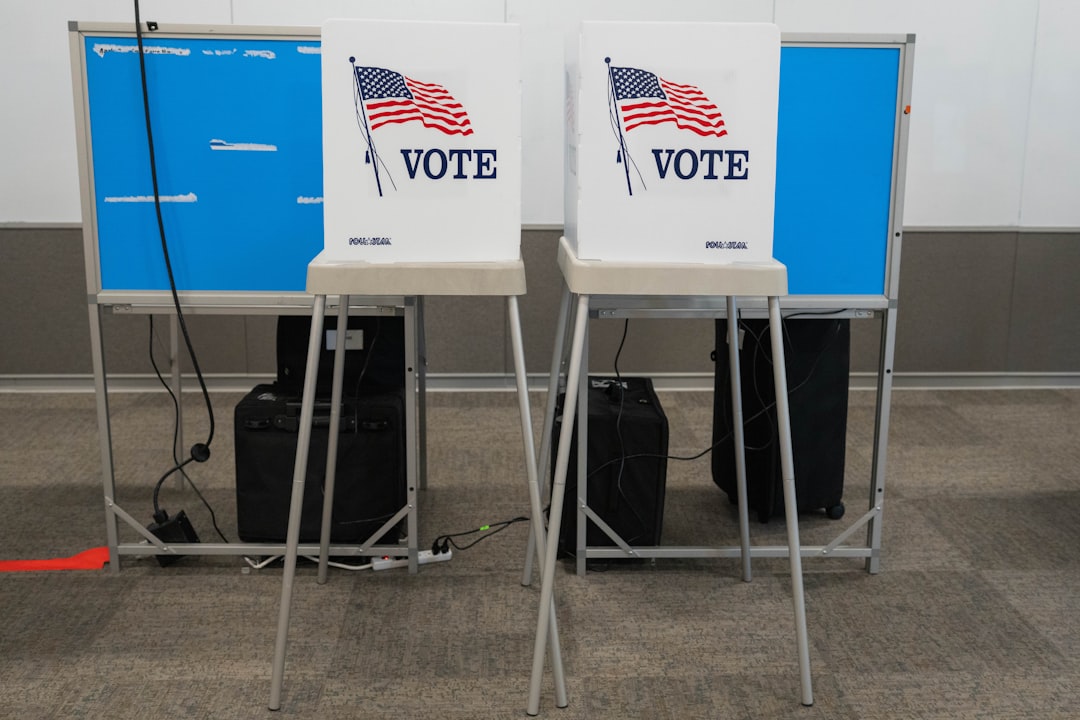
North Carolina Republicans are pushing a constitutional change that could let politicians redraw the state’s congressional map in time for this year’s midterm elections, rather than waiting for the usual bipartisan process. The proposal would sidestep the state’s current redistricting commission and make it possible to use new district boundaries approved by lawmakers. Supporters say the move is needed to respond quickly after recent legal and political battles over electoral maps. Critics argue it could give the party in power a stronger hand in shaping election outcomes.
For Canadians, this story matters because U.S. elections often influence Canada’s economy, foreign policy and cross-border issues, especially when control of Congress is at stake. A shift in the makeup of the U.S. House of Representatives can affect trade talks, border measures, climate policy, defence co-operation and support for Ukraine, all of which have direct or indirect effects on Canadian governments, businesses and households. The debate also speaks to a broader democratic issue familiar in Canada: how to draw fair political boundaries without giving one party an unfair advantage. While Canada uses independent electoral boundary commissions federally and in the provinces, American fights over redistricting show what can happen when map-making becomes a more openly partisan exercise.
What to watch next is whether the amendment gains enough political and public support to take effect in time for the midterms. Legal challenges are also likely, especially if opponents argue the change undermines fair representation or conflicts with existing state rules. Another key question is whether any newly drawn districts would materially change the balance of power in Washington.
To understand the stakes, it helps to know that redistricting happens after population changes are recorded, usually following the U.S. census. In many American states, elected lawmakers still play a major role in drawing electoral boundaries, and that has led to repeated accusations of gerrymandering, where district lines are shaped to favour one party or group. North Carolina has been one of the most closely watched battlegrounds in these disputes because its rapid growth and sharp urban-rural divide make its maps politically important. The fight is not just about one state’s boundaries, but about who gets to set the rules of representation in a polarized democracy.
The proposal now under discussion would bypass a process that was designed to reduce overt political interference in map-making. That is why the issue is attracting attention well beyond North Carolina. In the United States, a handful of congressional seats can determine which party controls the House, and control of the House can influence everything from federal spending to investigations and major legislation. If lawmakers are allowed to introduce new district boundaries on a faster timetable, the immediate practical effect could be a different electoral playing field before voters head to the polls.
That timing is part of what makes the story politically sensitive. Midterm elections already tend to serve as a referendum on the party holding the White House, and even small changes in district lines can have large consequences in competitive states. Opponents of the move say changing the rules close to an election can erode public trust, especially if one party appears to benefit. Supporters, meanwhile, are likely to frame the effort as a lawful use of constitutional power and an attempt to settle uncertainty around the state’s electoral map.
For a Canadian audience, there is a useful comparison here. In Canada, federal riding boundaries are generally reviewed by independent commissions using census data and public consultations, with the goal of reflecting population shifts while preserving communities of interest and effective representation. The process is not free from debate, but it is usually less partisan than in many parts of the United States. When Canadians see recurring American legal fights over district maps, it can reinforce why non-partisan electoral administration is considered an important democratic safeguard at home.
There is also a practical economic angle. Decisions made in Washington affect interest rates indirectly through fiscal policy, shape regulatory conditions for industries tied to Canada and influence infrastructure, manufacturing and energy policy across North America. If congressional control changes because of redistricting battles in key states, the resulting shift in committee leadership and legislative priorities could ripple into sectors that matter deeply in Canada, from autos and agriculture to defence production and clean energy. For provinces and Ottawa alike, stability in U.S. institutions is not an abstract concern.
The broader backdrop is years of escalating legal and political conflict over electoral maps in the United States. Courts, legislatures and voters have all played roles in deciding who draws the lines and under what standards. Some states have moved toward independent commissions to reduce partisan manipulation, while others have kept the power in the hands of elected officials. North Carolina has often sat near the centre of these national arguments because its electoral map has been challenged multiple times and its congressional delegation can be pivotal.
Another part of the picture is the growing public awareness of how administrative rules shape democracy. Voters may focus most on candidates and issues, but the design of electoral districts can determine how competitive races are, whose votes carry more weight and which communities are kept together or split apart. That makes redistricting more than a technical exercise. It becomes a contest over representation itself.
In the coming days and weeks, attention will likely focus on the exact wording of the proposed amendment, how quickly lawmakers try to move it and whether courts intervene before any new maps can be used. Watch, too, for reaction from voting-rights groups, election law experts and national political organizations, since North Carolina’s outcome could encourage similar efforts elsewhere. If the proposal advances, it will become another major test of how much public confidence Americans still have in the fairness of their electoral system.
Follow Canada News Media
Get the day's top Canadian stories and our two daily 60-second news videos wherever you scroll.
X Threads Facebook Instagram LinkedIn TikTok YouTube Pinterest Reddit Substack Flipboard Newsletter RSS