

The latest:
Quebecers out in the streets after 8 p.m. on Saturday can expect to be questioned by police as a month-long curfew comes into effect to control the spread of COVID-19.
The province announced earlier this week that the curfew will be in place from 8 p.m. to 5 a.m., except for those who fall into certain exempted categories, such as essential workers.
It’s a state of affairs Premier François Legault is defending as unpleasant but necessary. In an open letter on his Facebook page, Legault said, “I consider the situation critical, and it requires a shock treatment.”
With hospitals in many areas, including greater Montreal, reaching the breaking point, the government is making a desperate effort to stop COVID-19 from spreading in the community. The point, Legault writes, “is to prevent gatherings, even the smallest ones.”
Je m’adresse à l’ensemble de la nation québécoise.<br>J’ai besoin de chacune et de chacun d’entre vous.<br>On a besoin d’un effort collectif, de tout le monde, pendant un mois.<br> <br>Voici ma déclaration: <a href=”https://t.co/HhaYYy3vOa”>https://t.co/HhaYYy3vOa</a> <a href=”https://t.co/3v8CFzPOXZ”>pic.twitter.com/3v8CFzPOXZ</a>
—@francoislegault
The province will send out an emergency alert this afternoon to remind Quebecers of the curfew and that police will be more visible on the streets over the weekend.
The curfew comes as Quebec’s COVID-19 cases and deaths continue to rise and hospitals say they’re filling up and risk becoming overwhelmed.
The province reported 3,127 new cases on Saturday and 41 more deaths. Since the start of the pandemic, there have been 226,233 confirmed cases and 8,647 people have died.
The curfew will last at least four weeks, until Feb. 8, and violators could face fines ranging from $1,000 to $6,000.
Meanwhile, federal Public Services and Procurement Minister Anita Anand said Ottawa will do “whatever it takes” to get more vaccine doses delivered to Canada faster.
But she said there has not yet been any change in the number of doses the government is expecting to receive this winter, and approvals for additional vaccines are still at least several weeks away.
WATCH | Ottawa promises more COVID-19 vaccines to come next week:

As some provinces begin to run low on doses, Prime Minister Trudeau promises to ‘scale up’ COVID-19 vaccine deliveries. 1:38
Anand said Canada has already put a number of offers on the table to vaccine-makers to get more deliveries faster, including upping the price per dose.
Canada has approved two vaccines and is currently scheduled to receive four million doses from Pfizer-BioNTech and another two million from Moderna before the end of March.
That is the same delivery plan that has existed since November.
Fewer than 250,000 people have received doses in Canada.
What’s happening across Canada
As of 12:15 p.m. ET, Canada had reported 650,918 cases of COVID-19, with 82,202 cases considered active. A CBC News tally of deaths stood at 16,788.
Ontario reported 3,443 cases on Saturday, including 1,070 in Toronto, 548 in Peel Region, 303 in York Region, 282 in Windsor-Essex County and 179 in Ottawa.
The education minister said Saturday the province is expanding the list of essential workers eligible to receive free child care during the time school is taught remotely. Stephen Lecce says Canada Post staff, workers with the RCMP and
the Canada Border Services Agency, and workers with homeless shelters and children’s aid societies are among those on the expanded list.
WATCH | Alberta and Ontario differ on schools despite similar COVID-19 numbers:

Two provinces with similar COVID-19 infection numbers have made opposite decisions on school going forward. Alberta is sending kids back to the classroom next week, while Ontario is keeping most students at home. 2:00
Manitoba announced 222 new COVID-19 cases and nine new deaths on Friday. Chief public health officer Dr. Brent Roussin said there has been a spike in cases related to gatherings over the holidays.
Saskatchewan reported 336 new cases on Friday — the second day in a row that officials in the province recorded more than 300 new cases — and it announced seven additional deaths.
Alberta reported 1,183 new COVID-19 cases and 24 deaths on Friday. Dr. Deena Hinshaw, Alberta’s chief medical officer of health, announced the province has detected its first case of a variant of COVID-19 first found in South Africa.
WATCH | WestJet cuts 1,000 full-time positions amid second-wave job losses:
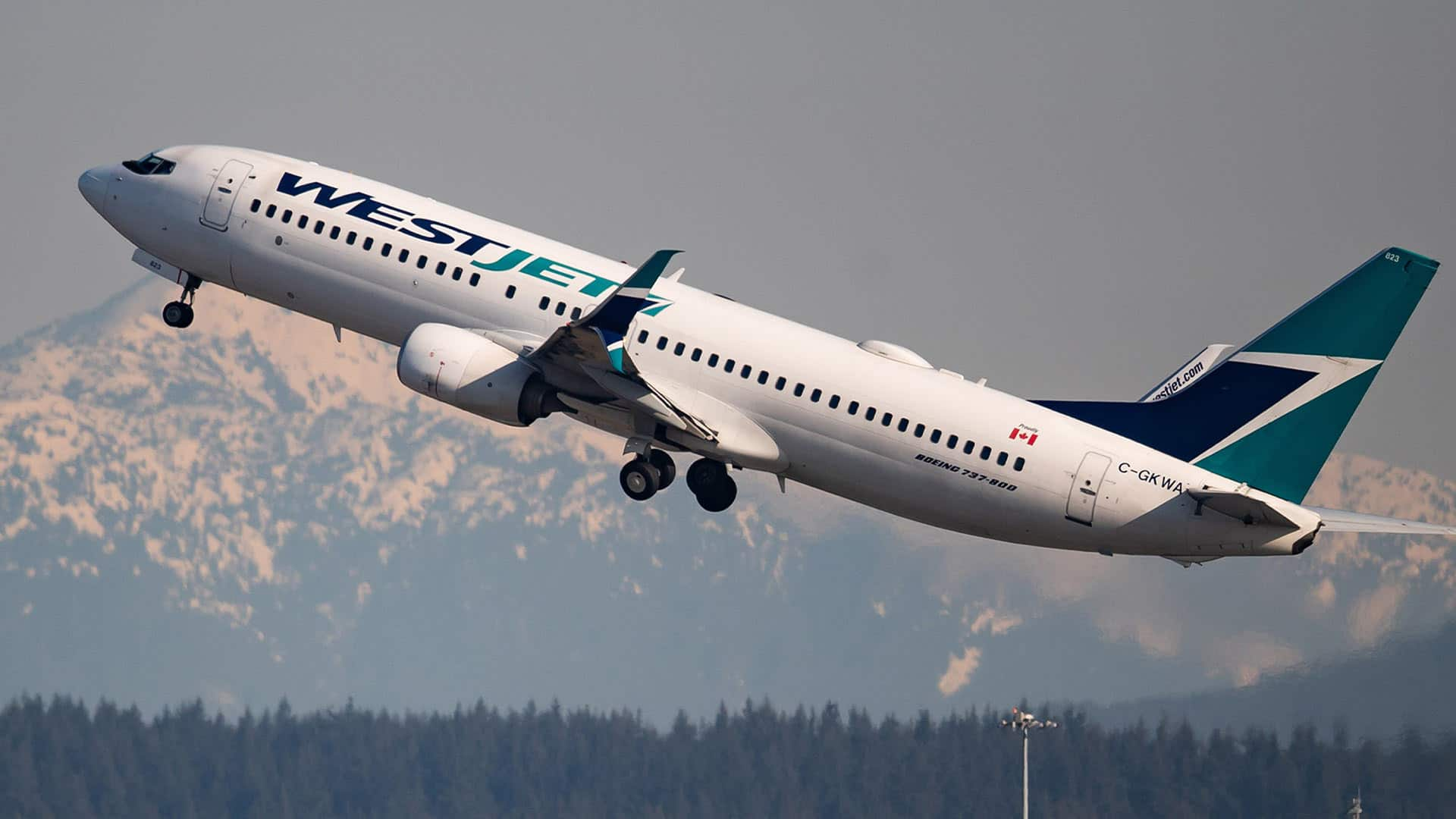
WestJet announces cuts affecting the equivalent of 1,000 full-time positions and says the government hasn’t done enough to help a flailing but necessary industry. Meanwhile, Canada lost 63,000 jobs over the last month. 2:31
British Columbia health officials announced 617 new cases of COVID-19 and 18 more deaths. In a written statement, Provincial Health Officer Dr. Bonnie Henry and Health Minister Adrian Dix said 358 people are in hospital, 75 of whom are in intensive care.
In the Northwest Territories, Indigenous leaders say the territorial government must address vaccine hesitancy if it wants to reach target immunization levels. The territory received 7,200 doses of the Moderna COVID-19 vaccine last week and unveiled its vaccination strategy on Tuesday.
In Atlantic Canada, New Brunswick reported 18 new COVID-19 cases on Friday, while Nova Scotia reported two new cases..
With case numbers rising in New Brunswick, health officials urged people to follow the rules, be honest with contact tracers and support people who are in isolation because of a positive test or a contact.
Nova Scotia announced that it is tightening border restrictions with New Brunswick. As of 8 a.m. on Saturday, everyone coming into Nova Scotia from New Brunswick will have to self-isolate for 14 days. There are exceptions for those who are crossing the border due to work, a medical appointment, child-custody arrangements or legal reasons.
What’s happening around the world
As of 12:20 p.m. ET Saturday, more than 89.1 million cases of COVID-19 had been reported worldwide, with more than 49.5 million of those considered recovered or resolved, according to Johns Hopkins University’s COVID-19 case tracking tool. The global death toll stood at more than 1.9 million.
In the Americas, Mexico on Friday posted its third straight day of a new high for coronavirus infections, with 14,362 newly confirmed cases and a near-record of 1,038 more deaths. The country has now topped 1.5 million total infections and over 132,000 deaths so far in the pandemic. The country’s extremely low testing rate means that is an undercount, and official estimates suggest the real death toll is over 180,000.
WATCH | Florida allows COVID-19 vaccine access to snowbirds:

Canadian snowbirds have early access to COVID-19 vaccines in Florida because the state has put all people over age 65 at top priority. 2:04
In Europe, Queen Elizabeth and Prince Philip received the first dose of a coronavirus vaccine, royal officials said Saturday. The couple are in their 90s and therefore eligible for Britain’s earliest waves of vaccinations.
Meanwhile, Pope Francis said on Saturday he planned to have a COVID-19 vaccination as early as next week and
urged everyone to get a shot, to protect not only their own lives but those of everyone else.
“I believe that ethically everyone should take the vaccine,” the Pope said in an interview with TV station Canale 5. “It is
an ethical choice because you are gambling with your health, with your life, but you are also gambling with the lives of
others.”
WATCH | U.K. sees 68,000 new COVID-19 cases three days into national lockdown:

Record-high COVID-19 counts were reported in the United Kingdom on the third day of a national lockdown that includes school closures. More than 68,000 new cases were recorded and another 1,325 deaths. 1:55
In the Asia-Pacific region, several regional governments in Japan have asked for a state of emergency declaration like the one issued by the prime minister to the Tokyo area to stem the surging rise in coronavirus cases. The heads of Osaka, Kyoto and Hyogo prefectures in central Japan relayed their request Saturday. There was no immediate decision, but the government panel of medical experts will study the situation. Japan’s state of emergency, which kicked in Friday for Tokyo and nearby Kanagawa, Saitama and Chiba, centres around asking restaurants and bars to close at 8 p.m. It lasts for a month but can be extended.
WATCH | What scientists know about the new coronavirus variant:

The B1-17 coronavirus variant, first discovered in the U.K., is now in at least 40 countries, including Canada. It has 23 mutations, including one that attaches to healthy cells like a key going into a lock. 1:56
In China, authorities are asking residents in two cities south of Beijing to stay home for seven days as they try to stamp out a coronavirus outbreak in which more than 300 people have tested positive in the past week. According to official notices on social media, the cities of Shijiazhuang and Xingtai in Hebei province are restricting people to their communities and villages and have banned gatherings.
India will start its COVID-19 vaccination drive on Jan. 16, with priority given to about 30 million health-care and front-line workers, a government statement said on Saturday.
Prime Minister Narendra Modi reviewed the preparedness for the COVID-19 vaccination program on Saturday. India hopes to inoculate 300 million of its 1.35 billion people free of charge in the first six to eight months of this year.