


There was a time, much earlier in the pandemic, when we were quick to show our appreciation for those on the front lines of the health care system.
There were the blue light campaigns that illuminated our appreciation for all that doctors and nurses were doing. There were messages of thanks chalked on the streets, taped on windows or expressed with food and coffee delivered to hospitals.
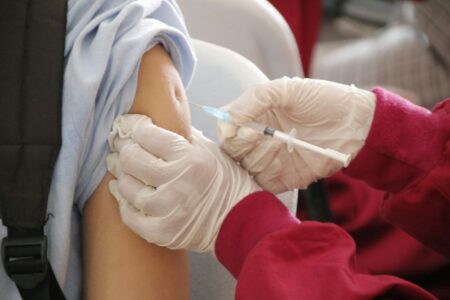
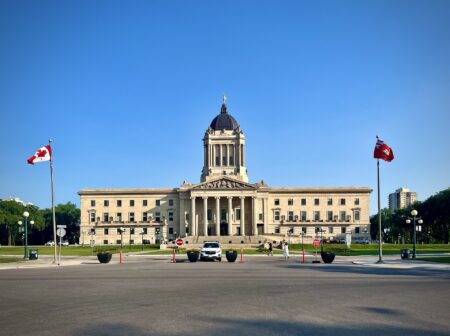
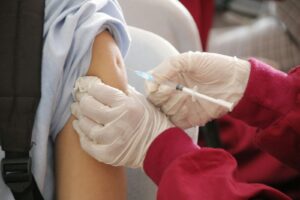
But at this point in the pandemic, maybe we need to step up our game. If we really care about those who have been putting themselves at risk to care for those with COVID-19, maybe we need to find a way to get the vaccinations moving a little faster so that everyone is a little safer. Maybe we need to ensure health care workers aren’t forced to roll up their arms on their own time at the super-site immunization clinics. If we can’t or won’t deliver the vaccines where they work, maybe we need to compensate them for the after-hours effort to get the protection they deserve. Or maybe we need to look in the rear-view mirror to the lessons learned during the H1N1 pandemic of 2009 that delivered the vaccine to 451,000 Manitobans — 37 per cent of the population.
At that time, Manitoba’s mass immunization plan had been developed and tested through staged exercises so that 200,000 vaccinations could be delivered on a weekly basis. Here’s an important point of reference: as of Friday, the two COVID vaccines will have been in the province for a month. As of the last report from the province, only 10,353 doses have been administered.
A 2010 provincial review of Manitoba’s H1N1 response concluded its “plans worked well for the H1N1 flu and the experience will help improve plans for future emergency situations.”
Granted, H1N1 was a different pandemic than COVID-19 and the vaccines deployed in 2009 don’t have the same challenges as the two we are now counting upon to save lives.
However, if there ever is a provincial review of Manitoba’s response to COVID-19, I’m willing to bet the conclusion isn’t going to be near as favourable as the one that studied the deadly H1N1 crisis.
In the meantime, it might be best if the super-site immunization clinics stocked the waiting areas with back copies of Reader’s Digest. Leaving a few copies of the provincial review of Manitoba’s H1N1 response for nurses and doctors to thumb through might hurt more than the jab.
— Paul Samyn, Winnipeg Free Press editor
THE LATEST NUMBERS


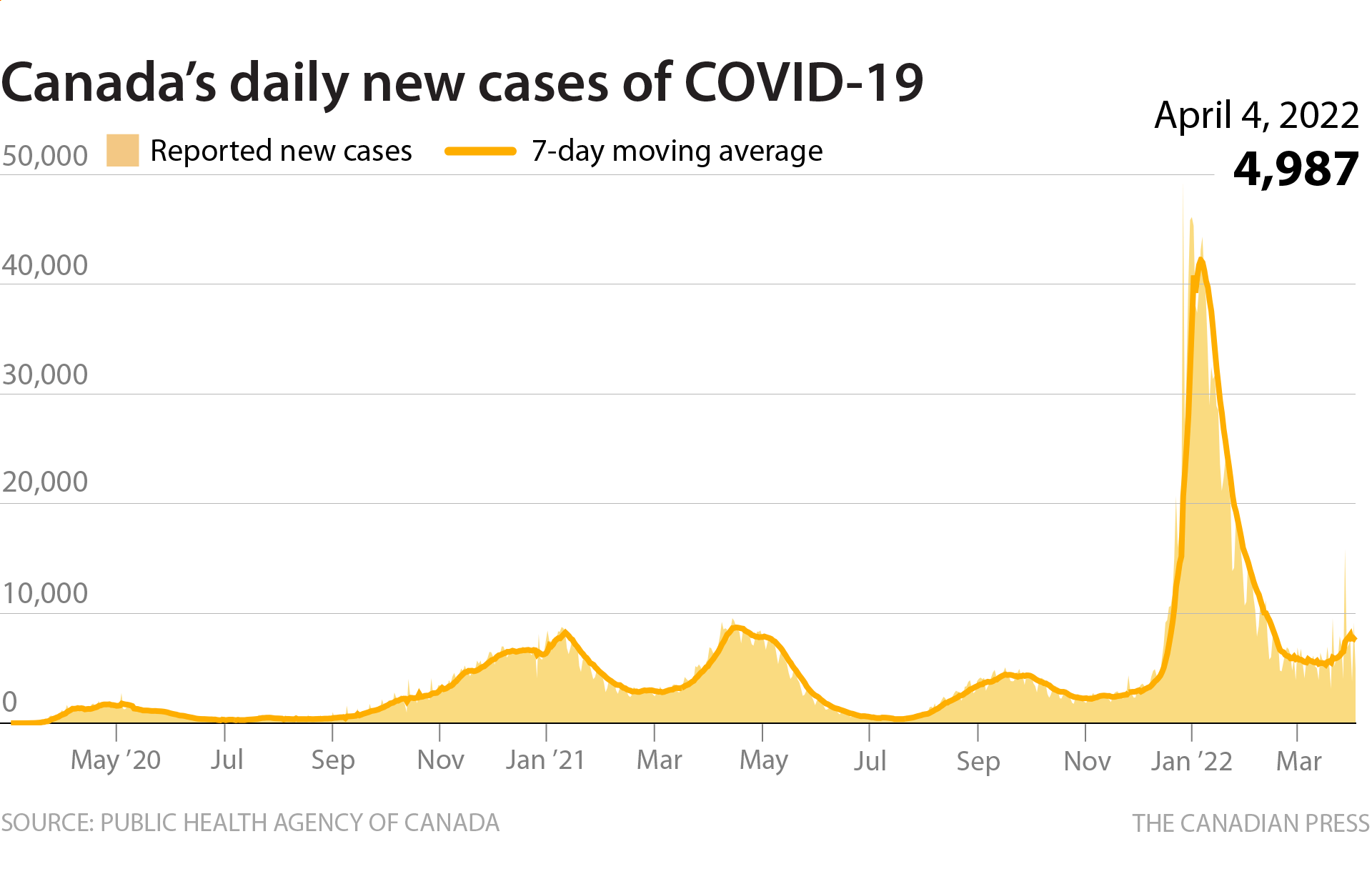
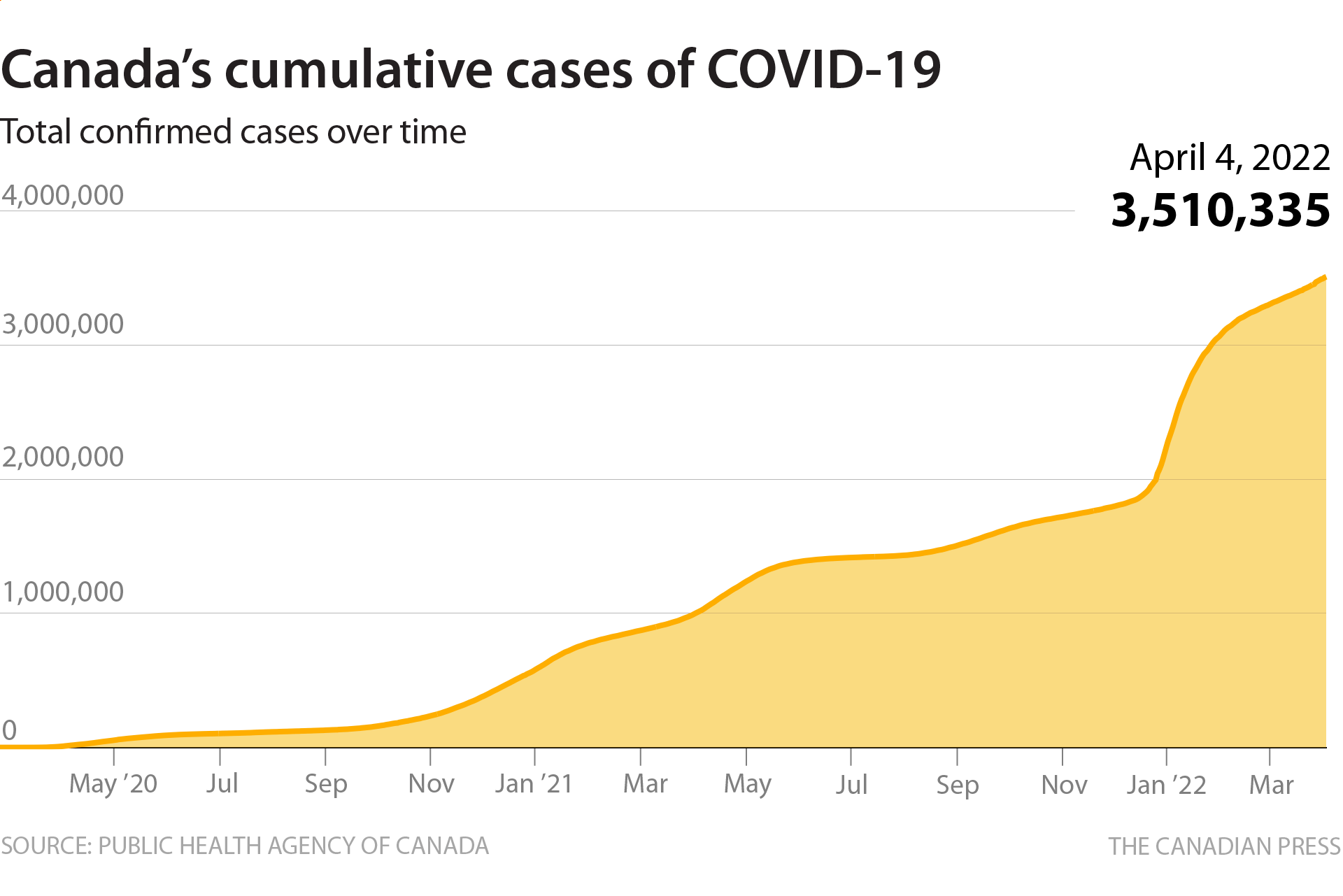
Note: Manitoba and Canada figures may not match due to differences in data sources.
THE LATEST IN MANITOBA
• Provincial health officials announced 92 new cases of COVID-19 and eight more deaths in Manitoba Tuesday. There are 3,100 active cases in the province, with 302 people in hospital, 35 of them in intensive care. Of the new cases, 44 are in the Winnipeg health region; eight in Southern Health; nine in Interlake-Eastern; 22 in Prairie Mountain; and nine in the Northern Health region. The five-day test positivity rate is 10.1 in Manitoba, and 8.4 in Winnipeg.
• The provincial government has handed out 48 more tickets and issued 249 warnings for violations of COVID-19 public health restrictions. The province says 33 of the tickets were for $1,296 and were given to individuals, including 22 who violated gathering restrictions by hosting too many people from outside their households. Eight of the tickets were given to people who didn’t wear a mask indoors in a public place, while six businesses were dinged with $5,000 fines.
• The province is expanding the Manitoba Bridge Grant to help small businesses survive extended critical-level pandemic restrictions. The code-red measures, which have been in place since November, were extended Saturday until Jan. 22. The financial support program’s Dec. 31, 2020 application deadline has been pushed to Jan. 31, and eligibility is being expanded to include more small businesses. Hotels, resorts, lodges and outfitters, travel agencies, janitorial services companies and owner/operators of licensed passenger-transportation businesses that have seen demand for their services impacted by the public-health orders will be eligible to apply for the grants. Beginning today, new applicants who were ordered to close their premises will be entitled to a one-time payment of $10,000, whereas eligible home-based business applicants will receive a maximum payment of $10,000.
• For the latest information on current public health orders, restrictions, essential items and other guidance, visit the provincial government’s website.
THE LATEST ELSEWHERE
• Canada’s largest province declared a new state of emergency Tuesday and is invoking a stay-at-home order as COVID-19 threatens to overwhelm Ontario hospitals. New modelling in Ontario released Tuesday projected soaring cases and deaths if more isn’t done to slow the spread of the virus. Hospitals in many regions are already overwhelmed with half the province’s intensive-care units at capacity or with just one or two open beds at any given time. More than 1,700 people are being treated in Ontario hospitals for COVID-19, including 385 in intensive care and 262 on ventilators. Ontario reported 2,903 new cases of COVID-19 Tuesday, which was the first time in more than a week daily cases fell below 3,000, but another 41 people died since Monday and 138 more were admitted to hospital because of COVID-19.
• Prime Minister Justin Trudeau announced Canada has secured another 20 million doses of the Pfizer-BioNTech vaccine for the virus that causes COVID-19. Along with doses of Moderna’s vaccine, this means Canada has enough confirmed shipments to vaccinate every Canadian who wants it by the fall. The shipping schedule currently has three million Canadians on track to be vaccinated by the end of March, another 10 million by the end of June and a further 22 million by the end of September.
• Nunavut officials are urging residents to get immunized against COVID-19 as the vaccine starts to roll out across the territory. Chief public health officer, Dr. Michael Patterson, says about 400 people have so far received their first doses of the Moderna vaccine. Premier Joe Savikataaq encouraged residents not to hesitate being inoculated and reassured them that the Moderna product is safe and effective. Patterson said about 60 per cent of Nunavut’s adult population needs to get vaccinated for the territory to have herd immunity.
• Two Canadian nurses who spoke at an anti-lockdown rally in Washington, D.C., on the day of the deadly storming of the Capitol are under investigation by their regulatory body. One of them, who is already suspended from her work in neonatal intensive care, is also facing an investigation by her hospital in London, Ont. In a statement, the College of Nurse of Ontario acknowledged the investigation against Sarah Choujounian and Kristen Nagle. The London Health Science Centre said it had suspended Nagle without pay in November for attending an anti-mask rally in the southwestern Ontario city. Nagle and Choujounian were both speakers at the Jan. 6 rally organized by a group called Global Frontline Nurses, which maintains “fraud is rampant” regarding the COVID-19 crisis inside and outside hospitals.
• Facing a slower-than-hoped coronavirus vaccine rollout, the U.S. federal government abruptly shifted gears Tuesday to speed the delivery of shots to more people. The move came as cases and deaths surged to alarming new highs. Health and Human Services Secretary Alex Azar announced a series of major changes to increase supply of vaccines, extend eligibility to more seniors and provide more locations for people to get shots. Azar said going forward the federal government will base each state’s allocation of vaccines partly on how successful states have been in administering those already provided. Additionally, Washington is urging states to immediately start vaccinating other groups lower down the priority scale, including people age 65 and older and younger people with certain health problems.
QUOTE, UNQUOTE
“We’ve kind of referred to her as the iron lady. She seems to pull through these things.”
— Joy Moore, whose 108-year-old mother, Wilhelmina Klimpke, survived COVID-19

LOCAL NEWS
NATIONAL NEWS
INTERNATIONAL NEWS
COVID-19 BASICS

Follow Canada News Media
Get the day's top Canadian stories and our two daily 60-second news videos wherever you scroll.
X Threads Facebook Instagram LinkedIn TikTok YouTube Pinterest Reddit Substack Flipboard Newsletter RSS