

The latest:
Ontario announced a provincewide “shutdown” to combat a spike in coronavirus cases on Thursday, as federal health officials reported that nearly 15 per cent of Canadian adults have now received at least one dose of a COVID-19 vaccine.
Citing the need for drastic action, Ontario Premier Doug Ford said the change will take effect Saturday and continue for at least four weeks.
The government is asking Ontarians to limit trips outside the home to necessities such as food, medication and other essential services, but stopped short of imposing a stay-at-home order like it did in January.
Retail stores will see limits on capacity while restaurants will be restricted to takeout, delivery and drive-thru service, the premier said.

The government has said schools will also remain open because they are crucial to the mental health of students.
“The decision was not made lightly,” Ford said. “I know the toll these restrictions continue to take on people’s mental health and well-being.”
430 patients with COVID related critical illness now in ICU on a total census of 1,821. 43 new admissions yesterday. This is the new highest number of COVID patients in critical care in this pandemic. <a href=”https://twitter.com/hashtag/onhealth?src=hash&ref_src=twsrc%5Etfw”>#onhealth</a> <a href=”https://twitter.com/hashtag/onpoli?src=hash&ref_src=twsrc%5Etfw”>#onpoli</a> <a href=”https://t.co/DU7tlRQBkM”>pic.twitter.com/DU7tlRQBkM</a>
—@AnthonyDaleOHA
The announcement comes hours after the province’s science advisers said stay-at-home orders are needed to control the third wave driven by more contagious and deadly COVID-19 variants.
The move came a day after Quebec Premier François Legault announced tighter rules in three cities he said are facing a “critical” situation in his own province.
Legault announced on Wednesday that people in Quebec City, Gatineau and Lévis should “remain at home unless they absolutely have to go to work.” The new measures, which begin Thursday evening, will last 10 days. Schools in the three communities will close, Legault said, as will non-essential businesses. The curfew in those areas will move up to 8 p.m. ET.
Montreal is not among the communities affected by the stepped-up restrictions, but the premier didn’t rule out further action.
WATCH | Quebec response to spike in cases:

The Quebec government has implemented an emergency shutdown in three regions, Levis, Gatineau and Quebec City, after a rapid increase in COVID-19 cases over the last week. 2:01
“The third wave is here,” said Legault, who noted during his briefing that hospitalizations are expected to increase in the coming weeks. “I ask you not to gather in homes and please get vaccinated as soon as you can.”
Quebec on Thursday reported 1,271 new cases of COVID-19 and nine additional deaths. Hospitalizations in the province stood at 487, with 119 people in the province’s intensive care units (ICUs), according to a provincial dashboard.
Health officials in Ontario reported 2,557 new cases of COVID-19 on Thursday and 23 additional deaths. According to data released by the province to the public, hospitalizations stood at 1,116, with 433 people listed as being in ICUs.
Figures from Critical Care Services Ontario posted on Twitter by the president of the Ontario Hospital Association Thursday morning put the number of COVID-19 patients in intensive care at 430. (Provincial officials have previously said the data published to the dashboard doesn’t include cases in which patients are no longer testing positive for COVID-19.)
WATCH | Ontario ICUs under pressure:

Critical care specialist Dr. Jamie Spiegelman says Ontario’s intensive care units are under pressure as COVID-19 cases spike. ‘We’re definitely seeing a younger population coming into the ICU,’ he says. 5:45
-From The Canadian Press and CBC News, last updated at 4:15 p.m. ET
What’s happening across Canada

As of 1:10 p.m. ET on Thursday, Canada had reported 985,954 cases of COVID-19, with 49,106 cases considered active. A CBC News tally of deaths stood at 22,991.
Health officials in Nova Scotia reported three new cases of COVID-19 on Thursday. Premier Iain Rankin announced that people aged 70 and older can now book for the Pfizer-BioNTech or Moderna vaccines.
In Newfoundland and Labrador, health officials reported one new travel-related case of COVID-19 on Thursday.

In New Brunswick, health officials reported 10 new COVID-19 cases on Thursday, while Prince Edward Island reported a single new case.
In the Prairie provinces, Manitoba reported 59 new cases of COVID-19 on Thursday and two additional deaths.
In neighbouring Saskatchewan, health officials reported 199 new cases of COVID-19 on Thursday and no additional deaths.
In Alberta, health officials reported 871 new cases of COVID-19 and three additional deaths on Wednesday. Hospitalizations in the province stood at 301, with 63 patients reported to be in intensive care.
WATCH | Alberta doctor says tighter measures needed:

Alberta needs more strict measures to curb a ‘beast’ of a coronavirus variant that is making young people much sicker, says Dr. Darren Markland, an intensive care physician in Edmonton. 6:09
In British Columbia, health officials reported three additional deaths Wednesday and 1,013 daily COVID-19 cases — breaching the 100,000 mark of total cases since the pandemic began. Hospitalizations in the province stood at 304, with 80 in intensive care.
Across the North, there was one new case of COVID-19 reported in a Yukon resident (though the individual was out of the province at the time.) There were no new cases reported in Nunavut or the Northwest Territories.
-From CBC News and The Canadian Press, last updated at 3:35 p.m. ET
What’s happening around the world

As of early Thursday afternoon, more than 129 million cases of COVID-19 had been reported worldwide, according to a coronavirus tracking tool maintained by U.S.-based Johns Hopkins University. The global death toll stood at more than 2.8 million.
The COVAX facility, which is a key part of the effort to get COVID-19 vaccines to lower-income countries, faces a “serious challenge” to meet demand, WHO Director-General Tedros Adhanom Ghebreyesus told a news conference on Thursday.
“Last week, I made an urgent request to countries, with doses of COVID-19 vaccines that have WHO Emergency Use Listing, to share 10 million doses immediately with COVAX,” he said.
“I requested manufacturers to help ensure that the countries that step up can rapidly donate those doses. This challenge has been heard but we’re yet to receive commitments for these doses. I’m still hopeful that some forward looking and enlightened leaders will step up,” he said.
Tedros’s remarks came after Pfizer said its vaccine continues to show efficacy against COVID-19 up to six months later. The drug company and its German partner, BioNTech, announced updated results Thursday from their ongoing late-stage study of more than 44,000 volunteers.
The companies said the vaccine showed efficacy of 91 per cent against symptomatic disease and was even more effective in preventing severe disease. Of 927 confirmed COVID-19 cases detected through March 13, 77 were among people who received the vaccine and 850 were among people who got dummy shots.
There were no serious safety concerns and the vaccine also appeared to work against a variant first detected in South Africa, the companies said.
This week, the companies said the vaccine is safe and strongly protective in kids as young as 12, based on a study of 2,260 U.S. volunteers.
In Africa, Nigeria hopes to receive up to 70 million doses of the Johnson & Johnson vaccine this year through the African Union, its primary health-care chief told Reuters, amid concerns about delayed deliveries of AstraZeneca shots.
Egypt received 854,400 doses of AstraZeneca’s vaccine as part of the global COVAX agreement, the health ministry said.
In Europe, a senior WHO official said Thursday that immunization campaigns against COVID-19 in European nations had been “unacceptably slow” to date and risk prolonging the pandemic.
Dr. Hans Kluge, WHO’s regional director for Europe, said vaccines “present our best way out of this pandemic,” but noted that to date, only 10 per cent of Europe’s population has received one dose and only four per cent have been fully protected with two doses.

“As long as coverage remains low, we need to apply the same public health and social measures as we have in the past, to compensate for delayed schedules,” Kluge said.
In Germany, President Frank-Walter Steinmeier has been vaccinated with the AstraZeneca shot, a signal of confidence in the vaccine after the country restricted its use in people under 60. The presidential office said the 65-year-old Steinmeier received his first shot at a hospital in Berlin on Thursday.
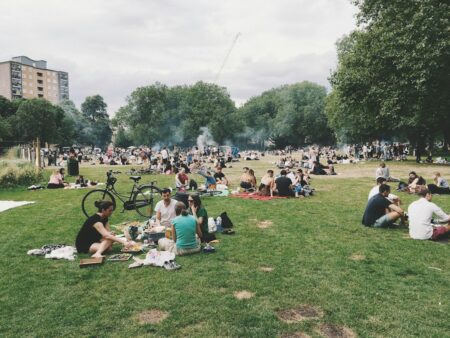
In Belgium, police used tear gas and water cannons on Thursday to disperse thousands of young people who gathered in a Brussels park for a party in defiance of the country’s COVID-19 lockdown, an event that began as an April Fool’s joke on Facebook.
Belgium entered a third COVID-19 lockdown last weekend, with groups limited to four people meeting outside, but this week’s sunny weather had already brought thousands out to the park.
In the Asia-Pacific region, Hong Kong will resume administering the coronavirus vaccine developed by Pfizer and BioNTech on Monday following a 12-day suspension over packaging defects detected in one batch, officials said.

India opened up its coronavirus inoculation program to people above 45 as infections surge, in a move that will delay vaccine exports from the world’s biggest vaccine maker.
South Korea is reviewing whether to approve rapid coronavirus tests that can be taken at home and produce near-immediate results as another tool to fight the pandemic.
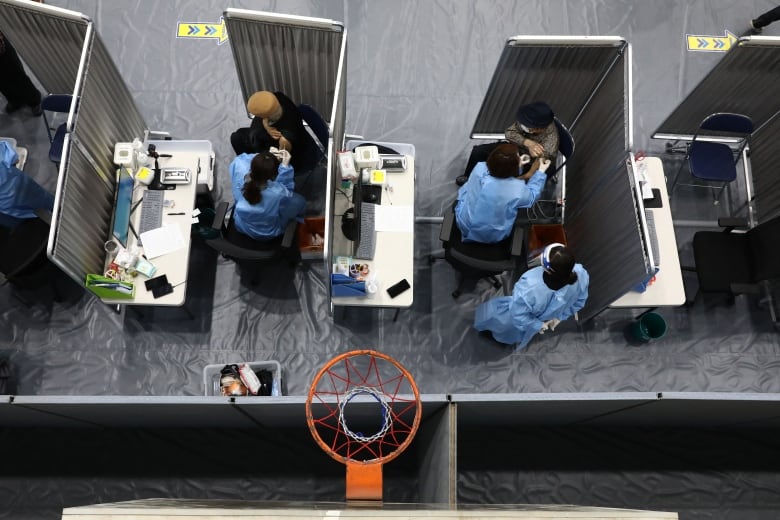
Kwon Jun-wook, director of South Korea’s National Health Institute, said Thursday there’s a need to provide convenient and accessible tests that people can use regularly because the virus is often transmitted by people with no or mild symptoms.
Health officials in China say six more people have become ill with COVID-19 in a southwestern Chinese city on the border with Myanmar. That brings the confirmed total in the Yunnan province city of Ruili over the past two days to 12, including three Myanmar citizens.
In the Middle East, Israel plans to administer the Pfizer vaccine to adolescents upon FDA approval, the health minister said.

In the Americas, Brazil health regulator Anvisa said it approved emergency use of the Johnson & Johnson vaccine while it rejected a request from the government to import doses of Covaxin, citing a lack of safety data and documentation.
Also Thursday, WHO epidemiologist Maria van Kerkhove told a briefing that a number of states in Brazil are in critical condition and hospitals are overwhelmed, with many intensive care units more than 90 per cent full.
Chile closed its borders and tightened an already strict lockdown further Thursday to slow the spread of the coronavirus and stop the influx of contagious new variants as cases climbed past one million despite one of the world’s fastest vaccination rates.
The dramatic move came as hospitals warned they were close to saturation with victims of the disease who are middle-aged and younger as cases have spiked in recent weeks following the Southern Hemisphere summer holidays.

Chile struck early deals with vaccine makers Pfizer and Sinovac and has already vaccinated more than 35 per cent of its population, ranking it third in the world for inoculations per capita, according to a Reuters tally.
But a second wave hit before the country could reach a goal of herd immunity by July.
-From The Associated Press and Reuters, last updated at 4:45 p.m. ET

Follow Canada News Media
Get the day's top Canadian stories and our two daily 60-second news videos wherever you scroll.