

The latest:
Quebec Premier François Legault announced Tuesday that Dr. Luc Boileau will be the province’s interim public health director, after Dr. Horacio Arruda, a key leader in the province’s pandemic response, tendered his resignation Monday.
Boileau, the current head of the province’s health-care research institute, the INESSS, takes on this new role as the Omicron wave continues to overwhelm hospitals across the province, forcing the health-care network to postpone surgeries and other medical services.
Legault thanked Arruda on Tuesday, noting he was in the difficult position of explaining public health decisions and said he’d grown close to him throughout the last 22 months of the pandemic.
“Being in front of the media every day and explaining these decisions is not easy for anyone,” Legault said. “I think there are advantages to having someone new after all those months, to take on those responsibilities.”

Legault said Arruda would take a couple weeks to rest before returning to help out in another role that has yet to be decided on.
Arruda wrote in a letter dated Monday that his office has offered public health opinions and recommendations amid uncertainty and based on the best available knowledge and various expert opinions. But he acknowledged there was a “certain erosion” in public support for health measures.
“In such a context, I consider it appropriate to offer you the possibility of replacing me before the end of my term of office,” the letter said.

Adults in Quebec who refuse to be vaccinated for non-medical reasons and don’t have a medical exemption will face a new health care ‘contribution,’ says Quebec Premier François Legault. 0:53
Legault also said Tuesday that adults who refuse to get their first dose of a COVID-19 vaccine in the coming weeks will have to pay a “health care contribution,” noting that unvaccinated people are currently straining the health care system.
Legault did not say when the tax would take effect or how much it would cost, but he did say he wanted it to be significant enough to act as incentive to get vaccinated — more than $50 or $100, he said. Legault said details would be revealed “in the coming weeks.”
In Quebec on Tuesday, the health ministry reported 62 additional deaths, bringing the death toll in the province to 12,028. Health officials also reported 2,742 hospitalizations — a pandemic high for the province — with 255 people in intensive care.
Lab-based testing in the province is no longer widely accessible, but the province on Tuesday reported an additional 8,710 lab-confirmed cases.
In recent weeks, the province has brought back several stringent health measures, including a curfew for a second year in a row, amid rising infections and hospitalizations.
-From The Canadian Press, with a file from CBC News, last updated at 2:10 p.m. ET
What’s happening across Canada

Canada’s largest school board, the Toronto District School Board, says there are new safety measures in place for children’s return to the classroom, but the TDSB is still struggling with how to count COVID-19 case numbers and let parents know. (Frédéric Pepin/CBC/Radio-Canada) 9:26
With lab-based testing capacity deeply strained and increasingly restricted, experts say true case counts are likely far higher than reported. Hospitalization data at the regional level is also evolving, with several provinces saying they will report figures that separate the number of people in hospital because of COVID-19 from those in hospital for another medical issue who also test positive for COVID-19.
For more information on what is happening in your community — including details on outbreaks, testing capacity and local restrictions — click through to the regional coverage below.
You can also read more from the Public Health Agency of Canada, which provides a detailed look at every region — including seven-day average test positivity rates — in its daily epidemiological updates.
In Central Canada, Ontario students will return to classrooms next Monday after pivoting to remote learning after the holiday break — a sudden shift that sparked heated debate.
Students are set to be back in classrooms “as planned and previously announced,” Ivana Yelic, Premier Doug Ford’s director of media relations, said in an emailed statement.
The province’s health-care system has been under increasing strain in recent weeks due to the highly transmissible Omicron variant, which has also caused staffing shortages across several sectors.

While absenteeism is the big strain on Ontario’s health-care system right now, redeploying personnel and a new program for international volunteers should help fill in any gaps, says Ontario Health CEO Matthew Anderson. 2:51
Ontario on Tuesday reported 21 additional deaths and a total of 3,220 hospitalizations. More detail about intensive care units is expected later, Health Minister Christine Elliott said on Twitter.
Of the people in ICU with <a href=”https://twitter.com/hashtag/COVID19?src=hash&ref_src=twsrc%5Etfw”>#COVID19</a>, 83% were admitted to the ICU for <a href=”https://twitter.com/hashtag/COVID?src=hash&ref_src=twsrc%5Etfw”>#COVID</a>-19 and 17% were admitted for other reasons but have tested positive for COVID-19.<br><br>Some ICU-related data is currently unavailable. This data will be available shortly.
—@celliottability
The update came as the province reported 7,951 additional lab-confirmed cases.
Across the North, officials in Nunavut on Tuesday reported five additional cases of COVID-19, including one presumptive case.
Health officials in Yukon, meanwhile, said on Monday that people who develop symptoms of COVID-19 and aren’t eligible for a lab-based PCR test can pick up a rapid test at a drive-thru location in Whitehorse.
In Atlantic Canada, Nova Scotia on Monday reported three additional COVID-19 deaths and 59 hospitalizations, with two people in intensive care units. The update came as the province — which recently shifted temporarily to remote education — reported an additional 816 lab-confirmed COVID-19 cases.
In Newfoundland and Labrador, health officials on Monday reported two additional deaths and four COVID-19 hospitalizations. Health officials reported a total of 1,135 cases on Monday — but that figure included 680 positives that had been sent for testing at out-of-province labs because of capacity issues. More results from out of province are expected in the days ahead, the health minister said.
In Prince Edward Island, five people were in hospital being treated for COVID-19, health officials reported Monday, including one in intensive care. The province also reported 320 additional cases since the last update on Saturday.

Meanwhile, hospitalizations in New Brunswick hit a pandemic high on Tuesday, with 88 people in hospital, including 14 in ICU. The province, which reported 220 lab-confirmed cases on Monday, has expanded booster dose eligibility to adults over the age of 18.
In the Prairie provinces, Manitoba health officials on Monday said there were 378 people hospitalized due to COVID-19, with 39 in intensive care units. The province, which reported 19 additional deaths over a period of three days, saw 7,083 lab-confirmed cases since the last update.
In Saskatchewan, the total hospitalizations stood at 119 on Monday, health officials reported, with 11 in ICU. There were no additional deaths reported on Monday, as the province recorded 1,069 additional lab-confirmed COVID-19 cases.
Alberta, on Tuesday reported 635 COVID-19 hospitalizations, with 72 people in ICU. The update came as the province reported six additional deaths since its update last week, and 17,577 additional lab-confirmed cases.
In British Columbia, provincial health officials on Monday reported that COVID-19 hospitalizations stood at 431, with 95 people in intensive care units. The update came as the province’s health ministry reported seven additional deaths since last week’s update, along with 6,966 more lab-confirmed cases.
-From CBC News and The Canadian Press, last updated at 3:00 p.m. ET
What’s happening around the world

As of early Tuesday afternoon, roughly 311.1 million cases of COVID-19 had been reported worldwide, according to Johns Hopkins University’s coronavirus tracker. The reported global death toll stood at more than 5.4 million.
In Europe, British Prime Minister Boris Johnson faced a wave of public and political outrage on Tuesday over allegations that he and his staff flouted coronavirus lockdown rules by holding a garden party in 2020 while Britons were barred by law from mingling outside the home.
Meanwhile, in Italy, the latest wave of COVID-19 cases is increasing pressure on hospitals and jeopardizing the treatment of some 11 million cancer patients, a medical association said on Tuesday.
“The postponement of surgery may lead to the development of tumours in more advanced stages, with less chance of a cure,” the Federation of Oncologists, Cardiologists and Haematologists (FOCE) said in an appeal published on its website. The organization said Italy’s hospitals suffered from a lack of investment and inadequate staffing levels.
In the Americas, the U.S. Centers for Disease Control and Prevention (CDC) and State Department advised against travel to neighbouring Canada, and the Washington Post reported that it is considering recommending better masks.
In Mexico, President Andres Manuel Lopez Obrador announced he had contracted COVID-19 for a second time, saying he had a mild case and would keep working in isolation until he had recovered.
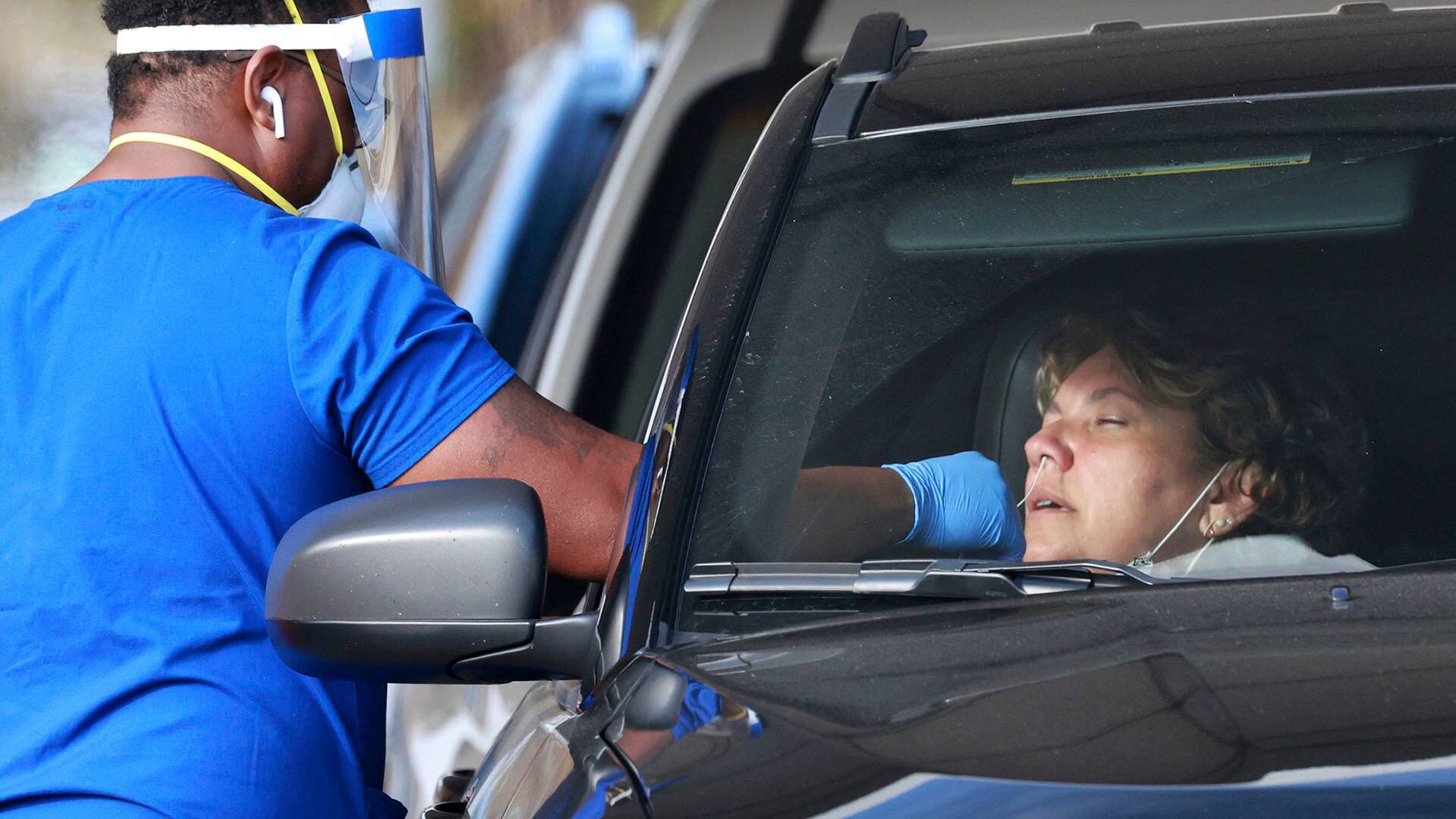
Dr. Peter Juni, scientific director of Ontario’s COVID-19 Science Advisory Table, talks to Andrew Chang about how long immunity may last after acquiring the Omicron variant and its impact on if people can transmit the virus. 2:21
In the Asia-Pacific region, a third Chinese city has locked down its residents because of a COVID-19 outbreak, raising the number confined to their homes in China to about 20 million people. The lockdown of Anyang, home to 5.5 million people, was announced late Monday after two cases of the Omicron variant were reported. Residents are not allowed to go out and stores have been ordered shut except those selling necessities.
Another 13 million people have been locked down in Xi’an for nearly three weeks, and 1.1 million more in Yuzhou for more than a week. It wasn’t clear how long the lockdown of Anyang would last, as it was announced as a measure to facilitate mass testing of residents, which is standard procedure in China’s strategy of identifying and isolating infected people as quickly as possible.
The lockdowns are the broadest since the shutting down of Wuhan and most of the rest of Hubei province in early 2020 at the start of the pandemic. Since then, China’s approach has evolved into one of targeting smaller areas hit by outbreaks for lockdowns.
The approach of the Winter Olympics, which open Feb. 4 in Beijing, and the emergence of Omicron have brought back citywide lockdowns in a bid to snuff out outbreaks and prevent them from spreading to other parts of China.
In Africa, health officials in South Africa on Monday reported 2,409 additional cases and 77 deaths.
In the Middle East, Israeli Foreign Minister Yair Lapid said he had tested positive but was in good health.
-From Reuters, The Associated Press and CBC News, last updated at 1:45 p.m. ET

Follow Canada News Media
Get the day's top Canadian stories and our two daily 60-second news videos wherever you scroll.
X Threads Facebook Instagram LinkedIn TikTok YouTube Pinterest Reddit Substack Flipboard Newsletter RSS