

The latest:
Ontario moved into the next step of its reopening plan on Wednesday, just hours before health officials reported the lowest single-day case number the province has seen since Sept. 10.
The province on Wednesday reported 14 additional deaths and 184 new cases of COVID-19.
The update came a day after the province’s top doctor said he’d prefer to wait a full 21 days before rolling back restrictions further.
“The two- to three-week cycle is very important to maintain so that we do the opening of Ontario in a stepwise manner, always going forward and not having to take a step back,” Dr. Kieran Moore said on Tuesday.
Moore made the comments at his first pandemic briefing since he officially took over as Ontario’s chief medical officer of health.
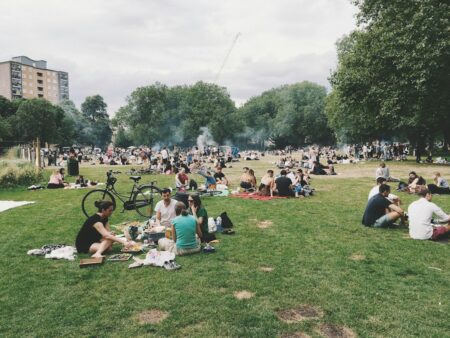
Ontario has surpassed COVID-19 vaccination targets for entering the second step of its reopening plan, which will allow more outdoor activities and more indoor services like haircuts to resume on Wednesday.
More than 77 per cent of people had at least one vaccine dose as of Tuesday morning and 37 per cent were fully vaccinated.
The province set 21 days between each step of its economic reopening to observe public health trends and allow vaccines to take full effect. It moved up the second step of the plan by a few days based on vaccination rates and other positive COVID-19 trends.
Ontario has also passed the goal set for entering the third step of the reopening plan, which would further expand capacity for indoor gatherings.
But Moore, like his predecessor Dr. David Williams, maintained on Tuesday that vaccination isn’t the only metric. He advised proceeding with caution with the more infectious delta variant spreading.
Waterloo Region not moving to Step 2
People with one vaccine dose are less protected against that variant and it’s contributed to local infection spikes in Grey Bruce and Waterloo Region. Waterloo won’t reopen with the rest of the province on Wednesday as it manages the rise in infections.
Moore said he’s watching the variant’s impact locally and internationally and that reopening must be done cautiously to avoid losing progress made in the fight against the virus so far.
“It is a difficult adversary. It’s aggressive. It wants to spread rapidly,” he said of the variant.
“We need to be prudent and we need that 21 days to be able to understand the impact of opening on our communities.”
-From The Canadian Press and CBC News last updated at 10:20 a.m. ET
What’s happening across Canada

Masks are our ‘last line of defence’ against the highly transmissible COVID-19 delta variant as Canada opens up, says respirologist Dr. Samir Gupta. (Ben Nelms/CBC) 1:39
As of 12:15 p.m. ET, Canada had reported 1,415,060 confirmed cases of COVID-19, with 7,260 considered active. A CBC News tally of deaths stood at 26,291. More than 37.1 million COVID-19 vaccine doses have been administered so far across the country, according to CBC’s vaccine tracker.
In Quebec on Wednesday, health officials reported 126 new cases of COVID-19 and three additional deaths.
In Atlantic Canada, New Brunswick on Wednesday reported three new cases of COVID-19.
Newfoundland and Labrador, meanwhile, reported one new case of COVID-19 on Wednesday, a day before the province begins welcoming more travellers from Canada.
The updates in New Brunswick and Newfoundland and Labrador came as Nova Scotia moved into Phase 3 of its reopening plan, which includes further opening to travellers seeking to come into the province from outside Atlantic Canada.
Across the North, there were no new cases reported in Nunavut on Wednesday. Health officials in the Northwest Territories and Yukon had not reported figures for the day.
However, Yukon’s Chief Medical Officer of Health Dr. Brendan Hanley said in a statement Tuesday that the territory is in a “new phase of the pandemic” as officials reported another 10 COVID-19 cases and one additional death.
In the Prairie provinces, Manitoba on Tuesday reported no new deaths and 61 new cases of COVID-19. Saskatchewan, meanwhile, reported two additional deaths and 52 additional cases of COVID-19.

While many Canadians are celebrating a return to normal, for many the pain is still too raw. Laina Tuckanow lost her mother and grandmother to COVID-19 and says for her, life will never be normal again. 2:44
In Alberta, health officials reported four deaths and 61 new cases of COVID-19 on Tuesday.
“Across the board, our numbers are moving in the right direction,” Dr. Deena Hinshaw said Tuesday, ahead of a broader reopening later this week.
“Cases, hospitalizations, ICU admissions and our positivity rate are the lowest they’ve been since last summer, early fall.”
British Columbia will move to Step 3 of its pandemic reopening plan on Thursday, lifting the provincial mask mandate and government state of emergency declaration. The news came as B.C. reported 29 new cases and no new deaths on Tuesday.
-From CBC News and The Canadian Press, last updated at 12:15 p.m. ET
What’s happening around the world

As of early Wednesday morning, more than 181.8 million cases of COVID-19 had been reported around the world, according to data published by Johns Hopkins University in the United States. The reported global death toll stood at more than 3.9 million.
In the Asia-Pacific region, Australian officials extended lockdown and physical distancing measures to more of the country on Wednesday, with four major cities already under a hard lockdown in a race to contain an outbreak of the highly contagious delta coronavirus variant.
Bangladesh is deploying army troops from Thursday to enforce a strict lockdown amid a record spike in coronavirus cases driven by the delta variant first detected in India, the government said on Wednesday.
“No one will be allowed go out except in case of an emergency during this period,” the government said in a statement, warning that army troops alongside law-enforcement agencies would be deployed to enforce the lockdown.
In the Americas, Dr. Rochelle Walensky, director of the Centers for Disease Control and Prevention, says the CDC is leaving it up to local officials to set guidelines for mask-wearing as the highly contagious delta variant of the coronavirus surges in areas with low vaccination rates.
Walensky said Wednesday on NBC’s Today show that “we’ve always said that local policymakers need to make policies for their local environment,” but added CDC guidelines broadly indicate those who are vaccinated don’t need to wear masks.
Health officials in Los Angeles County are recommending people wear masks indoors in public places regardless of their vaccination status. Separately, the World Health Organization has reiterated its longstanding recommendation that everyone wear masks to lessen the spread of the coronavirus.
In Africa, the Tunisian government on Tuesday extended the hours of night curfew in an effort to stop the rapid spread of COVID-19, as the North African country reached a daily record of cases since the start of the pandemic last year.
Zimbabwe’s President Emmerson Mnangagwa on Tuesday imposed a dusk to dawn curfew, banned inter-city travel and cut business hours with immediate effect in response to increasing coronavirus infections.

In Europe, Greece will allow people fully vaccinated against the coronavirus inside restaurants without masks, the government said, as part of measures to boost inoculation rates.
Russia will fail to vaccinate 60 per cent of its population by the autumn as planned due to sluggish demand for the shots, the Kremlin said, after the country recorded its highest number of daily deaths from the virus.
In the Middle East, Oman said it was expanding its vaccination drive to anyone over the age of 18, as it accelerates what has been the slowest rollout in the Gulf.
-From Reuters, last updated at 8:10 a.m. ET

Follow Canada News Media
Get the day's top Canadian stories and our two daily 60-second news videos wherever you scroll.
X Threads Facebook Instagram LinkedIn TikTok YouTube Pinterest Reddit Substack Flipboard Newsletter RSS