

The latest:
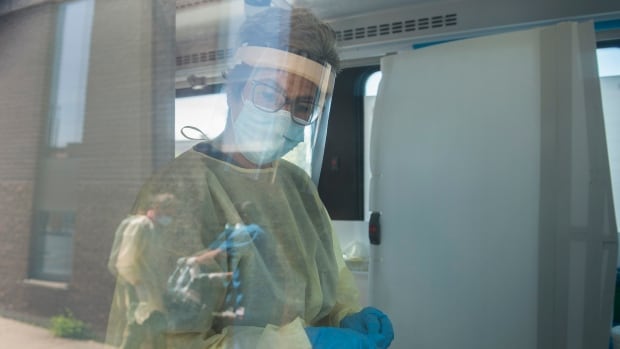
Health officials in Saskatchewan are opening up coronavirus testing, saying as of Monday anyone who works outside the home will be able to get a COVID-19 test — even if they aren’t showing symptoms.
“We have fairly low COVID activity and that’s where we want to keep it,” Chief Medical Health Officer Dr. Saqib Shahab said Wednesday as officials released an extensive list of who can be tested, including people being admitted to health-care facilities, people who are immunocompromised and the homeless.
Saskatchewan has reported seven deaths to date. The province has reported 620 coronavirus cases, with 494 of those cases considered recovered, with most new cases in the north and far north regions.
The shift in Saskatchewan comes as hard-hit Ontario and Quebec continue to face questions about ramping up testing.
Ontario Premier Doug Ford said Wednesday he’s shocked by the recent drop in COVID-19 tests in the province. The province reported Wednesday that the number of tests completed in the previous day was just 7,382. On Tuesday, it was 5,813 and it was 9,155 on Monday — well below the approximately 17,000 per day that had been completed in the days before that.
Health Minister Christine Elliott said criteria for members of the public have been expanded so that anyone with symptoms can get tested, and the province is now looking to focus on retirement homes and other group living settings.
“We’re looking at solutions for that and how we can get teams in there quickly and do that testing to make sure that we really understand what’s happening in the community,” she said.
Dr. Theresa Tam, Canada’s chief public health officer, recommended on Wednesday that people in areas with COVID-19 wear masks when they are in spaces that don’t allow for proper physical distancing. The mask guidance is meant to supplement existing public health measures like handwashing, cough etiquette and physical distancing, Tam said, as she explained the shift.
“Use of non-medical masks or face coverings is recommended as an added layer of protection when physical distancing is difficult to maintain,” said <a href=”https://twitter.com/CPHO_Canada?ref_src=twsrc%5Etfw”>@CPHO_Canada</a> Dr. Theresa Tam. <br><br>Read more: <a href=”https://t.co/uLesDCpdln”>https://t.co/uLesDCpdln</a> <a href=”https://t.co/BHchoxWELd”>pic.twitter.com/BHchoxWELd</a>
—@PnPCBC
As of 7:30 a.m. ET on Thursday, there were 80,142 confirmed and presumptive coronavirus cases in Canada, with 40,789 of those cases considered recovered or resolved. A CBC News tally of deaths based on provincial coronavirus reports, regional health data and CBC’s reporting stood at 6,136.
The novel virus, SARS-CoV-2, first emerged in China in late 2019 and has since spread around the world, causing devastating outbreaks, straining health systems and causing massive economic disruptions. The virus causes an illness called COVID-19, and while researchers are searching, to date there are no proven treatments or vaccines.
Here’s what’s happening in provinces and territories
British Columbia’s premier says he wants the federal government to take the lead on the issue of paid sick leaveso workers can stay home if they are sick — but he added that the province is “prepared to go it alone if need be.” Read more about what’s happening in B.C.
Health officials in Alberta reported three more coronavirus outbreaks in Calgary, as the city waits to see when restrictions on restaurants and salons there will be lifted. Premier Jason Kenney said that Calgary and Brooks, which are on a delayed reopening schedule because of higher case numbers, will learn Friday about when they can take the next step in reopening. Read more about what’s happening in Alberta.
WATCH | How health care could change with virtual triage, paramedics:
Saskatchewan reported another death in a COVID-19-positive patient on Wednesday, bringing the province’s death toll to seven. Health officials announced 21 more cases, with all but one in the far north and north regions. Read more about what’s happening in Saskatchewan.
Manitoba will allow outdoor gatherings of up to 50 people and indoor gatherings of up to 25 as of Friday, health officials said, though physical distancing measures will need to be in place. Read more about what’s happening in Manitoba.
Ontario reported 390 new cases of coronavirus on Wednesday, bringing the provincial total to 23,774, with 18,190 considered recovered or resolved. The province has seen 2,067 deaths, according to CBC’s case tracker. Read more about what’s happening in Ontario.
Critical care physician <a href=”https://twitter.com/drmwarner?ref_src=twsrc%5Etfw”>@drmwarner</a> is raising concerns about Ontario’s COVID-19 contact tracing.<br><br>”I’ve spoken to family members of patients who have COVID in my ICU two or three days after they have been diagnosed, and they are asking me when public health is going to call them” <a href=”https://t.co/Zplnwk5Hxq”>pic.twitter.com/Zplnwk5Hxq</a>
—@PnPCBC
Quebec is loosening up some of its public health guidance, saying as of Friday people will be able to gather outside in groups of up to 10 people, provided they are following physical distancing guidelines. Read more about what’s happening in Quebec.
New Brunswick’s premier said he is considering easing up the province’s ban on temporary foreign workers as employers face a labour shortage. “If we don’t fill the roster in the next few days … then there will be the decisions made to ensure we meet the needs,” Blaine Higgs said. Read more about what’s happening in N.B.
WATCH | Travel bubbles considered for regions with low COVID-19 cases:
In Nova Scotia, Dalhousie University announced it is moving most classes online for the fall. The university president said programs like medicine, dentistry and agriculture will still happen offline, but with public health measures in place. Read more about what’s happening in Nova Scotia.
Prince Edward Island’s premier said Wednesday that seasonal residents will be allowed to start coming into the province beginning June 1. They will have to provide a written plan of how they will self-isolate for 14 days, Dennis King said. Read more about what’s happening on P.E.I.
Newfoundland and Labrador reported no new cases of COVID-19 on Tuesday, extending its stretch with no new cases to 13 days. Read more about what’s happening in N.L, where the leader of the Newfoundland and Labrador English School District is saying it’s too early to say whether students will be back in their classrooms in September.
WATCH | Epidemiologist offers advice on prominent issues related to COVID-19:
Yukon is extending a program that offers relief for businesses that have seen revenue drop by 30 per cent or more during the coronavirus pandemic. Read more about what’s happening across the North.
Here’s what’s happening around the world
WATCH | Bolsonaro minimizes COVID-19 surge in Brazil, promotes hydroxychloroquine: