
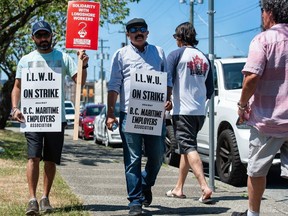
A crippling strike at the Port of Vancouver has been delayed, but could restart as soon as Saturday, leaving the government with few options to end a strike that is costing the economy billions every week.
“The ILWU Canada Longshore Caucus does not believe the recommendations had the ability to protect our jobs now or into the future.”
The deal was set to provide workers with a substantial wage increase as well as a signing bonus.
The union respected the decision, but issued a new strike notice with workers set to hit the picket lines on Saturday.
On social media, federal Minister of Labour Seamus O’Regan called the strike “illegal,” and in a joint statement with Transport Minister Omar Alghabra, said they were considering all options to bring the strike to a close.
“We have been patient. We have respected the collective bargaining process. But we need our ports operating,” the two ministers said.
The leadership of the International Longshore and Warehouse Union rejected the offer before it had been put to a full vote of membership. Under the Canada Labour Code, O’Regan can force leadership to put the offer to a full vote.
Conservative leader Pierre Poilievre called on the government to step up and resolve the strike quickly. He said the Liberals’ efforts so far had failed.
“Justin Trudeau must do his job and end this strike immediately because of the massive cost to workers, consumers and businesses. We’re calling on him to deliver a plan to end this strike within the next 24 hours.”
Greater Vancouver Board of Trade president and CEO, Bridgitte Anderson, said the government should be moving quickly to end the strike.
The Board of Trade has estimated the strike’s current cost at $10 billion with backlogs that could take months to clear. A report in 2023 from the World Bank and S&P Global Market Intelligence found the Port of Vancouver second from the bottom in an international ranking of efficiency with ships occasionally waiting weeks to be offloaded.
Anderson said the strike is further damaging their reputation and she fears trade will simply move elsewhere.
“This creates more uncertainty and more instability, not only for our economy but also for our international reputation as a stable trading partner,” she said. “This is a competitive global environment and we had already heard before the strike, certainly during the strike, that cargo shipments were being diverted to other ports.”
“It is 43 per cent of all the cargo that is shipped into Canada. If you take the next five largest ports and combine them, they’re about the same size as a Port of Vancouver,” he said.
Johnson said larger companies can and will look to larger ports, but small businesses waiting on important deliveries often don’t have that luxury. He said the longer this goes on the more problems it will create, including driving up prices as products wait to be unloaded.
“I don’t think the government wants something else that is putting price pressure on consumer products and driving up inflation.”
With additional reporting from Catherine Lévesque

Follow Canada News Media
Get the day's top Canadian stories and our two daily 60-second news videos wherever you scroll.