





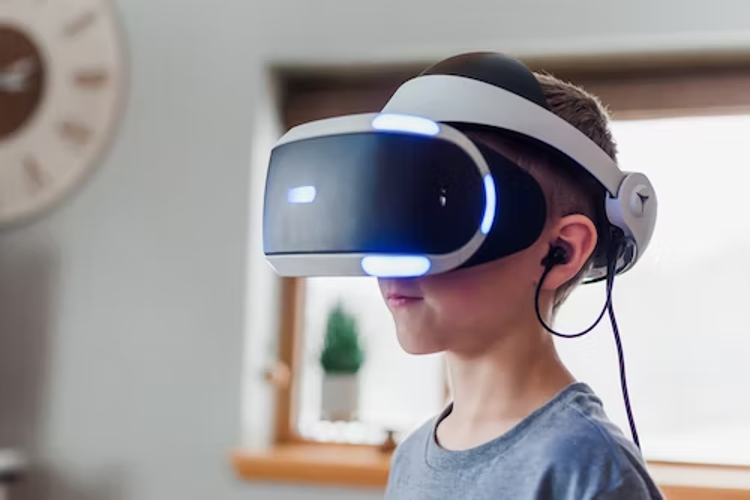
New technologies have widened the scope of games as they have expanded fast in popularity. For instance, the Xbox Series X|S and PlayStation 5’s enhanced visual and processing capabilities have propelled the ability to play poker online to new and exciting heights.
The most significant change is that we can now play with people from all over the world, as opposed to only those nearby. This makes connecting with other players and groups with similar interests much easier, and due to the ever-increasing popularity of smartphones, there is already an insatiable appetite for online gaming.
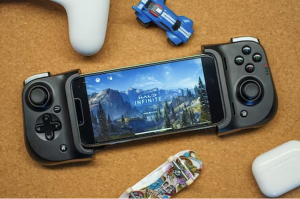
The emergence of mobile phones and tablets has seen a considerable shift away from consoles such as the Xbox and PlayStation. Virtual reality, augmented reality, and a host of other emerging technologies are also increasingly influencing gaming trends. These developments will facilitate the creation of ever more creative games for mobile and web platforms, with developers no longer restricted by the limitations of sequential storytelling.
VR and AR
Virtual (VR) and augmented reality (AR) are rapidly developing technologies with the potential to significantly improve the player’s gaming experience. New technologies will permit more immersive content, enhanced video quality, and harness more computing power. In addition, they will provide greater freedom for remote employees, and substantial benefits for all users. Consequently, these technologies will soon become standard tools for games developers.
Both AR and VR give developers and designers almost limitless options. The technology behind augmented reality and virtual reality generates realistic pictures, sounds, and emotions that imitate a person’s actual physical presence in a game. In contrast to existing gaming technologies, VR enables gamers to experience an altogether new universe. They can influence the virtual world as they wander about in it and move their limbs. This is the beginning of a revolution in the gaming business.
As these technologies continue to improve, the next stage in game creation will be the fusion of the actual and virtual worlds. Augmented reality is a virtual reality in which the actual world and the virtual world of the game blend together, enhancing the game’s social components. VR and AR will be increasingly integrated into mobile games in the future, posing new challenges and opportunities for developers.

Artificial Intelligence
Creating online communities around popular video games has the potential to bring people together even further. With the advent of artificial intelligence (AI), the games industry will see a fundamental change. AI technologies will propel the player’s gaming experience to new heights, making it more immersive and interactive than ever before.
AI will influence the game industry in several ways. In the near future, augmented reality games will become even more immersive with the help of artificial intelligence, helping to accelerate the development of new gaming technologies and experiences.
NFTs on the blockchain and cryptocurrency
Blockchain NFTs and cryptocurrency are two emerging technologies that have the potential to transform game design. These technologies enable developers to abstract the whole crypto network interface in terms that are accessible to end-users. NFTs can be used to tokenize real estate properties, for instance. By utilizing blockchain technology, the origin of NFTs may be determined.
Bitcoin, the first open-source fungible currency, was created in 2009. A Bitcoin can also be purchased through a typical broker. The primary advantage of NFTs is their endless ownership opportunities and transferability. NFTs may be sold on an exchange or auction site, unlike the traditional gaming system. This enables gamers to profit from their gaming victories. Due to fraud and market swings, however, this type of gaming should be approached with caution.
Blockchain NFTs and cryptocurrency are growing increasingly popular in the gaming sector. They can be used to build an in-game economy and enable players to value in-game items. Many players are drawn to these platforms by their openness and compatibility.
It can be challenging to create NFT video games as so few NFT game production firms have the requisite technology and expertise. For this reason, game producers must collaborate closely with game developers that can help them create NFT-based games. This will promote the expansion of the NFT infrastructure and new technological breakthroughs. Blockchain in game creation, NFTs, and cryptocurrencies can also be leveraged to offer a unique gaming experience.
Cloud-based video games
Cloud-based gaming is a rapidly expanding trend with significant potential. This sort of service enables customers with a suitable internet connection to play video games in the cloud. It also lets gamers play several games on the same computer or console without the need for multiple physical copies of each game.
Cloud-based gaming, also known as gaming-as-a-service (GAAS), enables players to stream games from a cloud server without downloading them to their computer. The technology has been in existence for a number of years, and continues to grow in influence, with some of the big hitters in the gaming and technology world creating multiple solutions for speedier deployment and wider reach.
For example, Microsoft, Google, and Facebook are all already creating their own cloud-based gaming platforms as the technology continues to gather traction. Currently, millions of players inhabit these virtual worlds, which give them the ability to accommodate a wide variety of activities, from visiting pop-up stores to watching music events. These platforms will enable game designers to build more engaging and adaptable user experiences in the future.
Follow Canada News Media
Get the day's top Canadian stories and our two daily 60-second news videos wherever you scroll.
X Threads Facebook Instagram LinkedIn TikTok YouTube Pinterest Reddit Substack Flipboard Newsletter RSS