

Monkey Pox was differentiated from smallpox in the 1970s, first identified and diagnosed by medical professionals in 1958. This viral disease produces pox-like lesions on the skin and is often mistaken for smallpox. The majority of cases are transmitted from animal to human by direct contact, therefore MPXV is highly contagious, person to person contact often through bodily droplets. Fever, nausea and fatigue will develop over a 4-7 day incubation period. Rash-like lesions may develop on the face, trunk and extremities of the body, ulcer-like, crusting over the wounds, yet can clear up in about 14-21 days. Scaring of the body may happen.
Western Blotting Tests are used to identify this disease. How can you stay safe? Well since Monkey Pox is found within African Monkeys and other animals from infected regions of Africa and Asia, simply staying away from the animals, and infected people seems the appropriate method prescribed. The fatality rate for Monkey Pox virus in Africa ranges from 1%-17|% of affected adults, and 15020% of affected children. Rodent-infested regions will ultimately allow the spread of this disease.
The 2022 Monkey Pox endemic is different from previous past events. It has been found to be a different species of poxvirus, morphing genetically as viruses do. The distribution, super spreading action of Monkey Pox happens in several ways…
1. Animals infected are transported around the world(Monkeys for Research.)
2. Individuals that travel to infected regions(Africa etc) are infected and then travel abroad.
Today’s endemic has spread to nations such as Australia, Canada, Belgium, the USA, Israel, Sweden, Denmark, Switzerland and The Canary Islands to name a few.
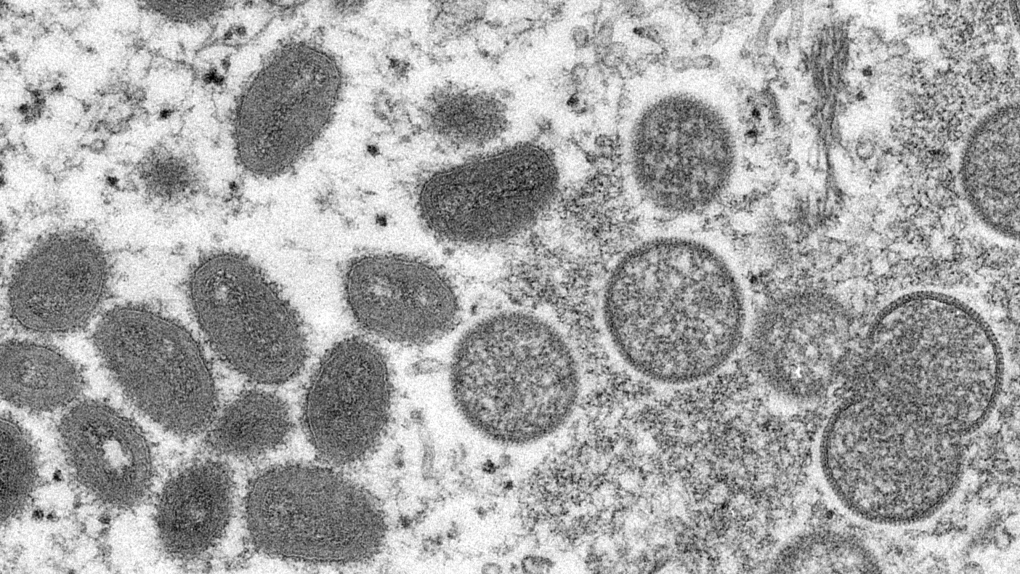
MPXV is oval-shaped viruses constructed in a similar way as many other viruses, such as smallpox, cowpox, buffalopox, camelpox, rabbitpox and others. Infections occur when a person’s or animal’s skin is broken due to a cut, scratch or other trauma. Bodily droplets/fluids come into contact with an infected subject.. Only 8-15% of infections occurred through human-to-human transmission among close family members.
The diagnosis of this disease is a major concern for all health and safety agencies. Since most medical centers or laboratories outside of Africa do not have the reagents needed to test for this virus, our medical professionals will certainly only recognize the possibility of its existence only once a subject is showing its symptoms. Remember the symptoms are very similar to other diseases.
Symptoms:
1. !st off fever, chills, muscle aches, sweating, fatigue, and exhaustion. (yeah like so many other diseases).
2. 2-4 days in a rash may develop with papules and pustules most often on the face and chest, spreading over time.
3. Some Poxing will attack its skin host and leave scarring.
Medical professionals need to vaccinate a subject within a two-week period. of exposure. The Jynneos vaccine is often used in adults at high risk. Cidofovir is a drug used for patients with severe life-threatening symptoms. Statistics have shown that due to the similarities of Monkey Pox with Small Pox, the vaccination for Small Pox has an 85% chance of protecting us from Monkey Pox, its cousin. If someone has been infected by Monkey Pox and has recovered, it is suggested that after 14 days they receive a smallpox vaccination. Researchers throughout the world are working on the development of antiviral medication with the hope that both Small Pox and Monkey Pox can be eventually eradicated.
Steven Kaszab
Bradford, Ontario
Information Sources: Health Canada, United Nations Medical Center(W.H.O.), University of Toronto, Scientific America Medical Periodicals Archives.
Follow Canada News Media
Get the day's top Canadian stories and our two daily 60-second news videos wherever you scroll.
X Threads Facebook Instagram LinkedIn TikTok YouTube Pinterest Reddit Substack Flipboard Newsletter RSS