



First, no more Donald Trump. Unless referring to a legal indictment or the “previous administration,” I will take the vow of silence on the former president and urge you to avert your gaze. No more obsession with Trump tweets or threats or rallies or announcements. It is not news, and covering such behavior would only distract from real news, of which there will be plenty.
Second, we have learned a certain segment of the electorate will buy into anything — or at least, that’s what these voters tell us. The temptation to “understand” people who are divorced from reality and who reject basic premises of democracy (e.g., truth, the sanctity of elections) should be quashed. What is critical is to distinguish those voters who are susceptible to reason and persuasion. We are “fortunate” in a peculiar way insofar as we can readily determine who is in the unreachable group and who is in the persuadable group: Ask them who won the presidential election.
Third, the public’s focus will be able to stray beyond the federal government and national politics. There are governors — both Democrat and Republican (e.g., Mike DeWine of Ohio, Charlie Baker of Massachusetts, Larry Hogan of Maryland, Gary R. Herbert of Utah) — who have acquitted themselves well during the coronavirus pandemic and subsequent recession. State legislatures generally are less partisan and more productive than Congress. And a slew of competent and courageous mayors have stepped into the leadership void following the killing of George Floyd and the subsequent nationwide protests. If we want to restore faith in government and to improve government services, more attention should be paid to politics and governance outside Washington. As a corollary, the incoming Biden administration might consider whether federalism provides an avenue around Republican obstructionism. The “laboratories of democracy” may never be more essential to our recovery.
Fourth, despite conventional wisdom that the “center has disappeared,” the centrist, bipartisan group of lawmakers who offered up a compromise spending plan provides a model for other initiatives. Certainly, there can be agreement with a Democratic president on reforms that recalibrate power between the executive and legislative branches. Republicans and Democrats likely can be persuaded to develop a reform package that includes excising “emergency” statutes, putting a sunset clause on memorandums authorizing use of force, enforcement and penalties for Hatch Act violations, transparency in presidential pardons, expedited enforcement of congressional subpoenas and rigorous rules to eliminate conflicts of interest and nepotism.
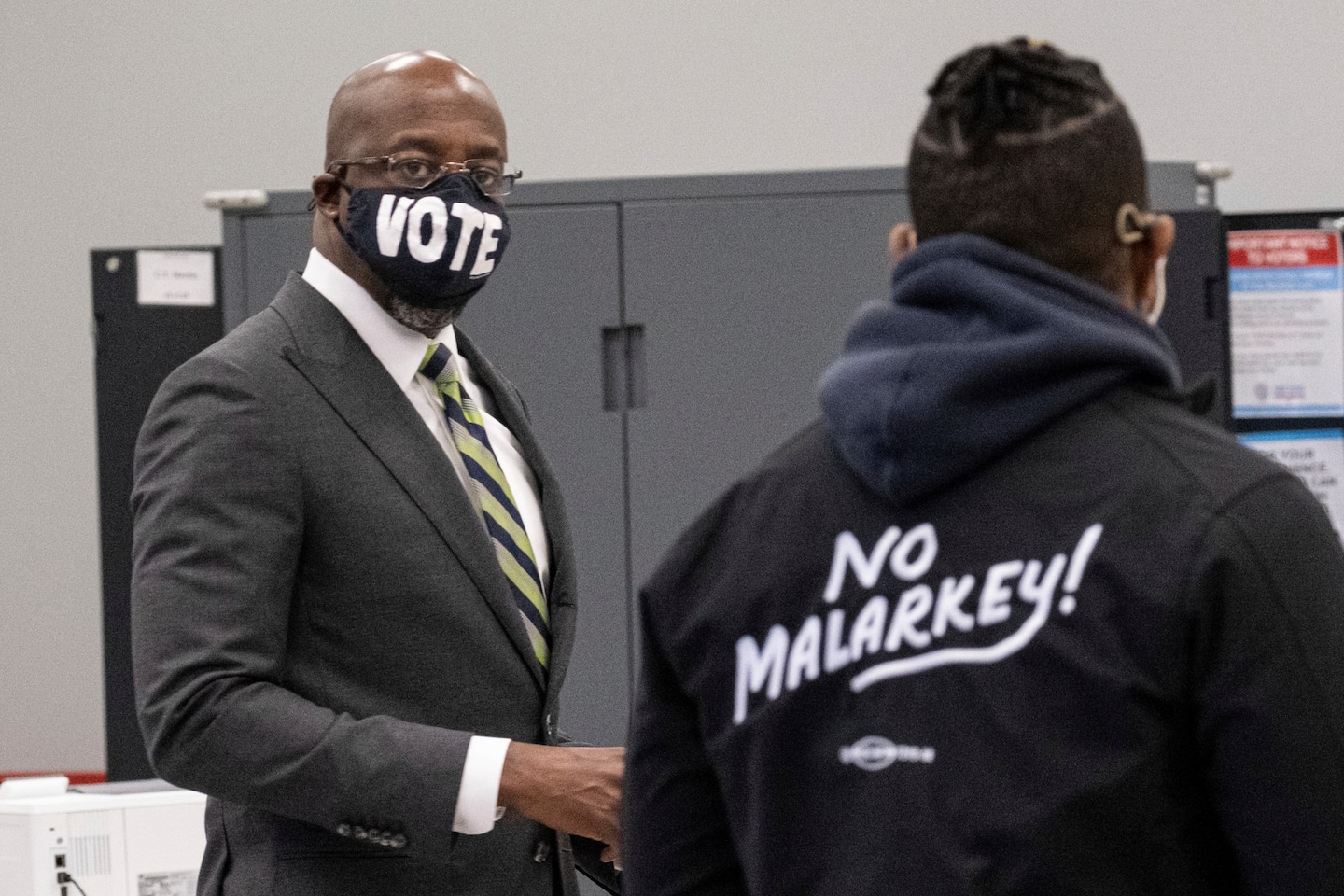
Finally, every effort should be made to repair the Voting Rights Act and eliminate barriers to voting. Expectations for such legislation should be tempered, given Republican senators’ assiduous objections to the enfranchisement of new voters. Sen. Rand Paul (R-Ky.) declared on Thursday, “I’m very, very concerned that if you solicit votes from typically nonvoters, that you will affect and change the outcome.” (At least he and his fellow Republicans are open about denying new voters — primarily nonwhite — the right to vote.) But in any case, voting-rights activist Stacey Abrams has showed in Georgia that despite efforts to skew the electorate, a concentrated voter outreach program that is well-funded can produce results over time. Aside from decrying Republicans’ aversion to democracy, Democrats should devote themselves to replicating Abrams’s success in other states. Perhaps Paul’s fear of Democratic control can become a reality.
Let’s move on from Trump-induced outrage and angst. Ignore Trump, herald federalism, encourage bipartisan reform and focus on voter outreach and engagement. Those will help make our politics more functional while improving our collective mental health.
Read more: