
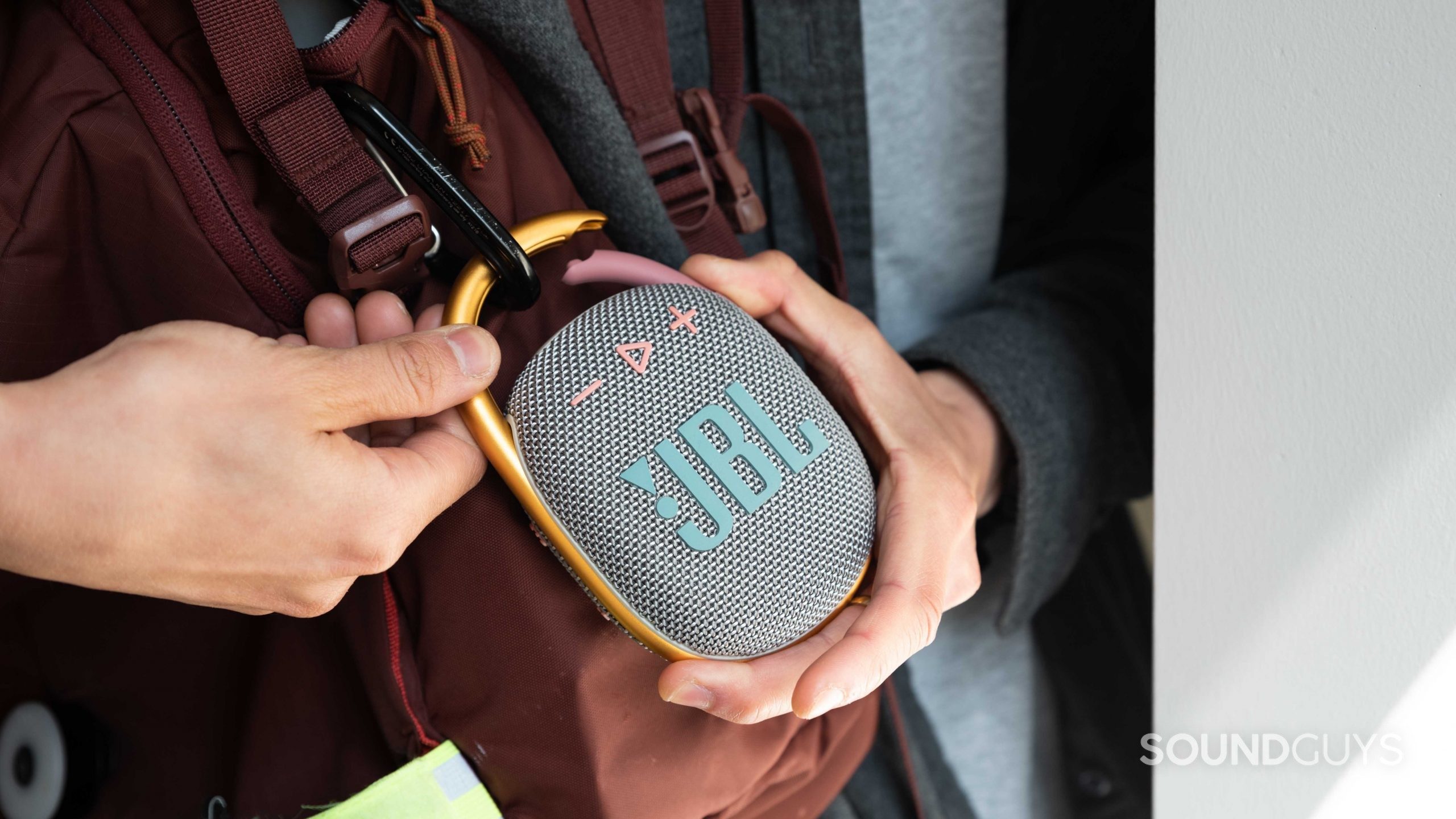
JBL makes some of the best Bluetooth speakers capable of enduring the rough outdoors. However, none are as portable as the JBL Clip series. As well as making it among some of the best shower speakers, the JBL Clip 4 is desirable for its small form factor and rugged design. Given it has been nearly three years since the JBL Clip 4 came to market, we fully expect the company to bring its updated JBL Clip 5 to fruition soon.
However, the company cannot rest on its laurels, and the JBL will need to bring some improvements to the JBL Clip 5, especially if it gets hit with a price increase. Here are all the upgrades I want to see with JBL’s latest portable Clip series Bluetooth speaker.
An AUX input
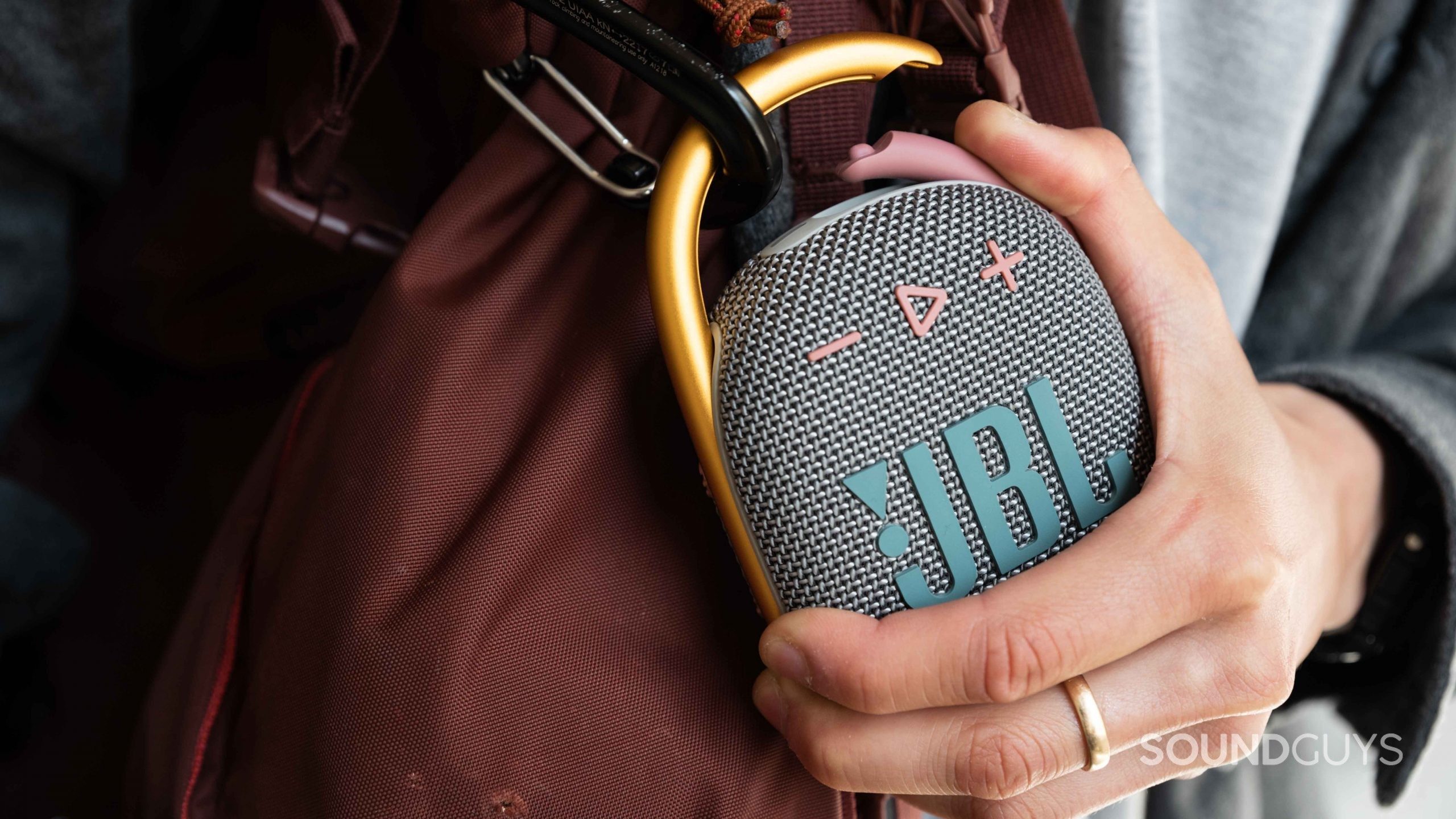
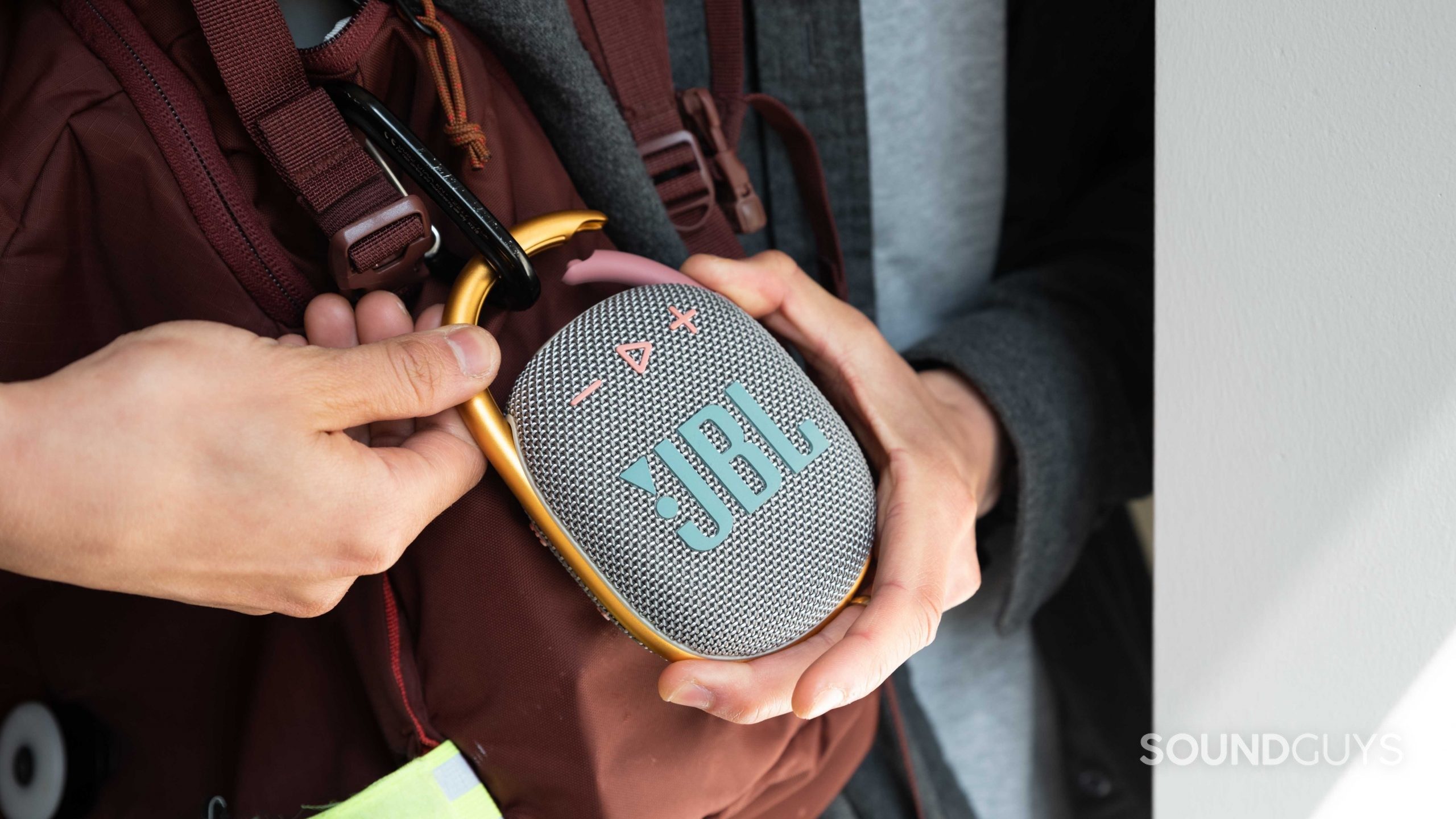
The carabiner is much beefier than before.
To the frustration of many, the JBL Clip 4 did away with the AUX input that was so proudly boasted by the JBL Clip 3. This is a shame, considering the company is one of the leading players regarding portable Bluetooth speakers. It is also worth noting that everyday users benefit from listening to music over wires.
Firstly, wired connectivity provides a reliable alternative when Bluetooth stability wavers. This is useful when walking through congested radio environments, like train stations, airports, or busy streets. Secondly, connecting via an AUX port provides lossless-quality audio playback without a hitch. Users can stream CD-quality audio without random dropouts, distortion, or fluctuating data transfer speeds. Finally, not all music players have taken to Bluetooth in the same way that smartphones have. For example, if you still listen to music via an old portable Walkman, you cannot connect. With this in mind, I hope JBL will re-embrace the AUX input when it brings out the JBL Clip 5.
Fast charging
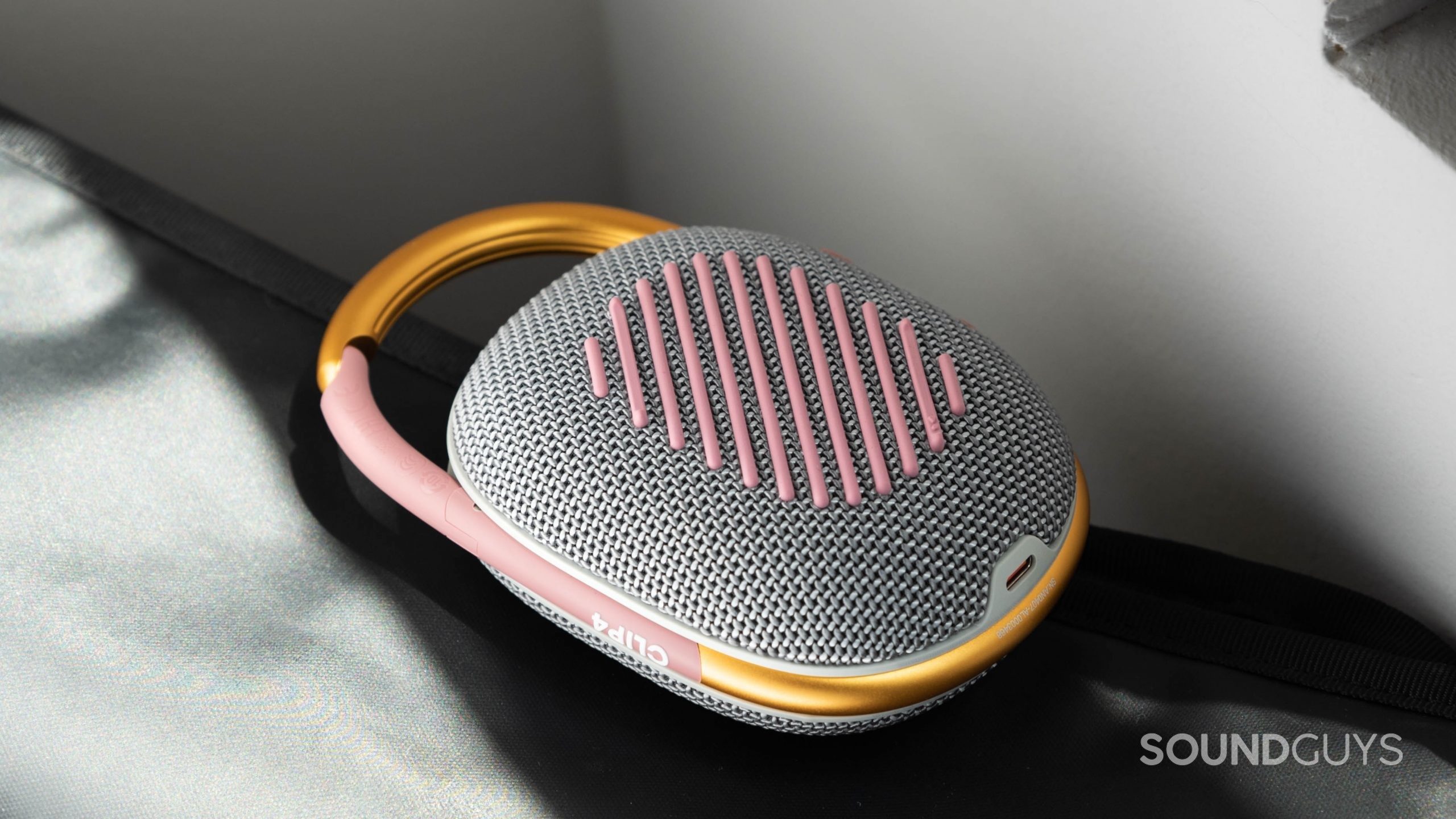
These rubber lines keep the speaker from sliding off a table.
It is no secret that the JBL Clip series speakers are built with portability in mind. While the JBL Clip 4 powers up via USB-C, there is no support for fast charging. In fact, none of the company’s flagship speakers are able to juice up faster than for two and a half hours. Although this appears to be an industry standard, the JBL Clip 4 takes three hours to recharge, while the Charge 5 takes four hours to boost.
Like some of the best wireless earbuds, I would like to see the JBL Clip 5 include fast charging. Not only would this separate the next-gen speaker from its predecessors, but it would also set a new industry trend in motion. If the company wants to take things further, it could consider wireless charging. This would make the JBL Clip 5 incredibly attractive for those living fast-paced lifestyles. It would also fit into the narrative of a truly portable speaker, giving users the ability to boost the Clip 5 on the fly.
PartyBoost and stereo mode compatibility
Lily Katz / SoundGuys
Two of the most exciting features hosted by JBL’s Bluetooth speakers are PartyBoost and stereo mode. The former allows simultaneous music streaming via multiple different JBL speakers. The latter splits the audio signal into left and right channels and plays them separately through two of the same generation JBL speakers. Unfortunately, the company’s Clip series speakers have been excluded from both features since their debut.
PartyBoost is excellent for, well, parties. It allows users to connect several JBL speakers to create a multi-room audio system. Additionally, it can increase the overall volume in a specific area, such as a BBQ in the garden. However, stereo mode is more fiddly. While this feature works great for watching films, it requires a user to own two of the exact same JBL speakers. Aside from being generally unlikely, it also gives less reason to keep hold of your older JBL speaker. This is equally bad for your wallet as it is for the environment. I want the company to fix its ways and include backward-compatible support for PartyBoost and stereo mode with the JBL Clip 5.
A longer list of Bluetooth codecs
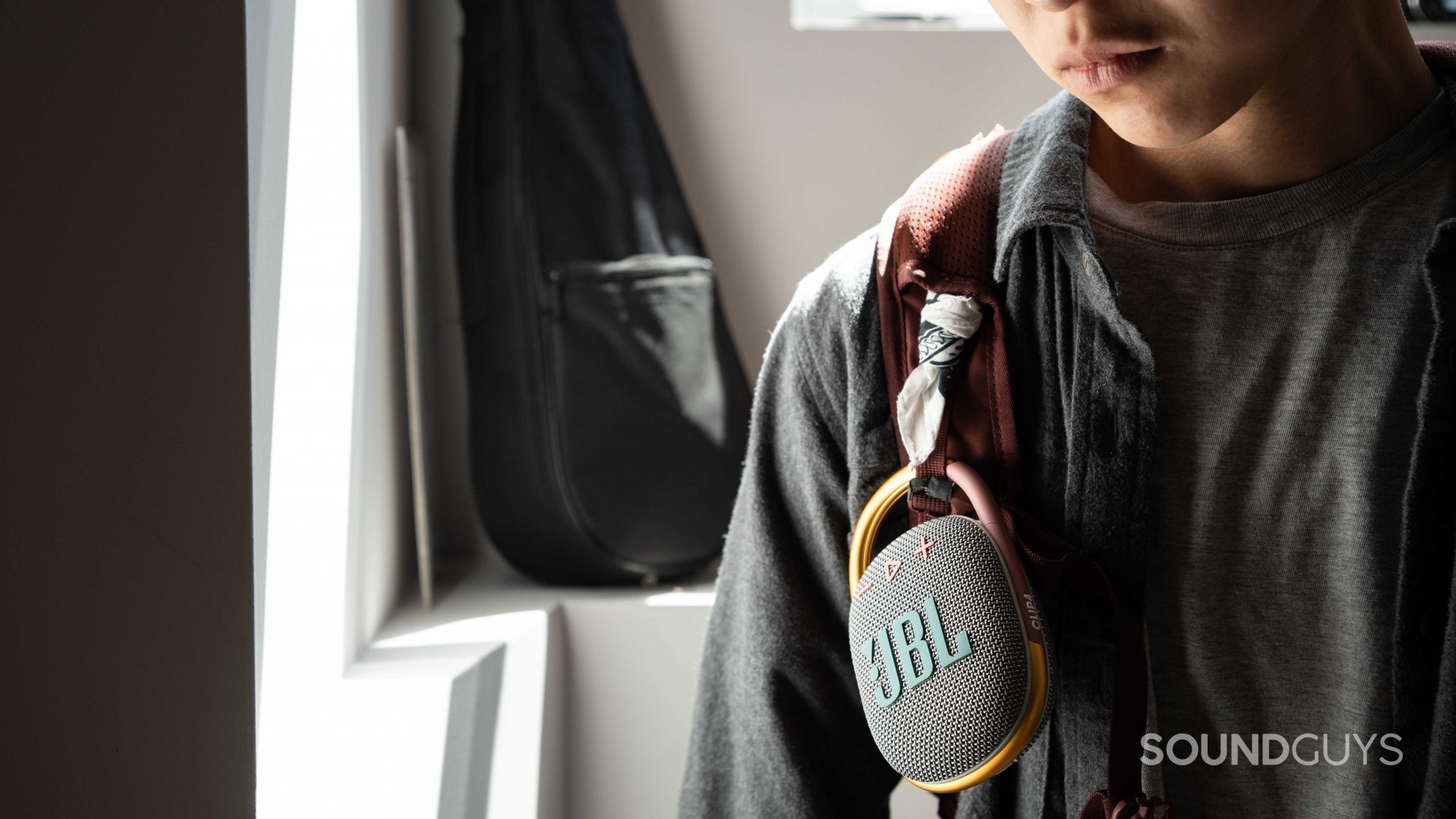
The JBL Clip 4 comes in six colorways: grey, squad, black, pink, red, and blue.
For the most part, casual music fans likely consider Bluetooth codecs an elusive and irrelevant aspect of wireless listening. Digging around in your smartphone and headphone companion app for Bluetooth settings may be one step too many. Nevertheless, Bluetooth technology has come a long way over the last few years. There is little excuse nowadays for only supporting SBC. This is especially true for the JBL Clip 4, given it axed the AUX input of its predecessor.
While fine as a backstop, the SBC Bluetooth codec supports up to 320kbps, 16-bit/ 44.1kHz audio sampling. In addition to reproducing lossy audio, the application of this codec often results in audio-visual lag when watching movies. Those using iPhones are much better served with AAC, which provides up to 250kbps, 24-bit/ 44.1kHz audio sampling. The JBL Clip 5 would also benefit from hosting Qualcomm’s aptX codec, offering users up to 352kbps, 16-bit/ 48kHz audio. While still considered a lossy connection, it is much better at reproducing higher-quality music.
A built-in microphone
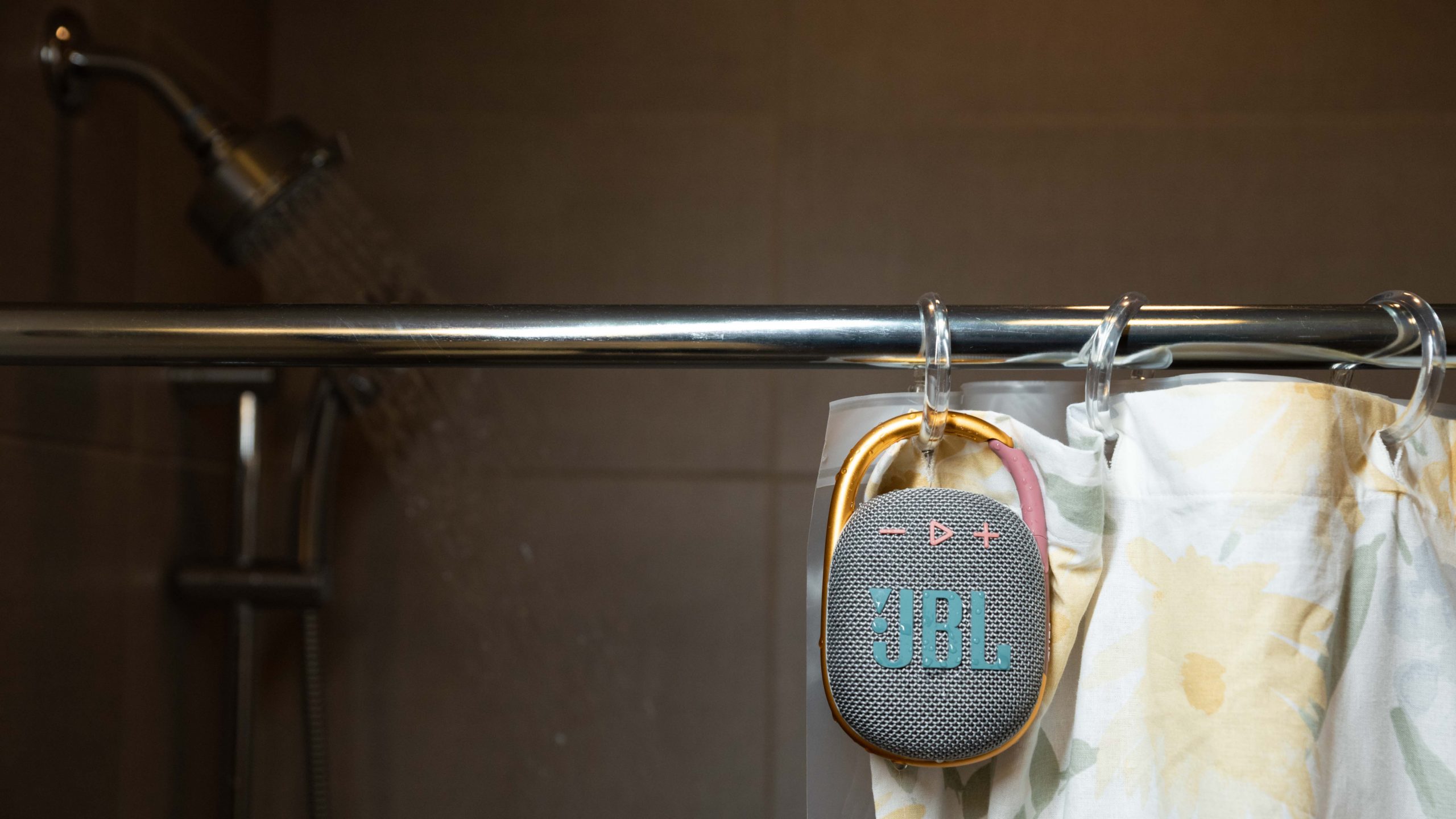
Just like the AUX port, the JBL Clip 4 ditched the integrated microphone of its predecessor. While the microphone quality on the Clip 3 was not exactly high definition, it was a neat feature for answering hands-free calls. Its usefulness was especially acute in the shower, even just to let the person on the other end know you would call them back later.
With the competition among Bluetooth speakers being so fierce, JBL should re-adopt a built-in microphone for the Clip 5. In addition to making it stand out among other portable speakers, it would afford users a more convenient listening experience. Rather than having to fumble around for your phone when someone calls, you could use voice assistant features to pause the music and take the call. Without it, the company may lose out to others on the market, such as the Bose SoundLink Flex, Sony SRS-XB100, or Sonos Move.
Will there be a JBL Clip 5?
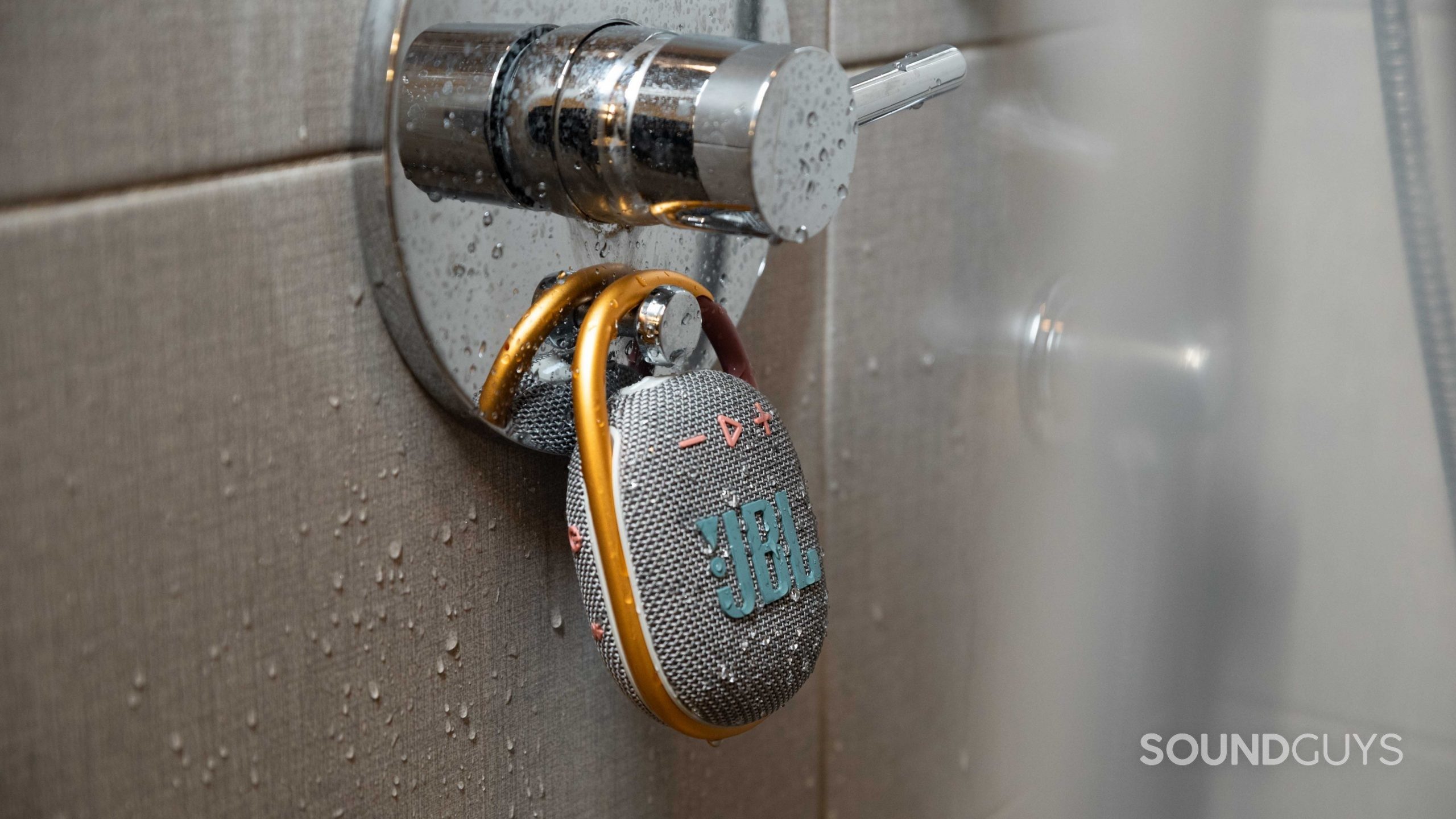
The IP67 rating protects the speaker from dust, dirt, and water.
JBL is no stranger when it comes to releasing some of the best Bluetooth speakers under $100. Given the company’s prevalence and success in this field, there is no reason for JBL not to follow up with a next-gen upgrade.
As yet, there has been no official announcement from JBL. However, we could very well see the JBL Clip 5 released in late 2023 or early 2024. JBL launched its most recent portable Bluetooth speaker, the JBL Flip 6, on December 6, 2021. While it hosts many of the same qualities as the company’s latest Clip series speaker, it is more than twice the size and twice as heavy as the JBL Clip 4. Users may gain an extra two hours of battery life, but they must also sacrifice the addition of a handy built-in carabiner. Regardless, the competition among portable Bluetooth speakers has never been so fierce. JBL will need to up its game with the JBL Clip 5 if it wants to remain the leader of the pack.
- JBL Clip 2 — January 5, 2016
- JBL Clip 3 — January 2018
- JBL Clip 4 — December 6, 2020
Based on JBL’s previous releases, it is fairly easy to ascertain when to expect the updated Clip speaker to come to market. As you can see in the list above, both the JBL Clip 2 and Clip 3 were released at the start of the year. The Clip 4 bucked this trend only slightly, launching in the final month of 2020. Based on these time frames, it is clear that JBL favors winter releases for its Clip series speakers.
JBL also appears to prefer sticking to an almost exact two-year release window before refreshing its speakers. For example, the JBL Clip 3 came to shelves nigh on two years after the JBL Clip 2. The company’s most recent Clip 4 launched even sooner, coming to market one year and 11 months after its predecessor. If we use the time elapsed between the JBL Clip 3 and Clip 4 to surmise when the company’s next-gen speaker will land, we could see the JBL Clip 5 come to market before the year is out. However, with the anticipated release of the JBL Flip 7 and Xtreme 4 also in the mix, we may have to wait until at least early 2024.
Should you wait for the JBL Clip 5?
Lily Katz / SoundGuys
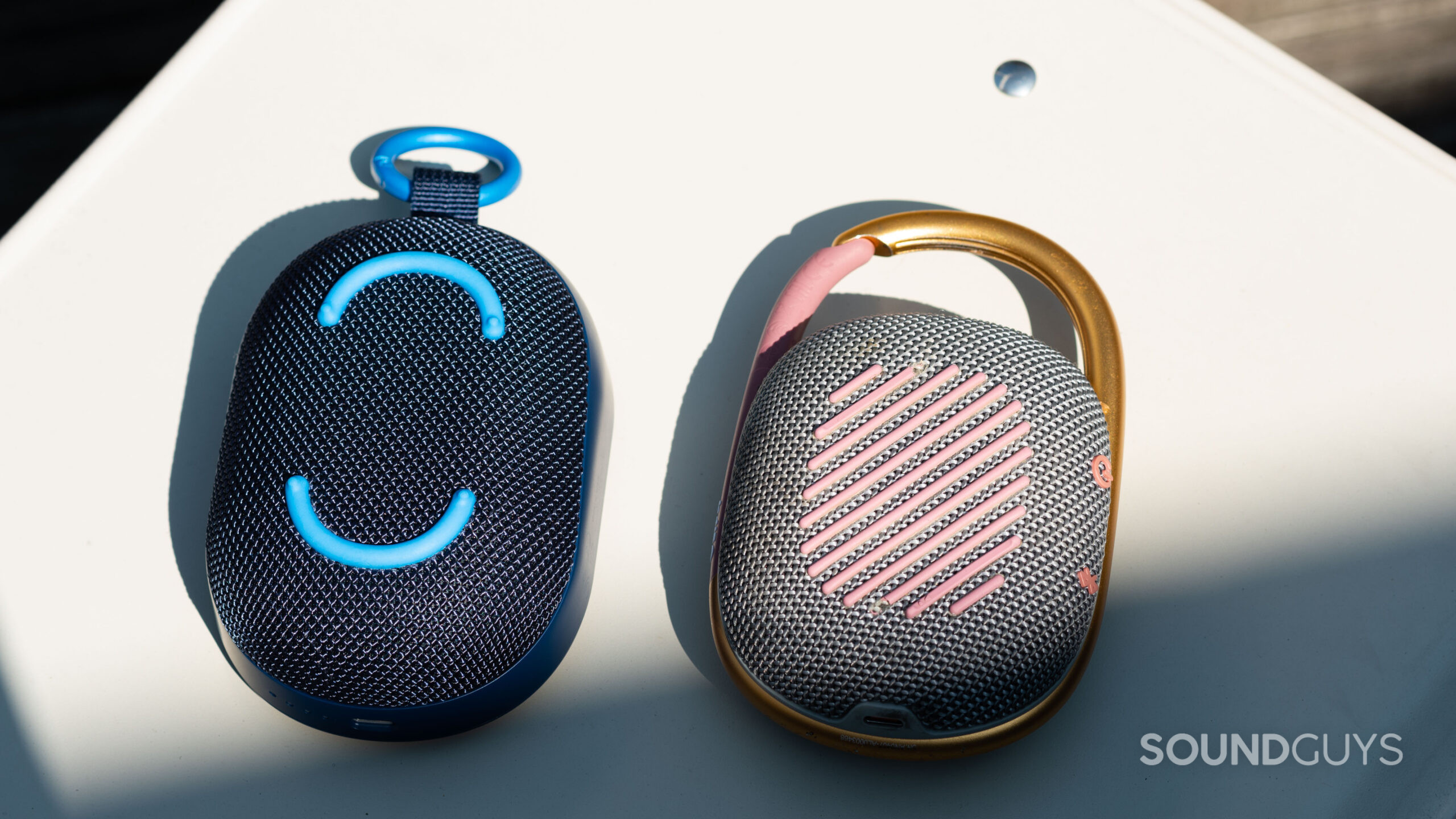
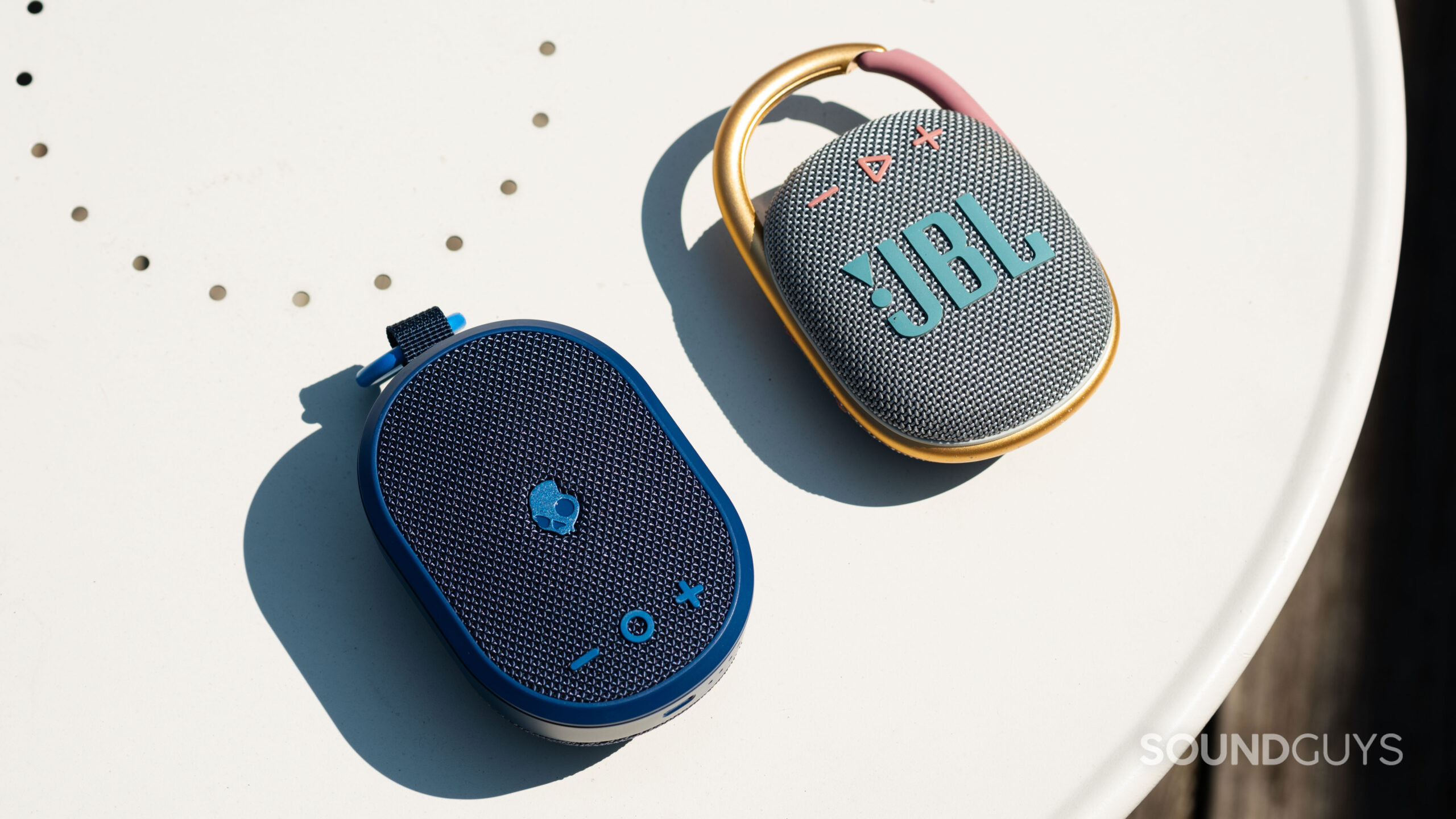
The Kilo is a good budget alternative to the JBL Clip 4, but JBL’s speaker sounds better and has a more premium build.
The JBL Clip 4 remains available for purchase from the company’s website and other popular vendors, such as Amazon. If you are lucky, you can also find them on sale around the yearly holidays. However, given JBL’s next-gen upgrade is expected to adorn a heftier price tag just like other recent JBL speakers, it’s fair to weigh up whether the company’s flagship speaker will be worth it.
The JBL Clip 4 ($59 at Amazon) are undoubtedly among the best value Bluetooth speakers on the market. In addition to their small build, the speaker boasts an impressive IP67 dust and water-resistant rating. The improved carabiner system makes for easier transportation, and the added USB-C port provides future-proof charging. Users gain 10 hours of battery life, Bluetooth 5.1, a loud 5W output, surprisingly good sound quality, and large controls for simple operation. However, the speaker only supports the SBC Bluetooth codec, having ditched the AUX input of its predecessor. There is also a lack of fancy gadgets, such as voice assistant features and fast charging. The impossibility of pairing to other JBL speakers via PartyBoost and stereo mode is also a misfire.
For only a little more money, the Bose SoundLink Micro ($99 at Amazon) serves as a formidable alternative to the Clip 4. This speaker houses a tear-resistant silicone strap, built-in microphone, voice assistant, IPX7 water-resistant rating, loud sound profile, and Multiconnect functionality. However, the battery life runs below the medium, clocking in at just under six hours. It also takes four hours to complete a full charge cycle, which is an hour longer than the Clip 4. The charging port still rocks the outdated MicroUSB, too. Nevertheless, the Bose SoundLink Micro lives among some of the best-sounding portable Bluetooth speakers in its price range.
Those looking for a little bit more kick in the bass frequencies should consider the JBL Flip 6 ($99 at Amazon.) Like many JBL portable speakers, the FLip 6 wears an IP67-rated build. Additionally, the speaker hosts USB-C charging, up to 12 hours of battery life, a loud sound profile, simple Bluetooth pairing, the “JBL signature sound,” and PartyBoost and stereo mode compatibility. However, users miss out on an AUX port, built-in microphone, and broad Bluetooth codec support. While the sound quality will be pleasing for most listeners, the speaker struggles to distinguish between instruments. The JBL Flip 6 is also more than double the weight and size of the Clip 4.
If budget and size constraints are of greater concern to you, then the JBL GO 3 ($39 at Amazon) may be up your alley. Like other JBL speakers, the GO 3 wears an IP67 dust and water-resistant design. However, it is by far one of the most portable, weighing only 211g and sizing at just 9 x 7 x 4 cm. The speaker may not float, but its small frame packs a surprisingly loud punch. Bass frequencies can sound a little subdued, but users will find that vocals are audible and clear-sounding. Moreover, when subjected to a constant output of ~75dB, the JBL GO 3 can last upwards of 10 hours on a single charge. It is worth noting that there is no support for AUX connections, Bluetooth Multipoint, or a built-in microphone. Nevertheless, users will struggle to find a more compelling speaker for the price.
That said, the Skullcandy Kilo ($39 at Amazon) comes pretty close. While this speaker is home to a quieter sound profile than the competition, it does boast 24 hours of battery life and USB-C charging. Juicing up takes three hours from flat, but the affordable price tag may justify the inconvenience. Bluetooth 5.3 features, as well as an IPX7 rating, stereo mode compatibility, and a somewhat cheap-feeling metallic clip. However, the Kilo lacks a companion app and a powerful bass response. That means users will have to download a third-party EQ app to try and bring out sub-bass frequencies. There is also no built-in microphone, which matches up with the JBL Clip 4.