

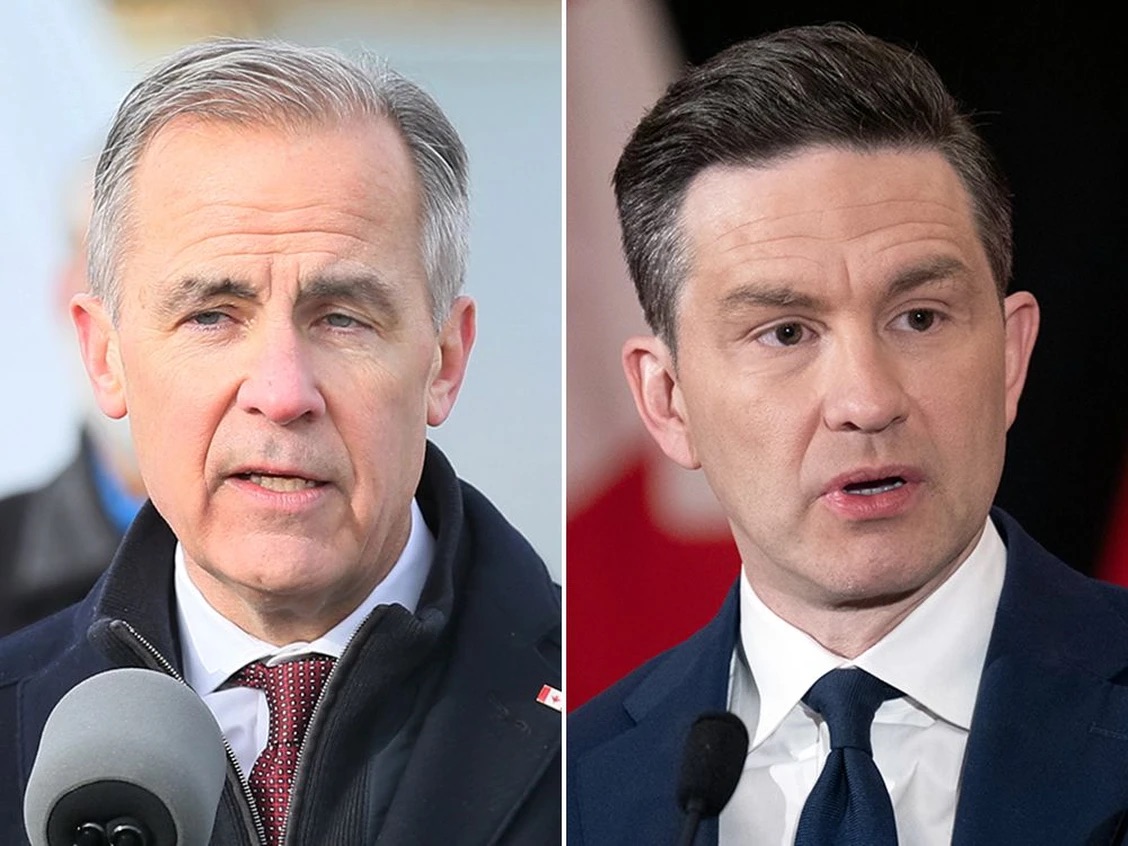
As Canada stands on the brink of a pivotal election, the nation’s Black communities are scrutinizing the platforms of two prominent leaders: Mark Carney, the newly appointed leader of the Liberal Party, and Pierre Poilievre, leader of the Conservative Party. Both politicians present distinct visions for the country, prompting critical discussions about which path best serves the interests of Black Canadians.
Mark Carney: An Economist’s Approach to Inclusive Growth
Mark Carney, a distinguished economist and former Governor of both the Bank of Canada and the Bank of England, has recently transitioned into the political arena. His leadership bid emphasizes economic stability, climate action, and social equity.
In his victory speech, Carney highlighted the importance of addressing systemic inequalities:
“Our economic policies must ensure that every Canadian, regardless of their background, has the opportunity to succeed.”
Carney’s commitment to climate action also resonates with environmental advocates within Black communities, recognizing the disproportionate impact of environmental issues on marginalized populations.
Pierre Poilievre: A Populist’s Promise of Economic Freedom
Pierre Poilievre, leading the Conservative Party, has built his platform on themes of economic freedom, reduced taxation, and limited government intervention. His populist rhetoric has drawn comparisons to former U.S. President Donald Trump, though analysts note differences in policy specifics.
Poilievre has acknowledged the contributions of Black Canadians, stating during Black History Month:
“Black Canadians have played a pivotal role in shaping our nation’s history, and their contributions continue to enrich our society.”
However, some community members express skepticism about the depth of his engagement with issues specifically affecting Black Canadians. Andray Domise, a Toronto-based journalist and activist, commented:
“While Poilievre’s acknowledgment is appreciated, there is a need for concrete policy proposals that address systemic challenges faced by Black communities.”
Policy Implications: Economic Equity and Social Justice
Carney’s platform includes targeted investments in education, affordable housing, and support for Black-owned businesses. His background suggests a data-driven approach to policy-making, aiming to reduce economic disparities.
Conversely, Poilievre’s emphasis on broad tax cuts and deregulation raises questions about the trickle-down benefits to marginalized communities. Desmond Cole, an activist and author, expressed concerns:
“Without targeted measures, there’s a risk that such policies could widen existing inequalities.”
Community Engagement and Representation
Carney has pledged to enhance representation within governmental bodies, aiming for a more inclusive decision-making process. His approach aligns with calls from Black leaders for greater involvement in policy development.
Poilievre’s campaign, while advocating for individual freedoms, has yet to outline specific strategies for increasing Black representation in political spheres. This omission has been a point of critique among diversity advocates.
Weighing the Options
Both Mark Carney and Pierre Poilievre offer visions for Canada’s future, each with distinct implications for Black Canadians. Carney’s focus on systemic reforms and inclusive growth presents a proactive approach to addressing longstanding disparities. In contrast, Poilievre’s platform centers on economic liberalization, with less emphasis on targeted interventions.
As the election approaches, Black Canadians are poised to critically assess which leader’s policies align more closely with the pursuit of equity, representation, and social justice.
Follow Canada News Media
Get the day's top Canadian stories and our two daily 60-second news videos wherever you scroll.