


- NASA “inadvertently” cut contact with its Voyager 2 probe after sending a wrong command.
- It is scrambling to get back in touch, but likely won’t be able to fix the problem before October.
- The 46-year-old probe is hurtling away from Earth at around 35,000 miles per hour.
NASA is scrambling to find Voyager 2, one of the most famous probes in space history, after losing contact with it when someone sent a wrong command.
The agency said Friday it hasn’t been in contact with the probe since July 21 after “inadvertently” pointing its antenna away from Earth.
Voyager 2, which has been traveling through space for almost 46 years, is expected to be out of touch until at least October when an automatic maneuver could put the antenna back in line with Earth.
In the meantime, the probe is traveling 35,000 miles per hour through space and is 12 billion miles away from Earth.
The agency is now looking for ways to contact the probe. If it can’t find it, it could mean the end of its 46-year-old mission.
In the coming weeks, it will be bombarding the area of space around Voyager 2 with the correct command using its Deep Space Network antenna in Canberra.
The hope is the probe will pick it the signal and resume operations as normal, Australia’s ABC News reported.
This is a long shot, Glen Nagle of the Canberra Deep Space Communication Complex told the ABC.
If that doesn’t work, NASA aims to reestablish contact on October 15, when the probe is set to automatically adjust its orientation. In the meantime, Voyager 2 should carry on following its pre-determined path, according to NASA.
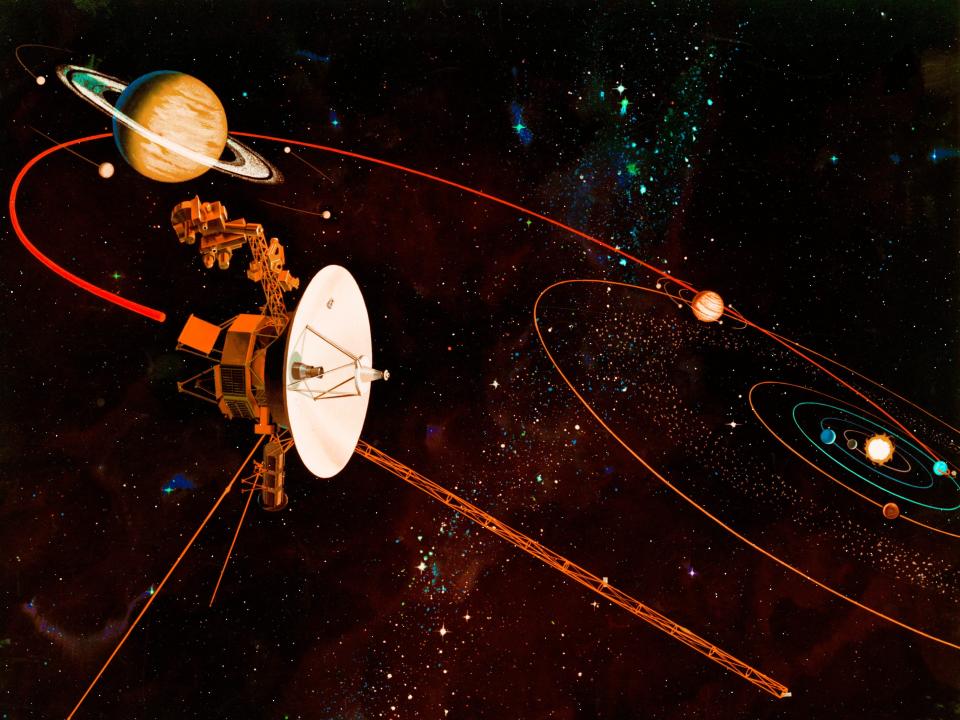
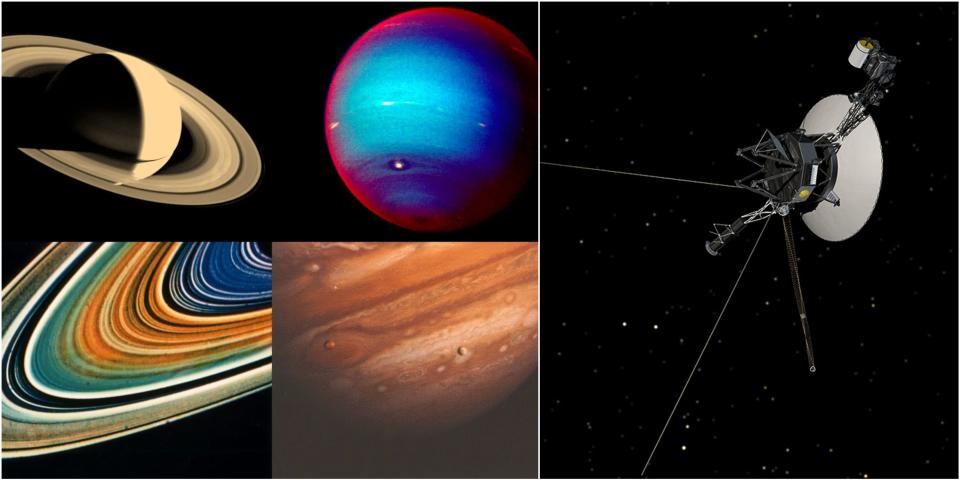
Voyager 2 is part of NASA’s longest-running mission, having traveled through space for almost half a century. Along the way, it has captured some of the most iconic pictures of the solar system.
Voyager 1 and 2 have far exceeded their lifespan — they were expected to run out of steam within four years of launch.
“The science data that the Voyagers are returning gets more valuable the farther away from the sun they go,” Linda Spilker, Voyager’s project scientist at NASA’s Jet Propulsion Laboratory in Southern California, said in a press release in April.
“We are definitely interested in keeping as many science instruments operating as long as possible,” she said.
Scientists have been to find clever ways to expand the probes’ lifespans by strategically switching off instruments, but they are nearing the end of the scientific mission.
But even after the last instrument switches off, the probes’ longer-term missions will continue. They carry a golden record that contains crucial information about humanity. If intelligent extraterrestrial life exists, scientists say they could use that information to reach out to humanity.