



The National Aeronautics and Space Administration (NASA) is cracking open a 50-year-old vacuum-sealed tube of lunar gas and soil.
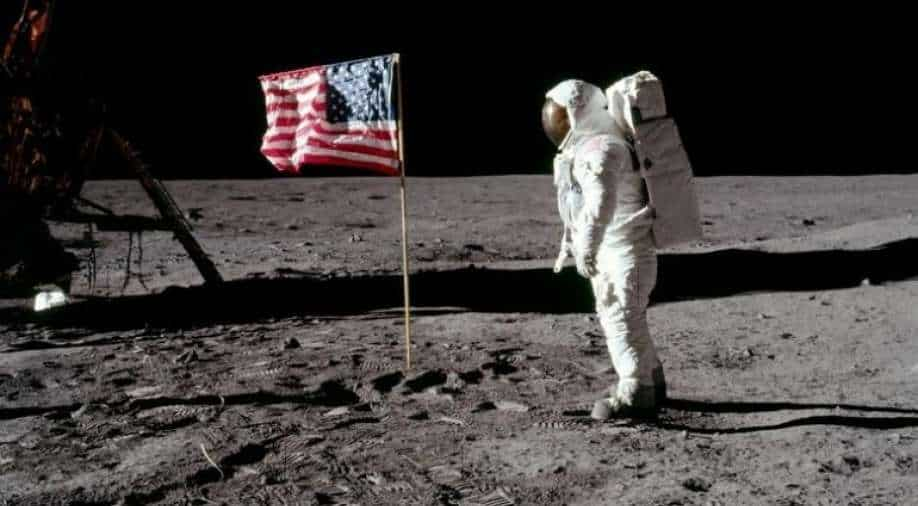
It was among one of the 2,196 rock samples collected during NASA’s Apollo missions to Earth. Dubbed 73001, the sample in question was collected by astronauts Eugene Cernan and Harrison Schmitt in December 1972.
The tube, 35 cm long and 4 cm (13.8 inches by 1.6 inches) wide, had been hammered into the ground of the Moon’s Taurus-Littrow valley to collect the rocks.
Also read | NASA is collecting names to send into space aboard Orion capsule to the Moon
Of the only two samples to have been vacuum sealed on the Moon, this is the first to be opened. It could as such contain gases or volatile substances (water, carbon dioxide, etc.)
And the aim is to extract these gases, which are probably only present in very small quantities, to be able to analyze them using spectrometry techniques that have become extremely precise in recent years.
NASA knew “science and technology would evolve and allow scientists to study the material in new ways to address new questions in the future,” Lori Glaze, director of the Planetary Science Division at NASA Headquarters, said in a statement.
The US space agency has extended its target date for sending astronauts back to the moon to 2025 at the earliest, stretching out by at least a year the timeline pronounced under former President Donald Trump.
Also read | Why has space business has become the final profitable frontier?
Trump’s administration had set the aggressive goal of returning humans to the lunar surface by 2024, an initiative named Artemis intended as a stepping stone toward the even-more-ambitious objective of sending astronauts to Mars.
NASA Administrator Bill Nelson cited delays from legal wrangling over the SpaceX contract to build the Artemis lunar landing vehicle as a major reason for extending the target date.
“We lost nearly seven months in litigation, and that likely has pushed the first human landing likely to no earlier than 2025,” Nelson told a news conference. “We are estimating no earlier than 2025 for Artemis 3, which would be the human lander on the first demonstration landing.”
Nelson, a former astronaut and US senator appointed by President Joe Biden to lead the space agency, said delays caused by the COVID-19 pandemic also played a role.
NASA had previously aimed to return crewed spacecraft to the lunar surface by 2028, after putting a “Gateway” space station into orbit around the moon by 2024.
But the Trump administration, in a surprise 2019 pronouncement from then-Vice President Mike Pence, set a deadline for putting Americans back on the moon within five years “by any means necessary.”
At the time, Pence said the United States was in a new “space race,” borrowing vocabulary from the 1960s Cold War era, to counter the potential space weaponry capabilities of Russia and China.
(With inputs from agencies)

Follow Canada News Media
Get the day's top Canadian stories and our two daily 60-second news videos wherever you scroll.
X Threads Facebook Instagram LinkedIn TikTok YouTube Pinterest Reddit Substack Flipboard Newsletter RSS