

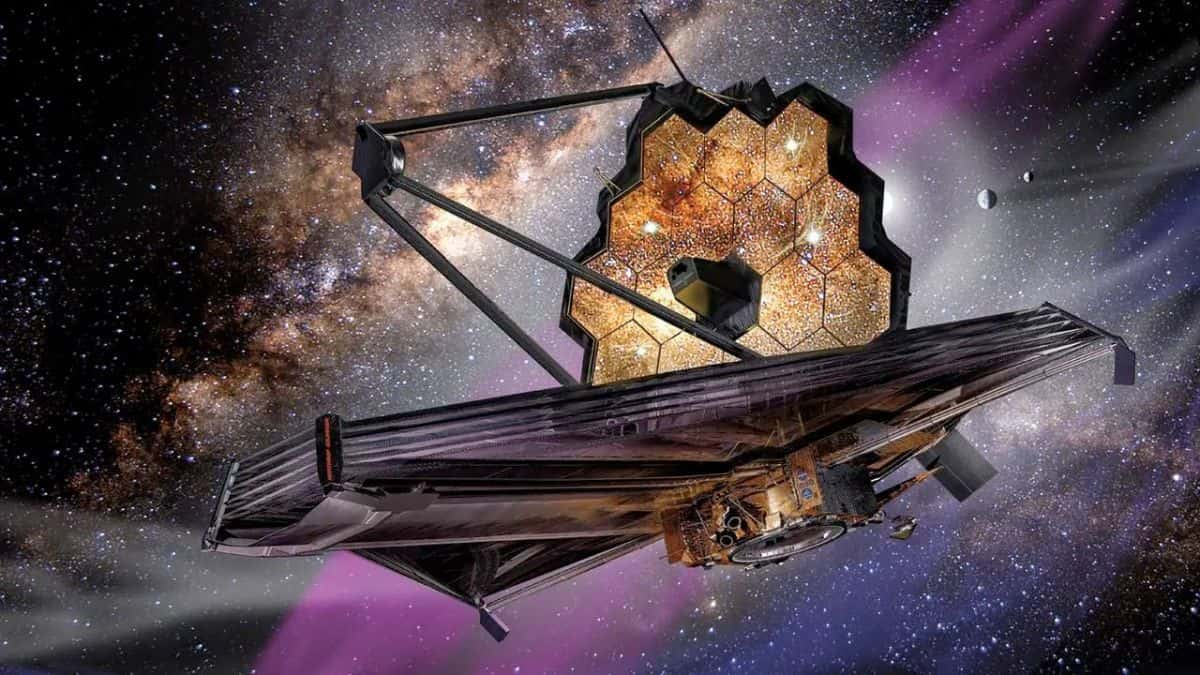

In a groundbreaking discovery, astronomers utilising NASA’s James Webb Space Telescope (JWST) have detected a distant exoplanet potentially cloaked entirely by a vast ocean of water. This finding marks a significant leap in the exploration of habitable conditions beyond Earth.
The observations, facilitated by the JWST, unveiled the presence of water vapour along with chemical signatures of methane and carbon dioxide within the atmosphere of the exoplanet.
Researchers from the University of Cambridge suggested that this chemical composition indicates a ‘water world’ scenario where the ocean blankets the entire surface, coupled with a hydrogen-rich atmosphere.
Professor Nikku Madhusudhan, leading the analysis, speculated on the extreme conditions of the exoplanet’s ocean, stating, “The ocean could be upwards of 100 degrees [Celsius] or more.” However, the habitability of such an environment remains uncertain.
Debates arise from a Canadian team’s additional observations of the same exoplanet, challenging the proposed scenario.
They argue that the planet’s temperature might be too high for liquid water to exist, estimating it could reach a staggering 4,000 degrees Celsius.
Habitable?
By analysing starlight filtered through exoplanet atmospheres, astronomers can discern detailed chemical compositions, shedding light on potential habitability.
The absence of ammonia in the atmosphere of TOI-270 d supports the ‘hycean world’ hypothesis, suggesting an ocean beneath a hydrogen-rich atmosphere. However, further observations are needed to ascertain the abundance of water vapour and clarify the likelihood of an oceanic expanse.
While the search for extraterrestrial life remains ongoing, scientists caution against premature conclusions. “We need to be extremely careful about how we communicate findings on this kind of object,” Madhusudhan stressed, highlighting the complexity of interpreting data from distant worlds.
(With inputs from agencies)