


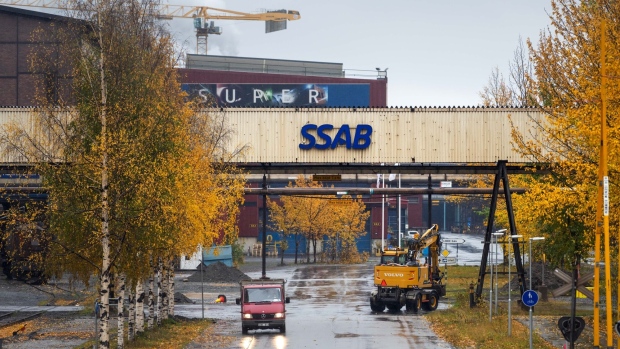

(Bloomberg) — Swedish steelmaker SSAB AB will spend as much as 4.5 billion euros ($4.8 billion) on a new plant in Lulea, in the northern part of the country, that will help clean up one of the world’s dirtiest industries.
The firm had been debating whether to go ahead with an investment at Lulea or at its Raahe facility in Finland.
Steel is the world’s second-largest emitting sector after power generated from fossil fuels. The industry, which has relied largely on the same production techniques for more than a century, accounts for more global carbon emissions than shipping and aviation combined. SSAB is already producing a small amount of fossil-free steel and plans to be largely fossil free by the end of the decade.
“We will remove 7% of Sweden’s carbon dioxide emissions, strengthen our competitive position and safeguard jobs,” Chief Executive Officer Martin Lindquist said in a statement.
While the decision was expected, the total budget for the expansion was a surprise, Morgan Stanley analyst Alain Gabriel said in a research note to clients “and may be negatively viewed by the market in light of the significant spending needs over the next four years amid a lack of government support.”
Shares of SSAB fell as much as 4.9% at 9:36 a.m. in Stockholm on Tuesday, with volumes at more than five times the 20-day average.
The investment will save an estimated €2 billion in expenditures to upgrade existing facilities over the next decade. The new mill will be funded with SSAB’s own cash flow, and within its financial targets, the firm said.
A fossil-free conversion is still planned in Raahe, SSAB said, depending on “SSAB’s financing and execution capacity, as well as the learnings from the Lulea project.”
The decision is a blow to the Finnish government and means the country won’t be carbon neutral by its target date of 2035 — ten years earlier than Sweden’s goal. That’s because SSAB’s blast furnaces at the Raahe steel mill are the single-biggest source of carbon spewed into the atmosphere from Finland.
The new Lulea mini-mill will have a capacity of 2.5 million tons of steel per year, the firm said. The supply of raw material will come from a mix of fossil-free sponge iron from the firm’s Hybrit demonstration plant in Gallivare and recycled scrap.
It’s expected to begin operating at the end of 2028, reaching full capacity a year later. Environmental permits are expected by the end of this year, SSAB said.
In 2023, SSAB decided to switch to fossil-free production at a plant at Oxelosund, also in Sweden, and that project is proceeding according to plan and will reduce Sweden’s CO2 emissions by a further 3%, the company said.
–With assistance from Kati Pohjanpalo.
©2024 Bloomberg L.P.