In spring 2025 visitors queue outside the National Gallery to see Stan Douglas’s Venice Biennale photographs – four panoramic scenes of 2011 street protest, stitched out of hundreds of frames and weeks of reenactment. Curators call the show a “turning point” for Canadian art visibility abroad. Behind the headlines lies a deeper current: Black artists have been shaping Canadian visual culture for more than a century, often without mainstream credit. Seven names trace that hidden arc and bring it into clear view.
Stan Douglas
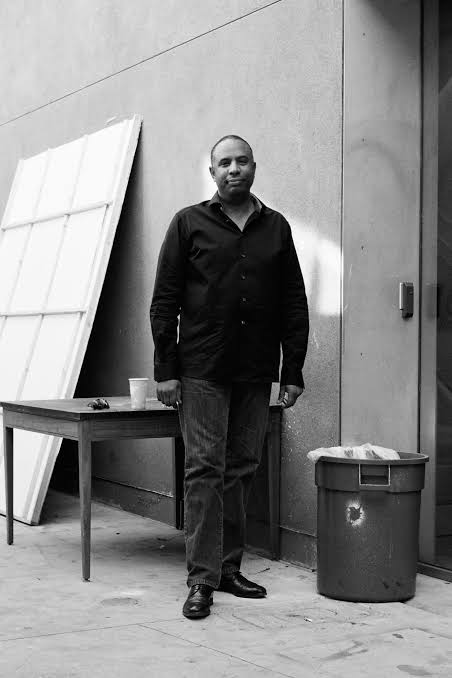
Vancouver, lens-based and film
Signature work: “2011 ≠ 1848,” Canada Pavilion, Venice Biennale, 2022. davidzwirner.com
Why he matters: Douglas stages history like noir theatre, then slows it down until viewers notice every ripple of power. Whether recreating the 1971 Gastown riot or remixing dub reggae on twin screens, he invites a second reading of events we thought we knew. The current National Gallery tour keeps the questions close to home: how are protest images archived, and who controls the angles? gallery.ca
Deanna Bowen
Montreal-based, research-driven multimedia
Signature work: “Black Drones in the Hive,” an evolving installation first commissioned by Kitchener-Waterloo Art Gallery in 2020 and still travelling in 2025. kwag.ca
Why she matters: Bowen sifts police ledgers, souvenir plates, film reels. She pins them to the gallery wall until colonial quiet becomes deafening. Winner of the 2021 Scotiabank Photography Award, she channels prize money into deeper archive digs and public workshops. theimagecentre.cascotiabankphotoaward.com
Sandra Brewster
Toronto, photo-gel transfers and site installations
Signature series: “Blur,” Art Gallery of Ontario, 2019; “FISH,” a 2025 wall intervention at the McMichael Collection. sandrabrewster.commcmichael.com
Why she matters: Brewster asks sitters to move while the shutter clicks, then transfers the blurred print onto wood or stone. Cracks appear, ink peels, identity trembles. The works echo Caribbean migration stories – here yet elsewhere, clear yet smudged. Critics praise the technique as a corrective to passport-photo certainty. ago.ca
Esmaa Mohamoud
Toronto, sculpture and large-scale costume
Signature exhibition: “To Play in the Face of Certain Defeat,” a touring survey seen in five provincial galleries between 2021 and 2024. kavigupta.comyouraga.ca
Why she matters: Mohamoud casts basketball jerseys in concrete, re-stitches ball gowns out of sports mesh, and titles a bronze hoop Giant Steps. She exposes how entertainment industries profit from Black labour while dictating body codes. The show’s run in Hamilton, Edmonton and Winnipeg proves regional appetite for hard questions. artgalleryofhamilton.com
Camille Turner
Toronto, performance and digital research
Signature project: “Afronautic Research Lab,” a travelling installation where visitors don white gloves, open redacted ledgers and listen to speculative audio guide them through Canada’s link to the Atlantic trade. camilleturner.com
Why she matters: Turner merges Afrofuturism with local maritime lore. In Halifax she guided viewers onto Pier 21 at dusk, headphones buzzing with imagined starship coordinates. The method is part séance, part archive lesson – memory launches forward, not back. camilleturner.com
Chantal Gibson
Vancouver, text-sculpture and poetry
Signature work: “How She Read: Confronting the Romance of Empire,” exhibitions on both coasts since 2020, paired with a Pat Lowther Award-winning poetry collection. chantalgibson.comen.wikipedia.org
Why she matters: Gibson blackens outdated textbooks, literally redacts the empire out of school readers, then invites students to write between the burnished lines. Her hybrid practice – half gallery, half classroom – shows how decolonial critique can start with a single dog-eared page.
Edward Mitchell Bannister
St. Andrews, NB, oil painting, 1828-1901
Signature moment: Gold medal, Philadelphia Centennial Exposition, 1876 – the first national art award won by a Black artist in North America. americanart.si.edu
Why he matters: Bannister left New Brunswick for New England yet carried Atlantic fog into his Barbizon-style shore scenes. His quiet canvases offered 19th-century viewers a different Black narrative – contemplative, free, holding a paintbrush rather than a tool of labour. Recent scholarship reframes him as a foundational Canadian figure rather than a footnote in U.S. art history. americanart.si.eduen.wikipedia.org
Connecting Threads
Across mediums these artists mine archives, sports arenas, blurred snapshots, and protest footage. They question who writes records, who profits from spectacle, and how Black presence can be simultaneously central and unseen. Their answers diverge in method yet converge on one principle: art is evidence.
Several of the works named here remain on view this year – Douglas at the National Gallery, Brewster at the McMichael, Mohamoud on tour. Check local listings, step into the room, and let the conversation continue in real time.
Follow Canada News Media
Get the day's top Canadian stories and our two daily 60-second news videos wherever you scroll.