


With the 2025 Volvo EX30, the company aims to revolutionize the way vehicles are built, ensuring that every aspect of the manufacturing process aligns with its ambitious sustainability goals. From the sourcing of materials to the assembly line, Volvo is implementing innovative practices and cutting-edge technologies to minimize energy consumption, reduce waste, and lower carbon emissions.
One of the key focuses of the EX30’s sustainable production is the use of recycled and eco-friendly materials. Volvo plans to incorporate a high percentage of recycled and renewable materials throughout the vehicle’s construction, including responsibly sourced metals, plastics, and textiles. By minimizing the reliance on virgin materials, the company aims to reduce its environmental impact and promote a circular economy.
Furthermore, the 2025 Volvo EX30 will be manufactured in a state-of-the-art facility designed to maximize energy efficiency and minimize waste. The production plant will utilize renewable energy sources, such as solar and wind power, to power its operations. Additionally, advanced waste management systems will be in place to ensure that any byproducts or waste generated during production are properly recycled or repurposed.
To further bolster its commitment to sustainability, Volvo is working closely with its supply chain partners to ensure they adhere to the same rigorous environmental standards. By fostering transparency and collaboration throughout the supply chain, Volvo aims to promote sustainable practices not only within its own operations but across the entire automotive industry.
In a statement, Henrik Green, CEO of Volvo, expressed the company’s vision for the 2025 Volvo EX30, saying, “Our goal is to create a vehicle that not only delivers exceptional performance and comfort but also embodies our commitment to sustainability. We believe that by pushing the boundaries of what is possible in terms of sustainable production, we can inspire other manufacturers to follow suit and collectively work towards a greener future.”
The 2025 Volvo EX30 is poised to become a flagship model for the company’s sustainability efforts. By combining advanced technology, eco-friendly materials, and responsible manufacturing practices, Volvo aims to set a new standard for sustainable vehicle production. As the automotive industry continues its shift towards sustainability, Volvo’s commitment to environmental stewardship places them at the forefront of this important movement.
What are the dimensions of the EX30?
Learn more about the cars
-
2024 VolvoC40
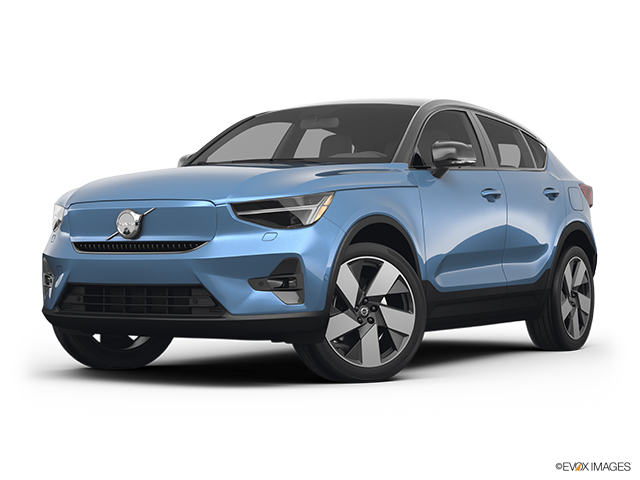
MSRP
-
2023 VolvoS60
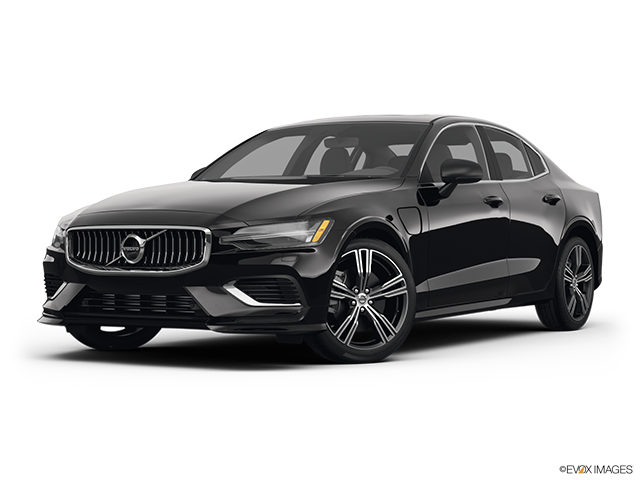
MSRP $47,900 to $75,300
-
2023 VolvoS90
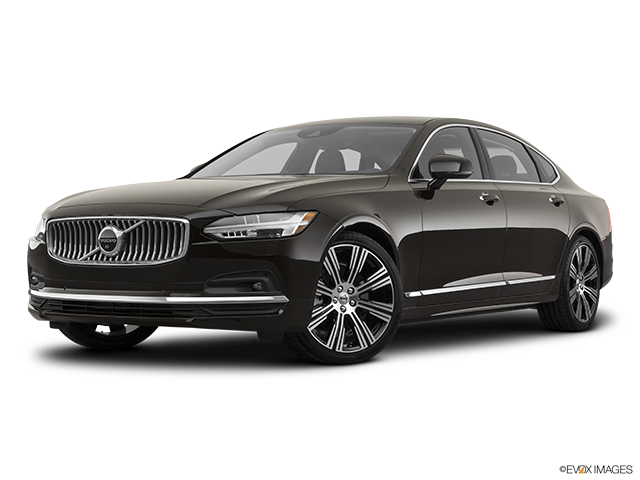
MSRP $69,950 to $83,800
-
2024 VolvoV60
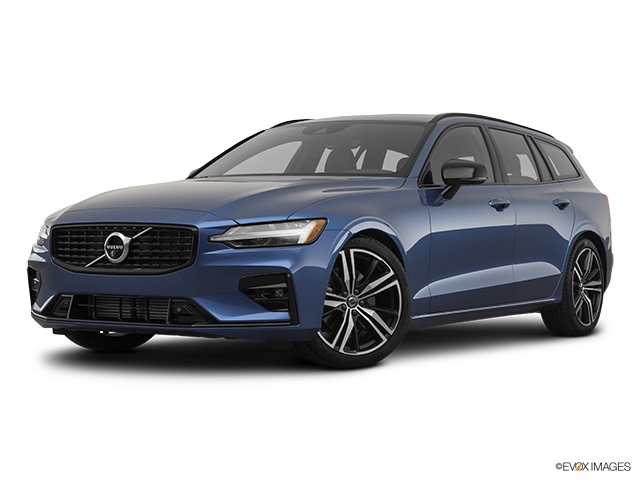
MSRP
-
2023 VolvoV60 Cross Country
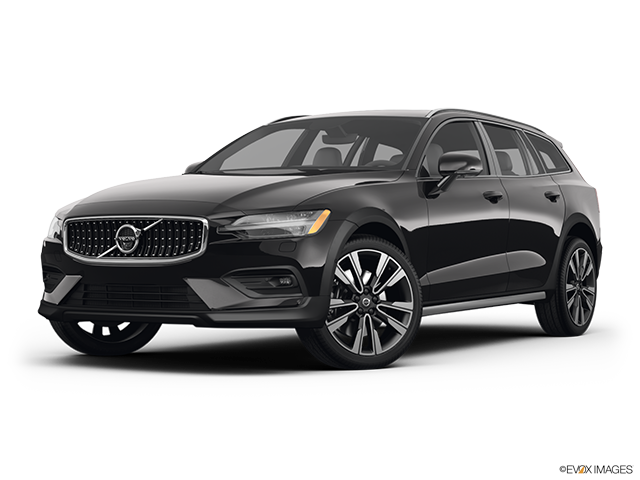
MSRP $53,500 to $65,900
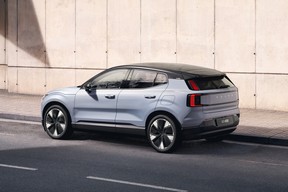
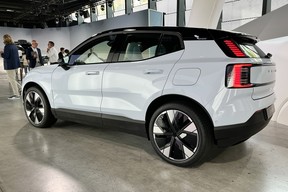
The 2025 Volvo EX30 is Volvo’s smallest SUV ever. It measures 4,234 millimetres long, with a 2,649-mm wheelbase. For context, that’s 19.1 cm shorter than the Volvo XC40, which was previously the smallest SUV in the brand’s line-up. The EX30’s width is 2,032 mm including the mirrors; and its height is 1,552 mm. Its equal overhangs at the front and rear emphasize its SUV proportions.
-
 2025 Volvo EX30 Photo by Volvo Global
 -
 2025 Volvo EX30 Photo by Volvo Global
 -
 2025 Volvo EX30 Photo by Volvo Global
 -
 2025 Volvo EX30 Photo by Volvo Global


What is the range of the Volvo EX30?
In Canada, the 2025 Volvo EX30 will be available in two configurations. The Volvo EX30 Single Motor Extended Range comes with one motor mounted to the rear axle to create rear-wheel-drive (RWD). This motor produces 268 horsepower and 253 pound-feet of torque. With this setup, the EX30 will go from zero to 100 kilometres per hour in 5.3 seconds.
In the Volvo EX30 Twin Motor Performance, a rear 211-hp motor is paired with a 211-hp motor on the front axle to generate a total of 422 hp and 400 lb-ft of torque. As each motor is powered, this creates all-wheel-drive (AWD). This configuration goes from zero to 100 km/h in 3.6 seconds, which Volvo says makes this the brand’s fastest-accelerating car ever. The Volvo EX30 Twin Motor Performance has an estimated range of 426.5 km when converting from U.S. EPA estimates.
Is the Volvo EX30 sustainably built?
Volvo says it examined not only the EX30 itself, but also its entire life cycle in its goal of reducing its carbon footprint. Over 200,000 kms of driving, the EX30 produces a carbon footprint of less than 30 tonnes. (This figure is based on using European electricity for charging. Regions with different electricity sources would produce different results.) According to Volvo, this figure is 25 per cent lower in the EX30 than it was for the electric C40 and XC40 models. The brand aims to reduce its overall per-car CO2 emissions by 40 per cent by 2025, versus 2018 levels.
-
 2025 Volvo EX30 Photo by Stephanie Wallcraft
 -
 2025 Volvo EX30 Photo by Stephanie Wallcraft
 -
 2025 Volvo EX30 Photo by Stephanie Wallcraft
 -
 2025 Volvo EX30 Photo by Stephanie Wallcraft
 -
 2025 Volvo EX30 Photo by Stephanie Wallcraft
 -
 2025 Volvo EX30 Photo by Stephanie Wallcraft
 -
 2025 Volvo EX30 Photo by Stephanie Wallcraft
 -
 2025 Volvo EX30 Photo by Stephanie Wallcraft
 -
 2025 Volvo EX30 Photo by Stephanie Wallcraft
 -
 2025 Volvo EX30 Photo by Stephanie Wallcraft


The textiles found in the interior also incorporate recycled materials. For example, the wool blend uses 70 per cent recycled polyester, and the denim fabric is woven with fibres that would otherwise be waste material from the denim clothing recycling process. At the end of its life cycle, the EX30’s materials are designed to be 95-per-cent recoverable.
The manufacturing process has also been considered. The Volvo EX30 will be built at a facility in China that uses 100-per-cent climate-neutral electricity, as well as other climate-neutral energy sources. The brand is asking the same of its Tier 1 suppliers.
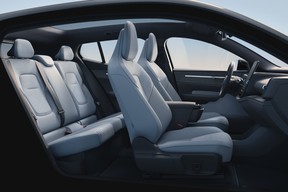
How much interior space does the EX30 have?
-
 2025 Volvo EX30 Photo by Volvo Global
 -
 2025 Volvo EX30 Photo by Volvo Global
 -
 2025 Volvo EX30 Photo by Volvo Global
 -
 2025 Volvo EX30 Photo by Volvo Global
 -
 2025 Volvo EX30 Photo by Volvo Global
 -
 2025 Volvo EX30 Photo by Volvo Global
 -
 2025 Volvo EX30 Photo by Volvo Global
 -
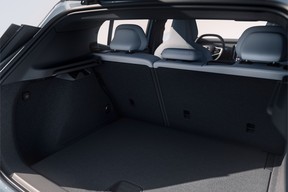 2025 Volvo EX30 Photo by Volvo Global


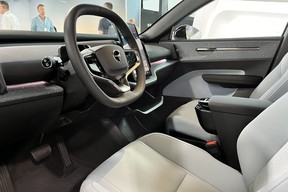
Four interior designs that Volvo dubs “rooms” will be offered, laid out with various sustainably sourced materials. All four will be offered in Canada, though precisely which interiors will be offered with which exteriors will be determined closer to launch.
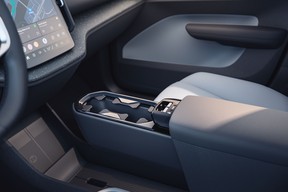
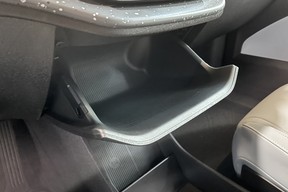
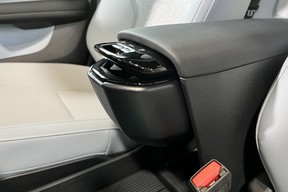
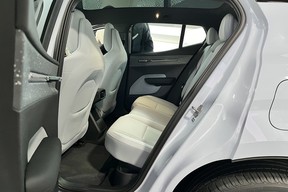
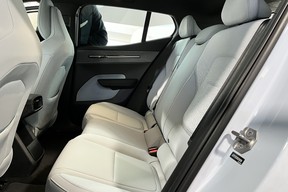
The EX30 has five preset Swedish-inspired ambient colour themes, such as sunset and northern lights. Each theme can be paired to an ambient soundscape. A modular centre console has pull-out cup holders that can be retracted to free up space. Rear passengers receive dedicated phone pockets in the front seatbacks; and a slide-out storage drawer in the back of the centre console.
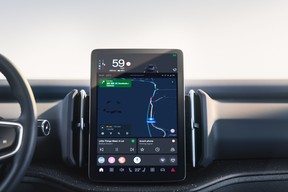
The Volvo EX30 has only one screen

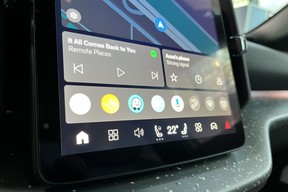
The centrepiece of the minimalist dashboard is a 12.3-inch vertically oriented touchscreen infotainment system. This is the only screen in the cabin. The EX30 does not have an instrument cluster, digital or otherwise. Driving information such as speed and remaining charge live at the top of the infotainment screen, while navigation, media, and other controls are laid out below.
Controls for all functions are fully digital. Volvo says a contextual bar keeps the most relevant ones accessible when they’ll be required. A calm mode can be activated that removes all but the most important information from the screen.
The infotainment system is based on Google built-in and uses Google Assistant, Google Maps navigation, and apps downloadable from Google Play. This can be powered by 5G data where it’s available. But Volvo hasn’t forgotten the iPhone users this time around. The EX30 will be the first Volvo car to include wireless Apple CarPlay functionality.
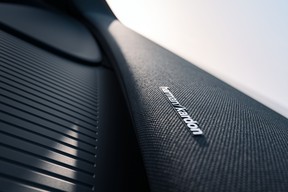
What’s special about the Volvo EX30’s sound system?
-
 2025 Volvo EX30 Photo by Stephanie Wallcraft
 -
 2025 Volvo EX30 Photo by Stephanie Wallcraft
 -
 2025 Volvo EX30 Photo by Stephanie Wallcraft
 -
 2025 Volvo EX30 Photo by Stephanie Wallcraft
 -
 2025 Volvo EX30 Photo by Stephanie Wallcraft
 -
 2025 Volvo EX30 Photo by Stephanie Wallcraft
 -
 2025 Volvo EX30 Photo by Stephanie Wallcraft
 -
 2025 Volvo EX30 Photo by Stephanie Wallcraft
 -
 2025 Volvo EX30 Photo by Stephanie Wallcraft
 -
 2025 Volvo EX30 Photo by Stephanie Wallcraft
 -
 2025 Volvo EX30 Photo by Stephanie Wallcraft


How safe is the Volvo EX30?
There’s still much to learn about this in the coming months. What we currently know is the EX30 is a city car, so Volvo put a lot of emphasis on city safety. For example, the EX30 is equipped with a safe-exit alert that warns occupants if they’re about to open a door into the path of a cyclist or pedestrian. A new-to-Volvo intersection-collision mitigation system detects if a vehicle turns into your path unexpectedly, and brakes automatically.
Will Canada get the Volvo EX30 Cross Country?

We know there will be a Volvo EX30 Cross Country with more ground clearance, skid plates, and alternate wheel designs. In the markets globally where it will be offered, orders will open sometime in 2024. As of this writing, it’s not yet clear whether this version is coming to Canada.
How much does a Volvo EX30 cost?
We’re a way off from being able to answer that question. Canadian deliveries will start in the summer of 2024, and pricing will be announced closer to that launch timeframe. Volvo says we can expect the cost to be similar to an equivalent vehicle with an internal-combustion engine.
As of this writing, pre-orders and deposits have not yet opened in Canada for the 2025 Volvo EX30. Look for that to happen shortly.