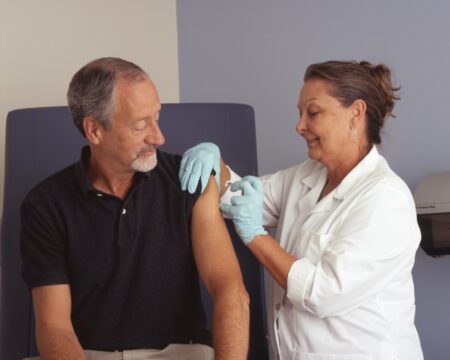



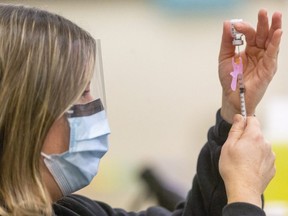
COVID-19 vaccination campaigns may not be the big news they were during the pandemic, but, to remind us the virus will be with us always, the Middlesex-London health unit is ramping up for a springtime targeted booster blitz for the most vulnerable.

COVID-19 vaccination campaigns may not be the big news they were during the pandemic, but, to remind us the virus will be with us always, the Middlesex-London Health Unit is ramping up for a springtime targeted booster blitz for the most vulnerable.
The anniversary of the start of the global pandemic was Saturday. It was March 11, 2020, when the World Health Organization (WHO) declared its deep concern about the virus after announcing there were 118,000 cases of COVID-19 in more than 114 countries and 4,291 deaths.
Middlesex-London has had 48,725 reported cases and 527 deaths.
“Fortunately, the baseline immunity in the population from an amazing vaccination effort and previous infection is such that the severity is no longer overwhelming our health care system and not leading to the same amount of deaths and severe hospitalizations that it was,” Summers said.
That is how we should be thinking about COVID-19 in 2023. Summers expects this fall there will be recommended annual booster doses for COVID-19 and the flu. We should expect public health messages about the importance of hand washing and staying home if ill, messages that were drilled into the community’s consciousness during the pandemic.
“Hopefully, the memories of the last three years emphasize the importance of ongoing public health principles, year in and year out,” Summers said.
There are reasons to use this anniversary as a moment to celebrate our resilience and ingenuity to push back against the spread of the disease and return to more normal lives.
The health unit said that more than 1.35 million doses were given through its mass vaccination clinics, pop-up clinics at local malls, community-based clinics at schools and community centres, through the provincial government’s Go-VAXX bus and at pharmacies and health care provider offices.
“The goal was always, you know, certainly for us in public health, to protect the lives and the health of our population and that also includes the quality of life,” Summers said. “We want people be able to socialize, we want people to be able to go to concerts and go to dinners and to travel and to do those things. The objective is making life what people want their lives to be.”
That means a renewed commitment to all vaccinations, to science, to infection prevention and control, and to limiting the spread of misinformation “so that we are confident in the scientific evidence we have to protect ourselves,” Summers said.
“These types of commitments will allow for people, hopefully, to continue to live those lives that we want people to live and that they wish to live,” he said.
It’s a relief to move past the days when COVID-19 brought society to a standstill, but Summers hopes the community doesn’t forget because “that informs their commitment to these public health principles moving forward.”
Summers said any emergence of new variants, the effectiveness of the vaccine and if we can sustain immunity against the virus could change how we deal with the illness.
But now, the community knows how to push back.
“I think one of the messages I try to (reiterate) for folks is that there’s tools available to you. You’ve got to understand your risks and COVID is never going to go away. So, you’ve got to make some decisions about how you’re going to approach this now,” Summers said.