




As we reflect on Black History Month in 2025, we celebrate not only the contributions of Black Canadians but also the resilience, strength, and legacy of individuals who have made a lasting impact. Among these trailblazers, few names shine as brightly as Donovan Bailey, one of the greatest sprinters of all time. The Jamaican-born athlete is renowned for his record-breaking achievements, but his story is about much more than speed. It’s about perseverance, dedication, and the power of representation.
Born in Manchester, Jamaica, in 1967, Donovan Bailey moved to Canada as a young boy, growing up in Oakville, Ontario. His journey was not one of immediate success; in fact, Bailey initially pursued a career in business, working as a stockbroker. It wasn’t until his early twenties that he turned to track and field, a decision that would change his life—and Canadian sports history—forever.
Speaking about his journey, Bailey has often noted the challenges he faced as a Black Canadian. “Growing up, I knew I had to work twice as hard to be recognized,” Bailey said in an interview in 2020. “But my parents instilled in me the importance of hard work, of never giving up, and that’s something I carried with me on the track and off.”
His late start in athletics might have seemed like a disadvantage, but Bailey quickly showed that his talent and dedication were unmatched. At the 1995 World Championships, Bailey won gold in the 100 metres, setting the stage for his historic Olympic performance the following year.
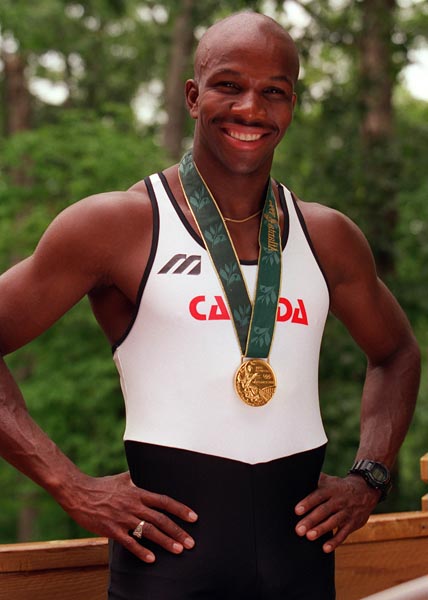
The 1996 Summer Olympics in Atlanta was a watershed moment for Bailey and for Canadian sports. Bailey not only won the gold medal in the 100-metre dash but also set a new world record of 9.84 seconds, earning him the title of “The World’s Fastest Man.” It was the first time since 1928 that a Canadian sprinter had won Olympic gold in the 100-metre event, and the victory resonated deeply with Canadians of all backgrounds, particularly Black Canadians who saw Bailey as a symbol of possibility and excellence.
“Seeing Donovan Bailey cross that finish line, I remember feeling so much pride,” recalls Mark Taylor, a long-time track and field coach from Toronto. “It wasn’t just about his speed—it was about what he represented for Black Canadians. He showed us that no matter where you come from or what obstacles you face, you can reach the pinnacle of success.”
Bailey didn’t stop there. He also helped lead Canada’s 4 x 100-metre relay team to victory, securing a second gold medal. His achievements sparked celebrations across Canada, particularly in Black communities, where his success was seen as a triumph over systemic barriers.
After retiring from competitive racing in 2001, Donovan Bailey didn’t fade from the spotlight. Instead, he transitioned into the business world, becoming a successful entrepreneur and sports commentator. Bailey has consistently used his platform to speak out on issues affecting Black Canadians, from the importance of education to the need for greater representation in all sectors of society.
In recent years, Bailey has also been an advocate for mental health, particularly in the context of sports. He has spoken candidly about the pressures that come with being a high-performance athlete and the mental toll that racism and societal expectations can take. His advocacy is part of a broader conversation about the mental health challenges that Black Canadians face, particularly those in the public eye.
In 2021, Bailey was inducted into Canada’s Sports Hall of Fame, cementing his legacy as one of the greatest athletes in Canadian history. But for many, his legacy extends far beyond his athletic accomplishments. As a Black man who rose to the top in a predominantly white sport, Bailey’s story is a powerful reminder of what can be achieved in the face of adversity.
For many Black Canadians, Donovan Bailey’s success is about more than just sports—it’s about representation. In a country where systemic racism continues to create barriers, seeing someone like Bailey excel on the world stage sends a powerful message of possibility.
“Growing up, I didn’t see a lot of people who looked like me in positions of success,” says Ayanna Brown, a high school athlete from Vancouver. “But watching old clips of Donovan Bailey winning gold, it makes me believe that I can achieve anything I set my mind to. He’s a role model for so many of us.”
The impact of representation cannot be understated. Bailey’s achievements have inspired generations of young athletes, particularly Black Canadians, to pursue their dreams, whether in sports or other fields. His success has also sparked important conversations about the need for greater inclusivity and diversity in Canadian athletics, as well as in other sectors.
While Donovan Bailey’s story is one of triumph, it also highlights the ongoing challenges that Black Canadians face. In the world of sports, Black athletes often contend with racism, both overt and subtle, from being overlooked for leadership positions to facing discrimination from fans and officials.
Bailey himself has spoken out about the racism he experienced during his career, both in Canada and internationally. “There were times when I felt like I wasn’t being given the same opportunities as my white counterparts,” Bailey said in a 2021 interview. “But I knew that I had to keep pushing, not just for myself, but for all the young Black athletes coming up behind me.”
In recent years, the conversation around racial equality in Canada has gained momentum, particularly in the wake of global movements like Black Lives Matter. However, there is still much work to be done to address the systemic barriers that Black Canadians face in all areas of life, from sports to education to the workplace.
As we celebrate Black History Month in 2025, it is essential to honour the legacy of individuals like Donovan Bailey, who have paved the way for future generations. His story is a reminder of the power of perseverance, of the importance of representation, and of the ongoing fight for equality.
But Black History Month is not just about looking back—it’s also about looking forward. As we celebrate the achievements of Black Canadians, we must also continue to address the systemic issues that persist, from racial profiling to disparities in healthcare and education. Donovan Bailey’s success is a testament to what can be achieved, but it is also a call to action for all Canadians to work towards a more just and equitable society.
Donovan Bailey’s impact on Canadian sports and culture is undeniable. His world-record-breaking speed and Olympic victories brought pride to Canada, and his continued advocacy for equality and mental health underscores the importance of using one’s platform for good. As we celebrate Black History Month in 2025, let us not only honour Bailey’s achievements but also recognize the broader significance of his story. He is a symbol of what is possible when barriers are broken down, and his legacy continues to inspire Black Canadians and all Canadians to strive for greatness.
As Bailey himself once said, “The race isn’t always about who’s the fastest—it’s about who can endure.” His endurance, both on and off the track, serves as a powerful reminder of the strength and resilience of Black Canadians.
Follow Canada News Media
Get the day's top Canadian stories and our two daily 60-second news videos wherever you scroll.
X Threads Facebook Instagram LinkedIn TikTok YouTube Pinterest Reddit Substack Flipboard Newsletter RSS