




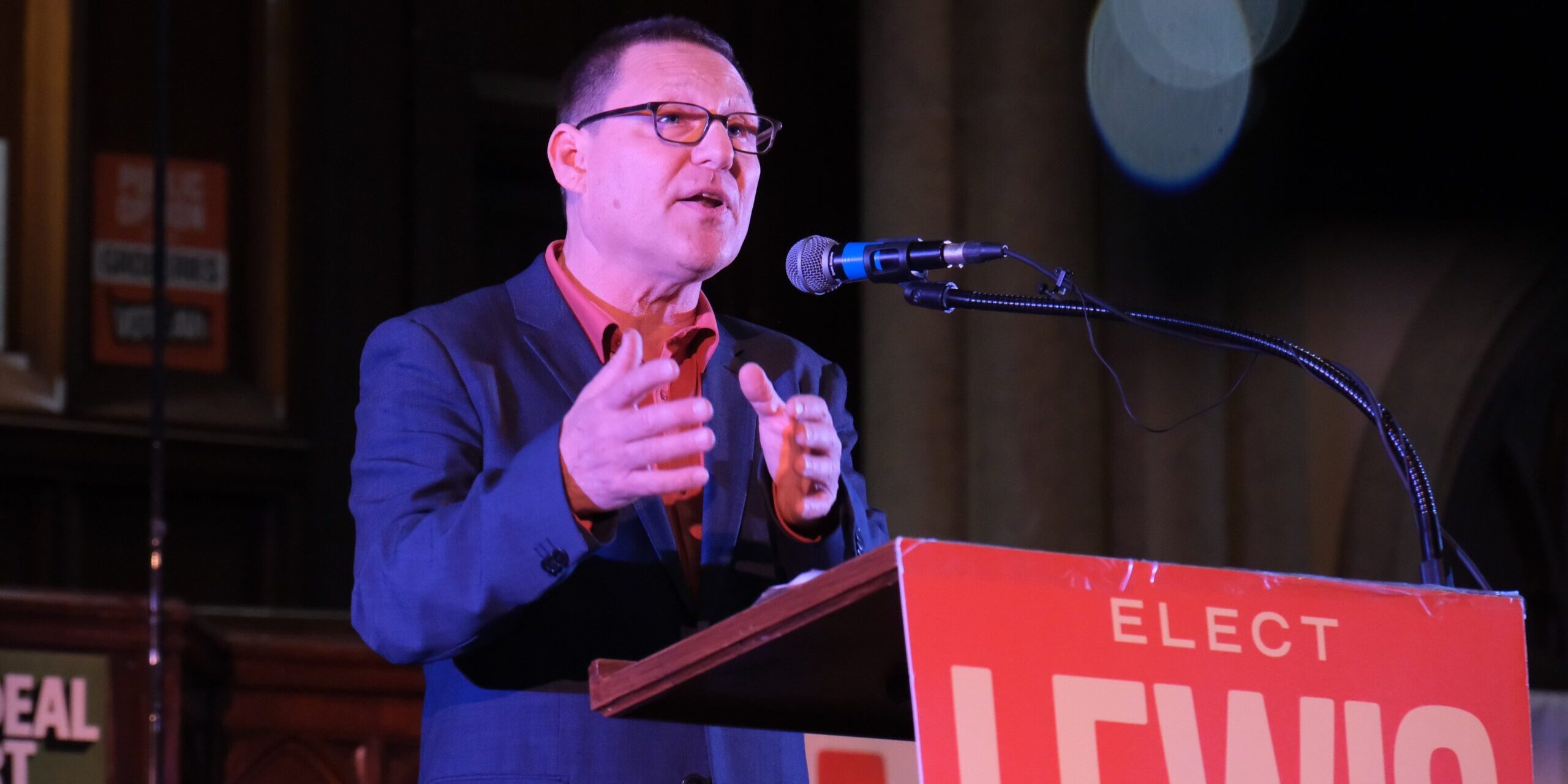
In the background of the NDP leadership base, one policy topic loomed uncharacteristically larger than many others: nuclear energy. In the context of surging labour union support for the energy (the Canadian Labour Congress has endorsed nuclear), growing Gen Z socialist support for nuclear, and the recent about-face by the Ontario NDP on the topic after a spirited debate, nuclear has established itself as a point of contention between organized labour and young NDPers (many of whom backed Lewis) versus the older, more traditional NDP activist base. But new NDP leader Avi Lewis has remained uncharacteristically silent on the topic when it comes to his policy positions.
This silence may be explained by the fact that much of his base and many of his most vocal supporters have long opposed nuclear (prominent Avi endorser Naomi Klein wrote a review for the 2024 anti-nuclear book Nuclear is Not the Solution, praising it). But there are already some indications that labour and youth pressure, who increasingly support nuclear energy, have caused him to reevaluate his position.
The divide within the NDP coalition is real; it was made clear at convention when a pro-nuclear resolution was prioritized to be the fourth resolution in the energy and climate block, over hundreds of others. Lewis will have to take a position soon, if for no other reason than the government’s headlong rush to a ‘nuclear renaissance’ in Canada.
The best position for Avi to take? One that synthesizes his support for public ownership and crown corporations, expanded democracy, while acknowledging the anti-nuclear concerns of many of his base, and the growing demand for nuclear to be a part of the zero-carbon future from labour and many of the young NDPers who helped Avi over the finish line.
It’s time to nationalize the Canada deuterium uranium (CANDU) reactor program.
History of CANDU
Canada’s nuclear industry was not built by the private sector It was built by the state and crown corporations. The CANDU reactor emerged in the Keynesian postwar period from a partnership of Atomic Energy of Canada Limited (AECL), a federal Crown corporation, and publicly owned utilities like Ontario Hydro. The proliferation of CANDU reactors in Canada was a political success, creating thousands of skilled, public-sector unionized jobs and public ownership over the means of producing energy, not just distribution.
That model, however, did not survive the turn to neoliberalism. Beginning in the 1990s, successive federal governments moved to commercialize and partially privatize AECL, culminating in the 2011 Harper government sale of its reactor division to SNC-Lavalin (now AtkinsRéalis).
What had once been a publicly owned national project was broken apart and sold off for the paltry sum of $15 million ($15 million, for comparison, is the same amount the government spent on helping eight GTA local businesses). The government retained the IP for CANDU, with AtkinsRéalis paying the federal government royalties.
AtkinsRéalis has made magnitudes more than the paltry $15 million they bought the technology for. To its credit, the retained public ownership of CANDU intellectual property represents a partial break from the logic of full privatization—an acknowledgement that technologies developed with public funds should not be entirely surrendered to the market. But Avi Lewis is not the NDP leader of partial measures.
Nationalize CANDU
For those in the NDP base who remain skeptical of nuclear power, nationalization offers something the status quo cannot: accountability. Concerns around safety, cost overruns, and waste management are not trivial, and although many of these concerns have been addressed by the planned construction of a deep geological repository, and the consistently on-time-and-under-budget delivery of nuclear projects through provincial crown corporations like OPG, they exist and must be addressed. These are precisely the kinds of issues that are best addressed through transparent, democratic institutions—not outsourced to private firms with limited public oversight. A publicly owned CANDU sector could embed stronger regulatory frameworks, clearer lines of responsibility, and meaningful public participation in decision-making, while delivering long term emissions reductions in our energy sector.
For those who support nuclear energy, organized labour, and the Gen Z socialists of the NDP youth wings focused on the material realities of a zero-carbon future, Avi Lewis taking a clear stance in favour of nuclear would signal a serious approach to energy and climate policy. It would mean acknowledging what these groups love about nuclear already, its public ownership ability to create good union jobs.
There is also a political opportunity here. For decades, the NDP has struggled to articulate a compelling vision of industrial policy in an era defined by de-industrialization and precarity. It is a criticism many of Lewis’ critics from the left have levelled at him.
Campaigning on a publicly owned CANDU would signal a break from that pattern. It would root the party in the politics of production—of building things, of creating jobs, of shaping systems rather than merely regulating them. It would offer a concrete example of what a democratic, publicly led green transition could look like in practice. If we can have publicly owned grocery stores, why not nuclear energy, and if we can have a publicly owned electrical grid, why not grocery stores?
In the founding documents of the NDP, in part devised by Avi’s grandfather, it calls on the NDP to “harness the atom” for a publicly owned electrical grid. It is clear that many years later, calls to ‘harness the atom’ in the NDP have never been louder. Avi has a rare opportunity now, to bridge the divide between the anti and pro nuclear elements of the Party, and adopt a model that emphasizes public ownership and control of our nuclear future. He has a chance to nationalize the atom.
Related Products
Follow Canada News Media
Get the day's top Canadian stories and our two daily 60-second news videos wherever you scroll.
X Threads Facebook Instagram LinkedIn TikTok YouTube Pinterest Reddit Substack Flipboard Newsletter RSS