



Article content continued
Experience away from the central bank appears to have become a requirement for running it
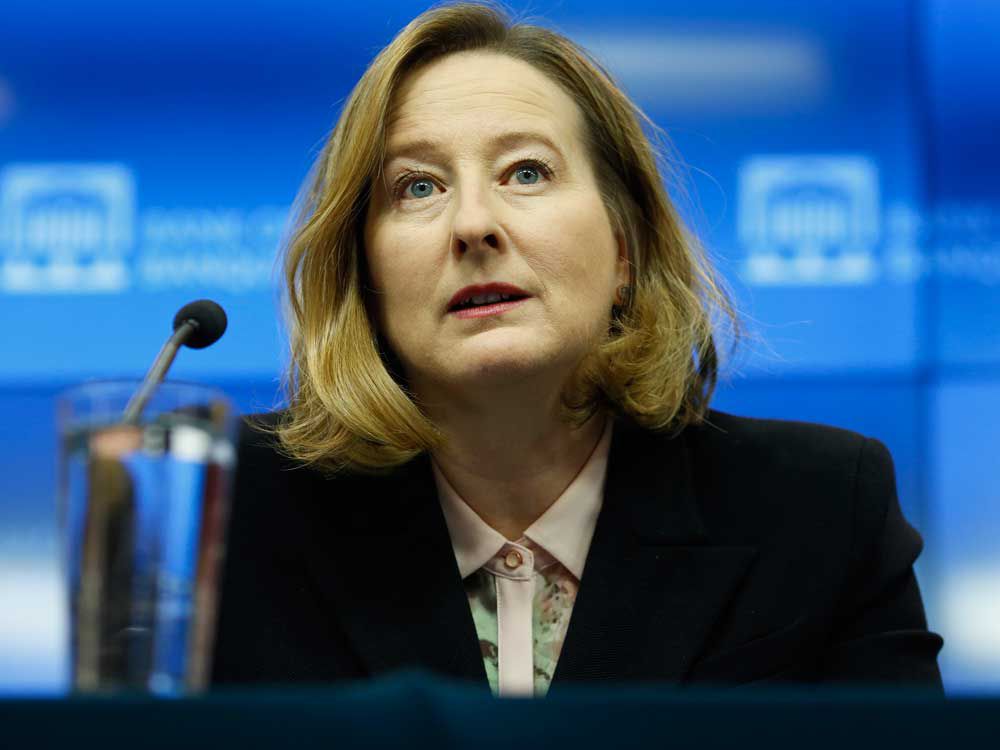
Experience away from the central bank appears to have become a requirement for running it. Wilkins, who broke one glass ceiling when she won the competition to become senior deputy governor, is still young enough to be governor. Macklem, 59, will have reached retirement age when his term ends in 2027.
But that’s the future. Here in the present, Wilkins’ decision to leave will trigger a reshuffling of the Bank of Canada’s leadership group ahead of what promises to be an exceptional period in the central bank’s history.
The central bank has already committed to doing its part to fight the COVID-19 recession by keeping interest rates near zero for at least a couple of years, evidence that the country’s biggest collection of PhD economists think the economy is extraordinarily weak.
Canadian policy-makers for the first time have deployed quantitative easing, or QE, in which the central bank uses its unique power to create money in order to buy debt worth hundreds of billions of dollars. The experience of the U.S. Federal Reserve and other central banks suggests the aggressive strategy will work, but QE remains an experiment that must be closely watched.
Wilkins’ mandate review, which could result in a decision to replace the Bank of Canada’s inflation target with a new approach to setting interest rates, also looms. All told, it won’t be a casual seven years for Macklem and his deputies.
Like the governor, the senior deputy governor is a cabinet appointment, so Chrystia Freeland, who replaced Morneau last month as finance minister, will influence the decision. At the same time, convention grants the governor significant say over who serves as his top lieutenant. The independent directors of the Bank of Canada’s board will lead the search and recommend candidates to Freeland.

Follow Canada News Media
Get the day's top Canadian stories and our two daily 60-second news videos wherever you scroll.
X Threads Facebook Instagram LinkedIn TikTok YouTube Pinterest Reddit Substack Flipboard Newsletter RSS