
On paper, Canada’s digitized archives promise a kind of historical equality: if a record exists, anyone can find it. Type a surname into a search box, and the past should surface—court notices, school board debates, church announcements, obituaries, land ads, hockey box scores, “wanted” notices, and the everyday items that make family and community history legible.
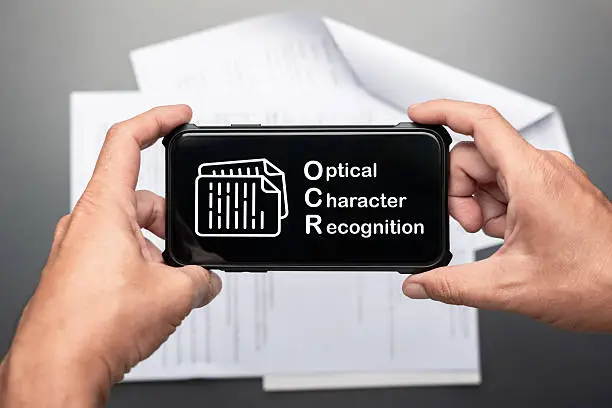
In practice, that promise often breaks at the first step: optical character recognition (OCR)—the software layer that turns scanned images of newspapers and documents into searchable text. When OCR misreads a word, it doesn’t simply produce a typo. It can effectively remove that word from search, because most archive interfaces depend on OCR text to retrieve results. A misread surname becomes, functionally, an unindexed surname.
For Black Canadian research—especially for families and communities whose stories already sit at the margins of official record-keeping—the result is a quiet but consequential distortion: the digital archive can “erase” people not by withholding documents, but by making them unfindable.
This is not an abstract technical glitch. It shapes what gets cited, what gets mapped, what gets taught, and which histories are treated as “documented.”
OCR: the invisible gatekeeper of digitized history
OCR systems analyze a scanned page (often a microfilm scan of a newspaper), segment it into blocks and lines, and then predict characters and words. The output is typically imperfect even under ideal conditions, and historical sources are rarely ideal:
- 19th- and early 20th-century newspapers used dense layouts, irregular fonts, tight spacing, and ink that bleeds through paper.
- Microfilm introduces blur, scratches, warping, and uneven contrast.
- Old pages may be torn, stained, or photographed at inconsistent angles.
- Headlines, ads, and multi-column articles complicate layout detection, which is often where OCR errors begin.
A core point that digitization marketing sometimes understates is this: OCR quality is not uniform. It varies by page, by title, by year, by microfilm reel, by print quality, and by the digitization workflow itself.
OCR evaluation research has repeatedly shown that historic newspapers produce markedly worse OCR than modern printed text, and that accuracy drops sharply when scans are degraded. (Two frequently cited works in the field are Simon Tanner, Trevor Muñoz and Pich Hemy Ros’s 2009 study on measuring digitization quality, and Rose Holley’s 2009 analysis of OCR in large-scale historic newspaper digitization; both document how quickly OCR performance deteriorates with poor source quality and how that affects search and discovery.) I’m not quoting specific percentages here because results depend heavily on collection and method—but the consistent finding is that errors are not edge cases; they are structural.
Why this becomes a Black Canadian issue (not just a tech issue)
OCR errors affect everyone using digitized newspapers. But they do not affect everyone equally.
Black Canadian history—particularly the history of African Nova Scotian communities and other long-established Black communities across the country—often depends on local newspapers and administrative notices: small articles, brief mentions, lists of names, church events, court proceedings, school reports, shipping news, and community announcements.
When a group is undercovered to begin with, each mention carries more weight. That creates a compounding problem:
- Fewer total references means fewer chances to “get lucky.”
If a prominent politician appears in hundreds of articles, OCR can misread their surname dozens of times and researchers will still find plenty. If a Black family name appears only a handful of times in surviving issues, one or two OCR failures can erase the searchable record. - Surnames are especially sensitive to OCR failure.
Search interfaces usually retrieve exact word matches. If OCR turns a surname into a near miss—one wrong character, a missing apostrophe, a stray hyphen—search often returns nothing. - Black Canadian names are more likely to be “non-standardized” across time.
This is not about any inherent property of Black surnames. It’s about historical recordkeeping: clerks, editors, and enumerators sometimes spelled the same name multiple ways across decades, and communities whose history was recorded by others (officials, courts, employers, newspapers) often experience higher rates of name variation. OCR then adds a second layer of variation—machine-generated variation—on top of human inconsistency. - African Nova Scotian history is frequently tied to older, harder-to-OCR material.
Many key sources are 19th-century and early 20th-century local papers, or microfilmed copies that may be several generations removed from the original print. OCR tends to struggle most in precisely those conditions.
The result is a modern research hazard: the archive may “contain” evidence, but search will not reliably reveal it.
How OCR errors distort research outcomes
The harm is easy to miss because it doesn’t always look like harm. It looks like an absence.
Here are the most common distortions OCR introduces into Black Canadian historical research:
1) False negatives that masquerade as historical silence
A researcher searches for a surname and gets zero results. The temptation is to interpret that as “they weren’t there” or “the paper didn’t cover them.”
But an empty result set may mean something else: the page exists and the name is printed, but the OCR never recognized it. In digital humanities terms, OCR failures reduce recall (the share of relevant items retrieved).
2) Skewed quantitative studies
Universities increasingly encourage “data-driven” history: counting mentions over time, tracking sentiment, mapping networks, or measuring media attention.
If Black names are systematically underrecognized by OCR, then:
- counts of mentions will be artificially low;
- trendlines will appear flatter than reality;
- “first mention” dates will be pushed later than they truly are;
- network graphs will omit key individuals because they never appear as a machine-readable entity.
This is how a technical artifact becomes a scholarly artifact: a computational result that looks like evidence, but is actually an OCR shadow.
3) Unequal discoverability and unequal citation
In journalism and academia, what gets found gets cited. OCR failures can produce an unequal research environment where:
- prominent institutions, officials, and businesses remain highly searchable;
- marginalized people become harder to find and thus less likely to enter the secondary literature.
This doesn’t require anyone to intend bias. It’s the logic of search: visibility becomes legitimacy.
4) Family history gets trapped behind a usability wall
Community historians and genealogists often rely on keyword search because manual page-by-page review is time-consuming and paywalled databases can be expensive.
When OCR doesn’t “see” a surname, families can be forced into:
- manual browsing of entire runs of newspapers,
- reliance on institutional access they may not have,
- or abandoning leads altogether.
For communities that have historically had to fight for the right to be documented, this is a bitter irony: the record exists, but only for those with time, money, training, or institutional support.
What does it mean to “quantify” the Black Canadian OCR problem?
If we want this issue to move from anecdote to action, the most useful next step is not another general warning that “OCR is imperfect.” It’s a collection-level audit that can tell us, in concrete terms, how bad the problem is for names.
A rigorous, Canada-focused audit could be done without any proprietary tools. Here is what a university lab, newsroom, or community archive partnership could measure.
Metric A: Name-level “search recall” in a specific database
Pick a list of surnames strongly associated with a community (for example, a roster from a church register, a cemetery ledger, a school list, a community association membership roll, or a curated community genealogy source). Then:
- Select a time window and a set of newspaper titles known to cover that community.
- For each surname, run an exact search in the database and record results.
- Independently sample pages likely to contain those names (for example, issues around known events—weddings, court cases, business ads, community meetings).
- Manually confirm whether the surname appears in print on those pages.
- Calculate how often the database search finds it.
This produces a practical, user-facing estimate: when the name is on the page, how often does search find it?
Metric B: Character error rate (CER) and word error rate (WER) on name-heavy sections
OCR researchers commonly evaluate accuracy using:
- Character Error Rate (CER): how many character edits are required to turn OCR text into the correct text, divided by total characters.
- Word Error Rate (WER): the same idea at the word level.
A Canadian project could select:
- obituaries,
- community announcements,
- church notices,
- court lists,
- shipping/news lists,
- classified ads
…and compare OCR output against a human-verified transcription. Even a few thousand words per title/year can reveal patterns: some reels or decades may be dramatically worse.
Metric C: “Variant explosion” (how many OCR spellings a surname becomes)
Even when OCR captures something, it may produce multiple variants. For a given surname, researchers can extract all close matches (using fuzzy matching) and measure:
- number of distinct OCR variants,
- frequency distribution,
- which letter pairs fail (rn/m, cl/d, i/l, etc.),
- whether errors cluster in certain titles or years.
This is particularly relevant to Black Canadian research because entity extraction (names) is the foundation for many modern methods: topic modeling, network analysis, and automated indexing.
Why African Nova Scotian research is especially exposed
African Nova Scotian communities—including communities such as Africville (Halifax) and historically Black communities in and around Halifax Regional Municipality and elsewhere in Nova Scotia—are frequently researched through:
- municipal records,
- land and property records,
- court and school documents,
- church archives,
- local newspapers,
- and community oral history.
Digitized newspapers are often treated as a “shortcut” into that ecosystem: search a surname, then follow the thread.
But if the OCR layer is unreliable, it can change the shape of historical inquiry. Researchers may over-rely on:
- sources that are already well indexed (government reports, later documents, or widely digitized titles),
- while underusing the messy local record where many community details are found.
In other words, OCR can create a new hierarchy of sources—not by historical value, but by machine legibility.
The problem isn’t only accuracy—it’s transparency
One of the most underreported parts of this issue is that many archive interfaces do not clearly communicate OCR limitations. Users often don’t know:
- whether full text was generated by OCR or manually transcribed,
- what OCR engine/version was used,
- what quality controls were applied,
- whether the text is corrected over time,
- how to use wildcard/fuzzy search effectively (if even available),
- which years or reels have degraded scans.
Without that information, researchers may treat search results as a neutral representation of the archive, when it’s actually a representation of OCR performance.
A practical journalistic question for Canadian institutions and database vendors is:
What do you tell users about OCR error rates, and what do you measure internally?
What would fix it? (And what can be improved right now)
There is no single “fix,” but there are proven interventions:
1) Publish OCR confidence and collection-level quality indicators
Even a simple page-level quality score helps researchers interpret negative results.
2) Add better search tools: fuzzy search, proximity search, and wildcard support
These features don’t solve OCR, but they reduce the cost of OCR failure. They also benefit non-expert users.
3) Community-led correction workflows
Crowdsourced text correction has been used in multiple jurisdictions for newspapers and public documents. The key is governance: who decides priorities, how contributions are credited, and how corrected text is preserved and shared.
For Black Canadian materials, correction projects can be designed as community-university partnerships where:
- community historians define which titles/years matter most,
- students learn transcription and archival ethics,
- corrected outputs return to the community in accessible formats.
4) Name dictionaries and “authority files” for communities
Researchers can build a community name authority list (including known spelling variants) and integrate it into search and entity recognition. This is not about policing names; it’s about ensuring the archive can find them.
5) Re-OCR with modern models, plus layout-aware processing
OCR engines have improved substantially in the last decade, especially when paired with models trained on historical fonts and when layout detection is robust. Reprocessing older scans can yield significant improvements—though the magnitude depends on scan quality.
A journalist’s test: try searching for absence
One of the simplest ways to demonstrate the OCR problem in a Canadian context—without overstating conclusions—is to report it as a reproducible experiment:
- Choose a specific community and a short period (e.g., 10 years).
- Identify a set of names from an independent source (a directory, church register, school list, cemetery ledger).
- Search for those names in a digitized newspaper database.
- Then manually browse a sample of issues where you have reason to expect those names to appear (community events, legal notices, etc.).
- Record the misses.
That kind of reporting produces a tangible finding: not “OCR is bad,” but “in this database, for this period, for this set of names, search misses X% of known appearances.” It’s the difference between a general caution and a measurable barrier to knowledge.
The deeper point: digitization can repeat old inequities in a new form
Black Canadian history has long faced barriers of preservation, custody, and interpretation. OCR adds a 21st-century version of those barriers—one that is subtle enough to pass as neutrality.
Digitization is often presented as democratization. And it can be. But when search is the main doorway to the archive, OCR becomes a gatekeeper. If that gatekeeper performs worse on the sources most likely to contain Black community life—local papers, degraded microfilm, dense columns of names—then Black history becomes harder to find precisely in the places where it survived.
That’s why the “Black Canadian OCR problem” matters: it doesn’t only slow down research. It can reshape what Canada believes is “documented,” what universities consider “citable,” and what the public thinks happened.
In Black History Month—and beyond—the challenge is not simply to digitize more, but to digitize with accountability: measure accuracy, disclose limitations, improve search, and involve communities in deciding what “access” should actually mean.
Follow Canada News Media
Get the day's top Canadian stories and our two daily 60-second news videos wherever you scroll.