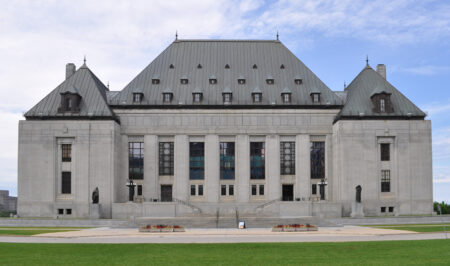




Canada’s Auditor General Karen Hogan has appointed a new external advisory council to help guide her office as it reviews major public programs and spending. One of the most notable additions is former Nunavut premier P.J. Akeeagok, whose inclusion brings northern and territorial experience into a body meant to strengthen independent oversight. The council is designed to offer advice, perspective, and challenge as the Office of the Auditor General carries out audits that often shape public debate in Ottawa and across the country. The move signals an effort to broaden the range of voices informing one of Canada’s most important accountability institutions.
For Canadian readers, this matters because the Auditor General’s work affects how governments are judged on everything from defence spending and housing programs to Indigenous services and climate-related commitments. When the office is supported by advisers with real-world political, regional, and governance experience, Canadians may see more informed scrutiny of whether public money is being used effectively. Akeeagok’s presence may be especially meaningful for people in the North, where federal policy decisions can have very different impacts than they do in southern Canada. It also matters for trust in public institutions, since a stronger advisory structure can help ensure oversight reflects the full diversity of Canada’s realities.
What to watch next is how the advisory council influences the Auditor General’s priorities and public-facing work over time. Canadians should look for whether future audits show a wider understanding of northern issues, Indigenous governance, and regional implementation challenges. It will also be worth watching how transparent the office is about the council’s role and whether its advice contributes to sharper, more practical recommendations for government departments and agencies.
The Office of the Auditor General of Canada plays a central role in the country’s democratic system by examining whether federal departments, Crown corporations, and some territorial governments are managing public resources properly. Its reports can trigger parliamentary hearings, policy reviews, and political pressure for reform, even though the office itself does not make laws or run programs. In recent years, Auditor General reports have drawn national attention to procurement problems, gaps in service delivery, and weak follow-through on government promises. By bringing in outside advisers, the office appears to be reinforcing its ability to stay independent, relevant, and connected to the different communities affected by federal decisions.
The appointment of P.J. Akeeagok stands out because he is a well-known public figure from Nunavut with first-hand experience in territorial leadership and northern policy. His time in public office gave him direct exposure to many of the issues that often sit at the intersection of federal and territorial responsibility, including infrastructure, housing, affordability, Indigenous rights, and the delivery of essential services in remote communities. Those are not abstract policy files in the North; they are practical concerns that shape daily life, from the cost of food to access to health care and transportation. Having someone with that background involved in an advisory capacity could help the Auditor General’s office better understand how programs perform outside major population centres.
That broader lens is particularly important in Canada, where national programs are often designed in Ottawa but experienced very differently in provinces, territories, rural regions, and Indigenous communities. A federal initiative that looks successful on paper may encounter serious barriers when rolled out in places with limited infrastructure, workforce shortages, harsh weather, or high delivery costs. Advisory input from people who understand those conditions can help the Auditor General ask tougher and more relevant questions. In turn, that can lead to audit findings that are more useful for Parliament and more meaningful for the public.
The council’s creation or renewal also reflects a wider trend in Canadian governance: major institutions are under pressure to show they are listening to a broader range of perspectives while preserving independence and credibility. For the Auditor General, that balance is especially important. The office must remain firmly non-partisan, but it also needs to understand how policies affect communities with very different histories, demographics, and economic realities. Drawing on outside advice does not replace the technical work of auditors, accountants, and investigators, but it can strengthen the strategic thinking that shapes what gets examined and how findings are framed.
For Canadians, the practical value of this may show up in ways that are not always obvious at first. When the Auditor General chooses to examine a troubled procurement system, a delayed infrastructure program, or a gap in Indigenous service delivery, that work can eventually influence how public money is managed and whether governments fix known problems. Better oversight can mean fewer wasteful decisions, clearer performance measures, and stronger pressure on departments to deliver what they promised. Over time, that can affect services Canadians rely on, from housing supports and veterans’ programs to emergency preparedness and northern infrastructure spending.
Akeeagok’s appointment may also be read as a sign that northern leadership is being taken more seriously within national institutions. Too often, northern concerns are treated as peripheral in federal discussions despite the fact that the Arctic is central to Canada’s sovereignty, climate future, and reconciliation efforts. Nunavut and other northern regions face distinctive challenges that deserve more than occasional attention, especially as Ottawa invests in infrastructure, defence, food security, and community services across the North. If the advisory council helps bring those realities into sharper focus, it could improve the quality of public accountability at the national level.
The bigger picture is that independent oversight bodies only work well when they maintain public confidence and keep pace with the complexity of modern government. The Auditor General’s office is often one of the few places Canadians look to for a clear, non-partisan assessment of whether public systems are functioning as promised. A more diverse advisory council will not solve every problem, but it can help the office test its assumptions and better reflect the country it serves. In that sense, the appointment of P.J. Akeeagok is more than a personnel update; it is part of a broader effort to make federal accountability stronger, more representative, and more grounded in the lived experience of Canadians.
Follow Canada News Media
Get the day's top Canadian stories and our two daily 60-second news videos wherever you scroll.
X Threads Facebook Instagram LinkedIn TikTok YouTube Pinterest Reddit Substack Flipboard Newsletter RSS