

For many Canadians, the country is often seen as a beacon of multiculturalism, diversity, and tolerance. But beneath this surface lies a complex and painful history of colonialism and systemic racism that continues to affect Black Canadians and Indigenous peoples to this day. From the legacies of slavery and residential schools to present-day inequities in healthcare, justice, and education, the effects of colonialism and racism in Canada are deep and ongoing. Understanding these legacies is crucial to addressing the inequities that still permeate society, as these communities continue to fight for recognition, rights, and reparations.
The history of colonialism in Canada is rooted in the dispossession of Indigenous lands and the attempted erasure of Indigenous cultures. Beginning in the late 15th century, European settlers arrived on the shores of what is now Canada and began colonizing Indigenous lands. Through treaties—many of which were fraudulent or unilaterally imposed by the Crown-Indigenous peoples were displaced from their territories, leading to significant cultural and economic devastation.
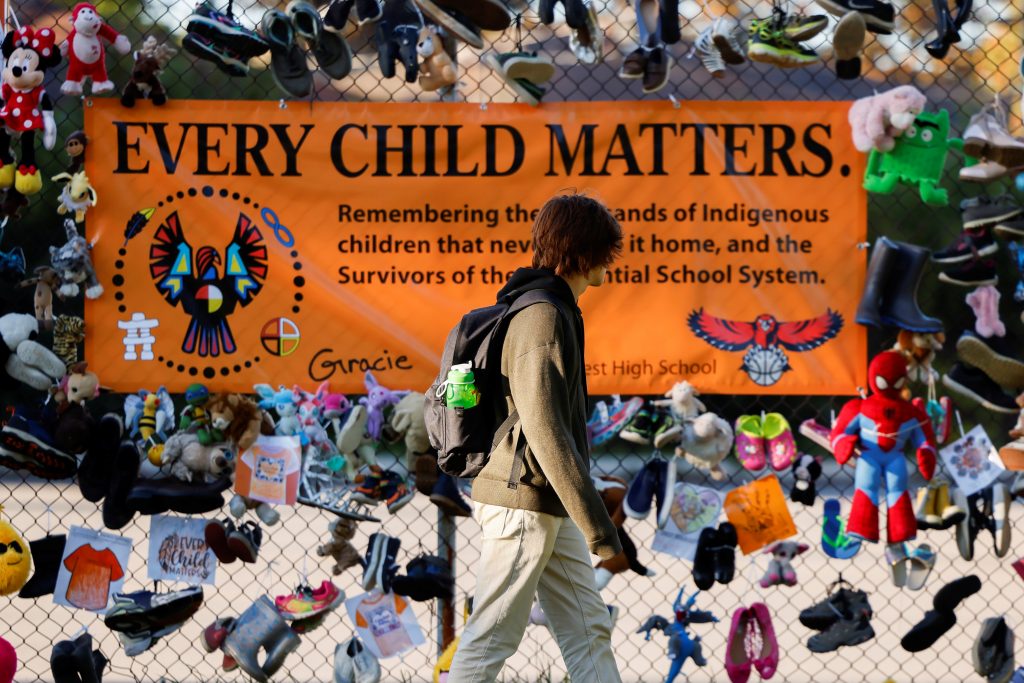
The introduction of residential schools in the late 19th century marked one of the darkest chapters in this colonial history. More than 150,000 Indigenous children were forcibly removed from their homes and placed in these institutions, where they were subjected to physical, emotional, and sexual abuse, as well as efforts to eradicate their languages and cultural practices. The last residential school closed only in 1996, and the traumatic effects are still felt today.
Elder Geraldine Smoke, a survivor of the residential school system and a member of the Cree Nation, shares her story: “They told us we were savages, that our ways were wrong. I was punished for speaking my language. They tried to break us—our bodies, our spirits. It wasn’t just about education. It was about erasing who we were. And they almost succeeded. But we survived.”
The Truth and Reconciliation Commission (TRC), established in 2008, has brought greater awareness to these atrocities, but many Indigenous leaders argue that reconciliation remains far from complete.
While the history of Indigenous peoples is now receiving more attention in the public consciousness, the experiences of Black Canadians remain largely overlooked. Canada’s involvement in the transatlantic slave trade is not as widely discussed as in the United States, but slavery did exist in what is now Canada for more than 200 years. The first enslaved African in Canada was brought to the colony of New France in 1628, and by the late 18th century, enslaved Africans made up a significant portion of the population in places like Quebec and Nova Scotia.
“Canada’s history of slavery has been whitewashed for far too long,” says historian Afua Cooper, who has extensively researched slavery in Canada. “We think of ourselves as the country of the Underground Railroad, the safe haven for escaping slaves. But before Canada was a refuge, it was a slaveholding society. Black people were bought and sold in this country, and that legacy of anti-Blackness didn’t end with the abolition of slavery.”
Even after slavery was abolished in 1834, Black Canadians continued to face widespread discrimination. In Nova Scotia, for example, the Black community of Africville was subjected to decades of neglect and systemic racism. The residents of this close-knit, predominantly Black community were denied basic services like running water, sewage systems, and garbage collection. In the 1960s, Africville was demolished by the city of Halifax under the guise of urban renewal, and its residents were forcibly relocated.
“Losing Africville was like losing a part of ourselves,” says Delvina Bernard, an Africville descendant and former member of the Africville Genealogy Society. “They took away our homes, our church, our sense of community. And they didn’t even apologize until decades later. Even now, Black Nova Scotians still face systemic racism in housing, employment, and education. The ghosts of Africville are still with us.”
In 2023, the Canadian government released a report acknowledging that systemic racism continues to affect Black and Indigenous Canadians in virtually every sector of society, from policing and the criminal justice system to healthcare and education.
According to Statistics Canada, Indigenous peoples and Black Canadians are disproportionately impacted by police violence and overrepresented in the criminal justice system. In 2021, Indigenous people made up 32% of the prison population, despite representing only 5% of the overall Canadian population. Similarly, Black Canadians are more likely to be stopped by police, experience racial profiling, and face harsher sentencing in court.
Desmond Cole, a Black activist and journalist, has been vocal about police brutality and racial profiling in Canada. “We have this idea that Canada is somehow less racist than the U.S., but that’s a lie. The same police violence that kills Black people in the U.S. is happening here. We have our own George Floyds and Breonna Taylors. Black people are being stopped and harassed for no reason other than the color of our skin. It’s a national crisis, and it’s being swept under the rug.”
In healthcare, Black and Indigenous people also face significant disparities. Studies show that they are more likely to experience poor health outcomes due to racism within the healthcare system. Indigenous women, for example, have reported being sterilized without their consent as recently as the 2010s, and Black Canadians face higher rates of chronic diseases like diabetes and hypertension due to systemic neglect.
Dr. Suzanne Shoush, an Indigenous physician, speaks to the challenges faced by Indigenous patients in the healthcare system: “There is a deep mistrust of the healthcare system in Indigenous communities, and it’s not hard to see why. Our people have been subjected to medical experiments, forced sterilization, and denial of care. Many of my patients tell me they’ve been treated like second-class citizens in hospitals—spoken to with disdain, refused pain management, or not believed when they describe their symptoms.”
Similarly, Dr. Onye Nnorom, a Black physician and advocate for equity in healthcare, highlights the structural barriers faced by Black patients: “Black Canadians face racism in healthcare that is often subtle but incredibly harmful. There is a pervasive bias that Black people feel less pain or that we are more resistant to certain treatments. These misconceptions lead to under-treatment and misdiagnosis. The system is not built to care for us.”
Education is another area where systemic racism is pervasive. Indigenous students often face lower graduation rates, underfunding, and inadequate resources, especially in remote and northern communities. The legacy of residential schools continues to haunt Indigenous education, with many survivors carrying intergenerational trauma that affects their children and grandchildren.
Cindy Blackstock, an advocate for Indigenous children’s rights and a member of the Gitxsan First Nation, has long called attention to the underfunding of First Nations schools. “Indigenous children in Canada receive significantly less funding for education than non-Indigenous children. It’s not just about money—it’s about equality and respect. Indigenous children have a right to quality education, but the government continues to underfund and neglect our communities.”
Black Canadians also face significant barriers in education and employment. A 2021 report by the Canadian Centre for Policy Alternatives found that Black Canadians are less likely to be employed in higher-paying jobs and more likely to experience unemployment compared to white Canadians, even when they have the same qualifications.
Andray Domise, a Black journalist and advocate, speaks to the systemic racism that Black Canadians face in the workplace: “I’ve lost count of how many times I’ve been told that I’m ‘overqualified’ for a job or that I don’t ‘fit the culture.’ That’s code for ‘you’re Black and we don’t want you here.’ There’s this glass ceiling for Black professionals in Canada—we’re allowed to work, but we’re not allowed to advance. We’re stuck in entry-level positions, and when we do get hired, we’re paid less than our white colleagues.”
The Fight for Justice and Equality
Despite the many challenges they face, Black Canadians and Indigenous peoples have long been at the forefront of the fight for justice and equality. Activists, scholars, and community leaders continue to push for meaningful change, whether through advocacy, legal challenges, or grassroots organizing.
In 2020, following the murder of George Floyd in the United States, Canada saw its own wave of Black Lives Matter protests, calling attention to anti-Black racism and police brutality in the country. The movement has galvanized a new generation of activists, many of whom are drawing connections between the struggles of Black Canadians and Indigenous peoples.
Ellen Gabriel, a Kanien’kehá:ka (Mohawk) activist and spokesperson during the 1990 Oka Crisis, highlights the solidarity between Indigenous and Black communities in the fight against systemic racism. “Our struggles are different, but they are connected. Colonialism and white supremacy have shaped the experiences of both Indigenous and Black people in this country. We have both been subjected to violence, dispossession, and dehumanization. But we have also both resisted. Our resistance is a powerful act of survival.”
Similarly, El Jones, a Black poet and activist from Halifax, sees the intersectionality
Follow Canada News Media
Get the day's top Canadian stories and our two daily 60-second news videos wherever you scroll.
X Threads Facebook Instagram LinkedIn TikTok YouTube Pinterest Reddit Substack Flipboard Newsletter RSS