

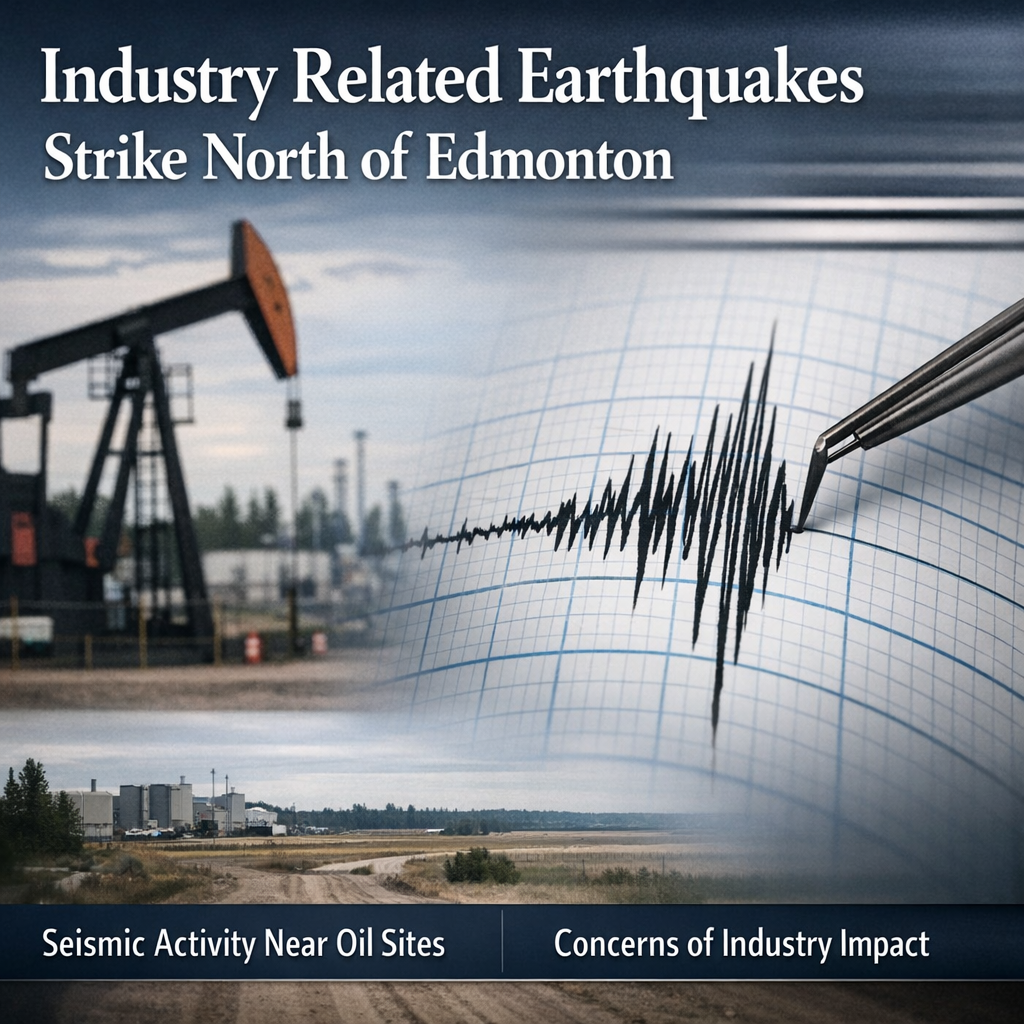
A growing cluster of small earthquakes near Peace River, Alta., is drawing renewed attention to how oil and gas activity can trigger seismic events in western Canada. The Alberta Energy Regulator has recorded more than 30 quakes in the area and classifies them as induced, meaning they are linked to industrial operations rather than natural tectonic movement. While most of the tremors have been minor, the pattern is raising fresh questions about monitoring, public safety and whether current rules are strong enough in regions where energy development and nearby communities overlap. The story matters because it highlights the balancing act between economic activity and the need to protect residents, infrastructure and confidence in the regulatory system.
For Canadians, this issue is about more than a remote cluster of tremors in northern Alberta. It speaks directly to how provinces oversee major energy projects, how quickly regulators respond when risks emerge and whether communities can trust that warning systems and shutdown rules will work as intended. In energy-producing regions, even low-level earthquakes can affect homeowners, farmers, Indigenous communities and municipalities that rely on roads, buildings and local services staying safe and stable. More broadly, the issue feeds into a national conversation about responsible resource development, especially as Canada tries to maintain energy production while facing tougher expectations around environmental oversight and public accountability.
The next key question is whether seismic activity in the Peace River area continues or eases as regulators and companies adjust operations. Readers should watch for any new restrictions, operational pauses, updated seismic assessments or enforcement action from the Alberta Energy Regulator. It will also be important to see whether the province releases more public information on what specific activities are tied to the quakes and whether local residents report any noticeable effects.
To understand the significance of these earthquakes, it helps to know that induced seismicity is a well-documented phenomenon in parts of Western Canada and the United States. In Alberta and British Columbia, some earthquakes have been linked to hydraulic fracturing and wastewater disposal, both of which can alter underground pressure and sometimes activate existing faults. Regulators have developed response systems, including thresholds that can trigger investigations or mandatory slowdowns, but those systems depend on timely reporting, strong enforcement and detailed geological data. Peace River has drawn attention before because it sits in an active resource-producing area where industrial operations take place close enough to local communities that even modest tremors can become a public concern.
The latest developments around Peace River underline a challenge Alberta has been confronting for years: induced earthquakes are no longer treated as a theoretical side effect of resource extraction. They are an observed and tracked issue, with data now publicly listed and classifications that point to a human cause. That does not automatically mean every tremor creates immediate danger, but it does mean regulators, operators and governments cannot dismiss them as rare anomalies. When earthquake events stack up in one region, the pressure grows for stronger explanations about what is causing them and what is being done to reduce risk.
For people living in the area, the distinction between a natural earthquake and an induced one may matter less than the lived reality of shaking ground, rattling windows or worry about what repeated tremors could mean over time. Residents often want practical answers: whether their homes are at risk, whether insurance could be affected and whether industrial work nearby will be scaled back if the events continue. In rural and northern communities, where energy development can be a major employer, these concerns are often mixed with economic dependence on the same industry being scrutinized. That tension can make public communication especially important, because communities need clear facts rather than vague reassurances.
From a regulatory perspective, the Alberta Energy Regulator faces pressure to show that its system is doing what it is supposed to do. The public listing of more than 30 known induced events suggests the monitoring process is active, but transparency alone is not enough if people are left wondering what consequences follow. Canadians have seen similar debates in other sectors, where data disclosure is welcomed but public trust ultimately depends on visible action, independent oversight and plain-language explanations. If seismic events continue to accumulate, there will likely be closer scrutiny of permit conditions, emergency response protocols and whether current thresholds for intervention are low enough.
The issue also lands at a sensitive time for Canada’s energy sector. Alberta remains central to the country’s oil and gas economy, and governments are keenly aware of the sector’s importance to jobs, investment and export revenue. At the same time, public expectations have changed. Many Canadians now expect environmental and safety oversight to be more transparent, more precautionary and more responsive when warning signs appear. Earthquakes linked to industrial activity can quickly become a symbol of whether regulators are staying ahead of the risk or reacting after public concern has already escalated.
Scientific context matters here as well. Not every industrial operation causes earthquakes, and not every region has the same underground geology or fault sensitivity. But experts have long said that when fluids are injected underground or when rock formations are fractured under pressure, the stress changes can in some cases trigger seismic movement. That is why location, operating intensity, subsurface mapping and real-time monitoring are so important. The better the geological understanding before development begins, the better the odds of spotting trouble early and adjusting activity before a string of events grows longer.
For Canadian readers, this story is another reminder that energy development is not just an abstract debate about markets or pipelines. It has direct local consequences that can be felt in communities, homes and public confidence in oversight bodies. Whether the Peace River earthquakes remain minor or lead to stronger intervention, the response will be watched closely as a test of how Canada manages the real-world impacts of resource extraction. In the weeks ahead, the focus will likely remain on whether the tremors continue, how clearly officials explain the cause and whether Alberta’s regulator can convince the public that the situation is under control.
Follow Canada News Media
Get the day's top Canadian stories and our two daily 60-second news videos wherever you scroll.