


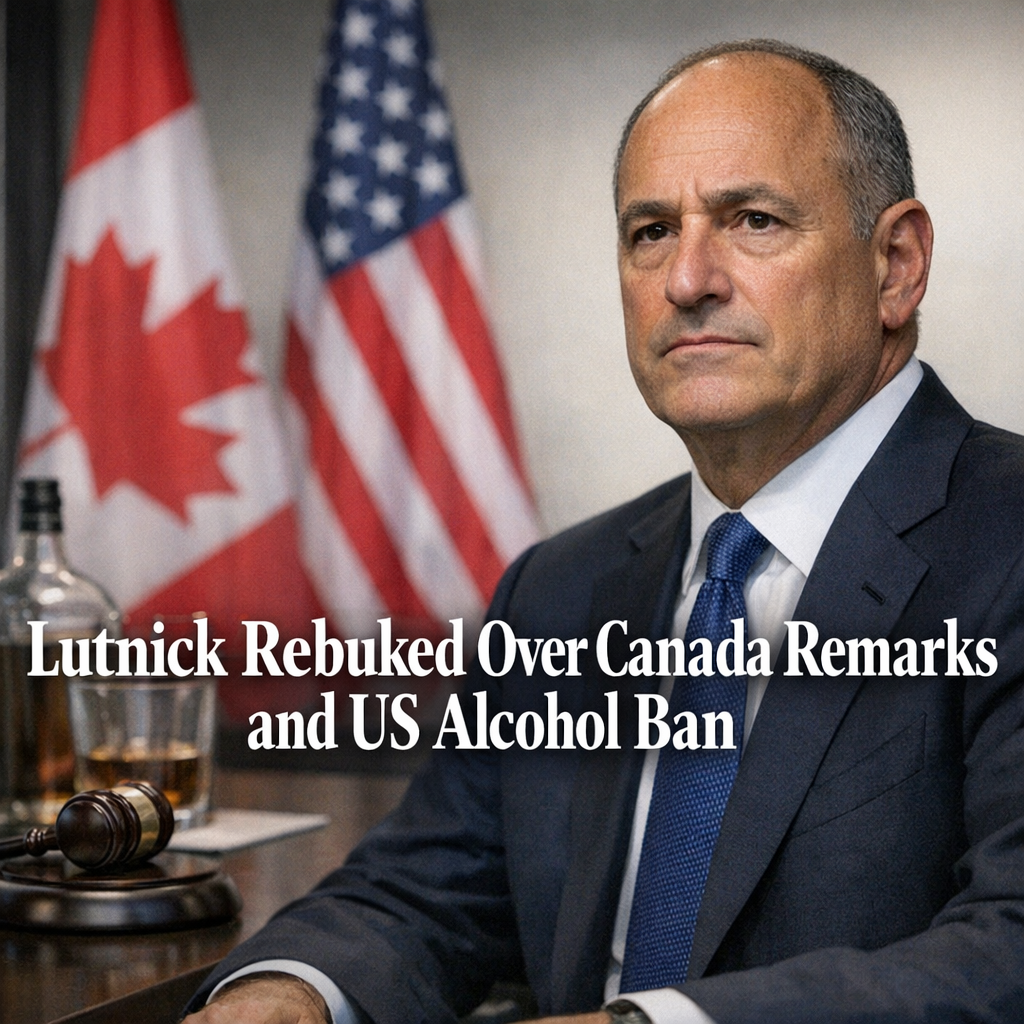
A sharp exchange in Washington has added fresh strain to already tense Canada-U.S. relations, after U.S. Senator Jeanne Shaheen said Canada would not move ahead on certain cross-border co-operation because of repeated insults from U.S. President Donald Trump and remarks from other American figures. Her comments suggest political rhetoric is now affecting practical diplomacy, not just public opinion. That matters because Canada and the United States rely on close day-to-day collaboration on trade, defence, border management and energy. When senior American lawmakers openly acknowledge that the tone coming from Washington is pushing Canada away, it signals a deeper problem in one of the world’s closest bilateral relationships.
For Canadians, the biggest concern is that personal attacks and political taunts could spill into areas that affect jobs, prices and public services. If Ottawa becomes less willing to sign on to joint projects or respond quickly to U.S. requests, that could complicate everything from supply chains and manufacturing to security planning and border co-ordination. Canadian businesses that depend on stable access to the American market may also face more uncertainty if the broader relationship becomes more unpredictable. On a daily level, any cooling in trust between the two countries can eventually be felt in travel, investment confidence and the speed at which the two governments solve practical problems.
What to watch next is whether this dispute remains a political talking point or develops into a more serious obstacle in Canada-U.S. talks. Readers should pay attention to any response from Ottawa, especially if Canadian officials publicly tie future co-operation to a more respectful tone from Washington. It will also be important to see whether other U.S. lawmakers try to calm tensions, or whether campaign-style rhetoric continues to shape policy decisions affecting the border.
The background here is important because Canada and the United States are not ordinary neighbours. They share one of the largest trading relationships in the world, an integrated manufacturing base, a long undefended border and deep defence ties through NORAD and NATO. Even when governments disagree, both sides usually try to protect the machinery of co-operation because so much of modern life depends on it. But over the years, harsh rhetoric, tariff fights and political pressure from Washington have tested that tradition, leaving Canadian leaders more cautious about appearing too eager to accommodate U.S. demands.
Senator Shaheen’s remarks stand out because they appear to confirm publicly what many Canadian officials and observers have suggested privately for years: tone matters in diplomacy, especially with allies. While governments often push through disagreements behind closed doors, there is a limit to how much public disrespect a partner can absorb before it becomes politically difficult to say yes. In Canada, elected leaders must answer not only to business groups and security officials, but also to voters who expect their country to be treated as a sovereign partner rather than a subordinate. If American leaders frame Canada in dismissive or hostile terms, even practical co-operation can become harder to defend politically.
That dynamic is especially relevant in Canada right now. Ottawa has often tried to balance pragmatism with public firmness when dealing with Washington, particularly during periods of pressure over trade, military spending, border enforcement or industrial policy. Canadian governments know the U.S. relationship is too important to neglect, but they also know there is domestic political value in resisting perceived bullying. Shaheen’s comment points to that exact tension: there may be issues where Canada might otherwise be willing to engage, but the political cost rises when the American side couples requests with insults.
This also highlights a broader lesson about how diplomacy works between close partners. Formal agreements, economic data and military ties matter a great deal, but so do trust and respect between leaders and institutions. Canada and the United States can disagree on major files and still move forward if both sides believe the other is acting in good faith. When that trust is weakened, even routine negotiations can become slower, more fragile and more vulnerable to domestic political backlash. In that sense, the latest exchange is about more than one comment or one senator’s frustration; it is about whether the political climate is making normal co-operation harder to sustain.
For Canadian readers, there is also a practical economic angle. Many sectors in Canada operate on the assumption that cross-border ties will remain steady even when politics get noisy. Auto parts cross the border multiple times during production, energy systems are closely linked, and many communities depend on smooth commercial movement. If political hostility starts to interfere with that baseline of co-operation, the costs can spread quickly. Companies may delay investment, provincial leaders may push Ottawa for firmer responses, and uncertainty can begin to affect planning well beyond Parliament Hill.
At the same time, Canadians should not assume one pointed exchange means a full breakdown is coming. The Canada-U.S. relationship has survived serious disputes before, including trade battles, defence disagreements and clashes over climate and industrial policy. In most cases, officials on both sides eventually find a way to keep essential co-operation moving. Still, public comments like Shaheen’s are significant because they show concern from within the U.S. political system itself, not just from Canadian critics. When an American senator says the tone coming from the president is directly influencing Canada’s willingness to act, it suggests the damage is visible in Washington too.
SEO Title: Canada-U.S. tensions rise after Senator says Trump insults are hurting co-operation
SEO Description: U.S. Senator Jeanne Shaheen says Canada is pulling back from co-operation because of insults from President Donald Trump, raising new concerns for trade, border ties and diplomacy.
Suggested SEO Keywords: Canada U.S. relations, Jeanne Shaheen Canada, Trump insults Canada, Canada U.S. diplomacy, Canada U.S. trade tensions, Canada border co-operation, Ottawa Washington relations
Follow Canada News Media
Get the day's top Canadian stories and our two daily 60-second news videos wherever you scroll.
X Threads Facebook Instagram LinkedIn TikTok YouTube Pinterest Reddit Substack Flipboard Newsletter RSS