


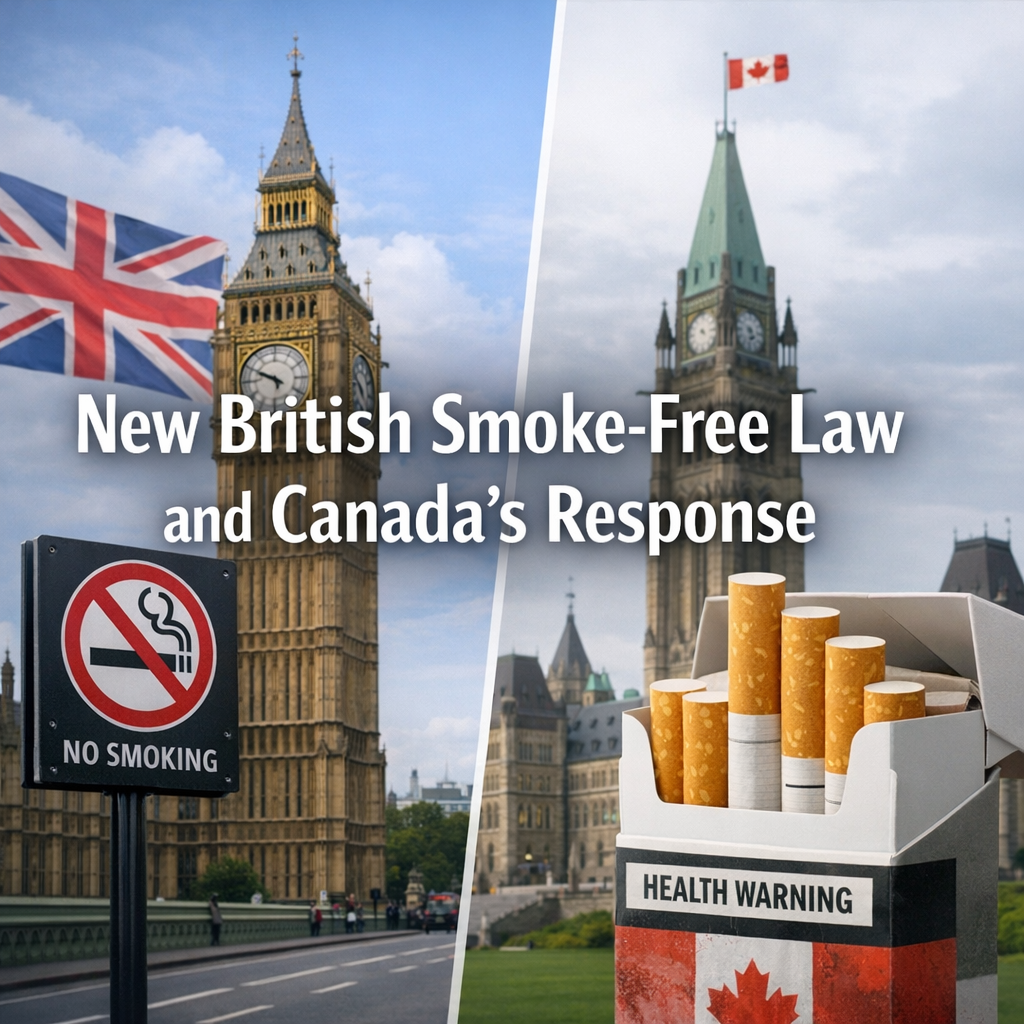
The United Kingdom is preparing to bring in one of the world’s toughest anti-smoking laws by permanently raising the legal age for buying tobacco. If passed and fully implemented, the measure would mean anyone born after 2008 would never legally be able to purchase cigarettes or other tobacco products. The plan is designed to gradually phase smoking out of younger generations rather than banning tobacco outright for current adult smokers. Supporters say it could cut smoking-related illness and reduce pressure on public health systems over time, while critics are raising questions about enforcement, black-market risks and personal choice.
For Canadian readers, the UK move matters because Canada is already pushing hard to reduce smoking rates and is watching international policy experiments closely. Federal and provincial governments here have tightened rules on tobacco advertising, plain packaging, warning labels and flavoured products, while also taking a more aggressive approach to vaping among youth. If the British model appears effective, it could influence future debates in Ottawa and across the provinces about whether stronger age-based restrictions should be considered in Canada. The discussion also matters to Canadian families, schools, health agencies and retailers, especially as officials continue trying to prevent teenagers and young adults from becoming nicotine users in the first place.
What comes next will depend on how the law is finalized, enforced and challenged politically in the UK. Health experts, governments and advocacy groups in Canada and elsewhere will be watching smoking rates among young people, retail compliance and whether illegal tobacco sales increase. The success or failure of the British approach could shape future tobacco-control policy far beyond the UK, including in countries that have already adopted strict public-health measures.
The bigger context is that smoking remains one of the leading preventable causes of death worldwide, even after decades of public education and tighter rules. Canada has seen major declines in smoking over the years, but tobacco use still contributes to cancer, heart disease, lung illness and high health-care costs. Governments have increasingly shifted from simply warning people about smoking to trying to stop nicotine addiction before it starts, especially among youth. At the same time, policymakers are balancing public health goals with concerns about consumer freedom, enforcement practicality and the changing role of vaping and other nicotine products.
The proposed UK law stands out because it changes the logic of tobacco control. Instead of setting a fixed legal age such as 18 or 19, it would create a moving age barrier that rises every year. In practice, that means today’s adults would still be able to buy tobacco, but younger generations would grow up in a system where legal access never arrives. Backers argue that this is a gradual and targeted way to reduce the number of future smokers without forcing current users to quit overnight.
That approach is attracting attention in countries like Canada, where smoking rates have fallen but not disappeared. Canadian public-health officials have spent years trying to push prevalence lower through taxation, public smoking bans, ad restrictions and prominent package warnings. Ottawa has also adopted a national goal of driving tobacco use down to very low levels in the coming years. Against that backdrop, any international policy that promises to further reduce youth smoking is likely to draw serious interest from health experts and lawmakers here.
There are, however, practical questions that go well beyond the headline appeal of the measure. Retailers in the UK would need clear rules and reliable age-verification systems to avoid confusion as the eligible age changes over time. Enforcement agencies would have to monitor compliance while also dealing with the possibility that some smokers turn to informal or illegal sellers. Those same concerns would resonate in Canada, where contraband tobacco has long been a challenge in some regions and where policymakers know that restrictions can have unintended consequences if enforcement is uneven.
Another issue is whether tobacco laws can stay effective in a market increasingly shaped by alternatives such as e-cigarettes and nicotine pouches. Canada has already wrestled with a sharp rise in youth vaping, prompting regulatory responses and public debate about whether vaping serves as a quitting tool for adults or a gateway to nicotine addiction for teens. The UK has often presented vaping as less harmful than smoking and sometimes as a smoking-cessation aid, but stronger tobacco rules may intensify questions about whether users will simply switch products. Canadian readers should pay attention to that part of the debate because tobacco and vaping policy are now deeply connected.
The political symbolism of the UK plan is also significant. Governments often promise to reduce smoking, but few attempt a generational phaseout with such a clear long-term goal. If the law works, it could become a model for countries looking for a bolder strategy than taxes and warning labels alone. If it runs into legal, political or enforcement trouble, that could reinforce the view that incremental restrictions remain the more realistic path.
For Canada, the most immediate lesson may not be whether to copy the UK exactly, but whether public-health policy should become more ambitious. Canadian lawmakers are under pressure to protect young people from addiction while avoiding approaches that are too difficult to police or too disruptive for businesses. Provincial differences would also matter, since tobacco sales, retail oversight and health priorities can vary across the country. Any similar discussion in Canada would likely involve a long debate among provinces, retailers, civil-liberties advocates, anti-smoking groups and medical organizations.
Canadian households may also see this story through a very personal lens. Many parents, teachers and doctors are less concerned with abstract policy design than with how to keep teenagers from ever picking up smoking or vaping. A generational ban sends a strong message that tobacco is not an ordinary consumer product but a major health risk governments are trying to eliminate. Whether or not Canada ever follows the UK’s lead, the story highlights a broader shift in public policy: moving from managing smoking to trying to end it for future generations.
In that sense, the UK proposal is more than a domestic law change. It is a test case for how far modern democracies are willing to go to prevent long-term disease tied to legal products. Canadian policymakers, public-health leaders and ordinary readers will be watching not just the political debate, but the real-world outcomes. Those outcomes could help shape the next chapter of tobacco control in Canada and beyond.
Follow Canada News Media
Get the day's top Canadian stories and our two daily 60-second news videos wherever you scroll.
X Threads Facebook Instagram LinkedIn TikTok YouTube Pinterest Reddit Substack Flipboard Newsletter RSS