



As hope for the end of the COVID-19 pandemic grows with encouraging news about vaccines, the Liberal government will increasingly turn its attention to recovery, and its promise to make climate change a central focus of the economy’s rebuilding.
Last month, Environment Minister Jonathan Wilkinson tabled legislation that will enshrine the government’s goal of making Canada a net-zero emitter of greenhouse gases (GHGs) by 2050. However, while setting an ambitious target is one thing, meeting it is quite another.
Prime Minister Justin Trudeau’s government is now at a critical juncture, even as he’s hemmed in by Conservative premiers who resist his climate-change agenda.
The Liberals can either continue the slow march with targeted and modest actions, or implement a far-reaching climate plan that will transform the Canadian economy and position it to prosper in a zero-carbon world.
To reach that more ambitious goal, the government will have to kickstart the effort with a stimulus plan that plows tens of billions of dollars into clean-energy programs. But the Trudeau government will also have to go far beyond the frequently heard calls for public spending on high-profile energy projects.
It will need the entire government to adopt a climate lens, as opposed to its current practice of creating boutique programs in departments such as Agriculture; Natural Resources; or Innovation, Science and Economic Development, while the rest of the bureaucracy carries on with business as usual.
The prime minister is unlikely to get much help from key provinces, as he did in 2016, when federal, provincial and territorial governments hammered out the Pan-Canadian Framework on Clean Growth and Climate Change. However, Ottawa can forge partnerships with municipalities — and with the private sector, which is far more committed to action than it was four years ago.
The enormous impact of capital markets could dwarf the public-sector effort to effect a zero-carbon transformation. To harness it, the government must step up and lead the effort to enshrine the principles of sustainable finance that properly value the risks and opportunities arising from the growing climate crisis and the global response to it.
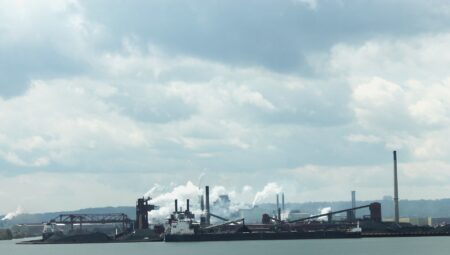
In responding to the pandemic this year, the federal government delayed much of its climate-change agenda. It focused instead on providing financial support to individuals and businesses, including the oil industry, which was struggling before the pandemic and has been clobbered by the resulting global drop in demand for crude.
In a November report, the Winnipeg-based International Institute for Sustainable Development said Canada, along with other Group of 20 industrialized countries, “doubled down” on its fossil-fuel subsidies this year, despite long-standing promises to end them. It rated Canada’s record of fossil-fuel subsidies between 2016 and 2019 “very poor.”
EnergyPolicyTracker.org, which is produced by two European non-government organizations, calculated that, as of Nov. 18, Canada had provided some $18.6 billion in conditional and unconditional support to the fossil-fuel sector, and only $14.6 billion to support clean energy. It characterized as “conditional support” the $2.4 billion that Ottawa spent on cleaning up abandoned oil wells and helping industry reduce methane emissions.
Meanwhile, the Liberal government’s lobbying of president-elect Joe Biden to approve the Keystone XL pipeline sends a clear message that, despite its public promise of net-zero emissions by 2050, Ottawa remains committed to building fossil-fuel infrastructure whose normal lifespan is around 30 years.
So what would an ambitious, climate-focused recovery plan look like?
For starters, it would be securely anchored in the government’s commitment to exceed its existing target under the Paris Agreement to reduce GHGs by 30 per cent below 2005 levels by 2030, and to reach net-zero emissions by 2050. It must also be rooted in a “just transition,” with education, training, and other support to ensure individual Canadians — oil-industry workers, Indigenous people, and others who are already disadvantaged in the current economy — don’t fall further behind.
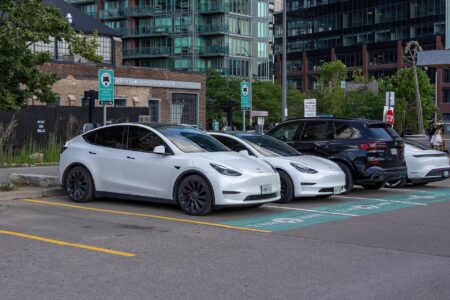
It would allocate billions of dollars annually over several years on a range of clean-energy programs. The Task Force for a Resilient Recovery — a group largely drawn from think tanks, with some business members — says $55.4 billion should be spent over five years on clean-energy infrastructure, building retrofits, electric-vehicle infrastructure, nature-based programs, and the production and adoption of clean technology across the economy.
A bold plan would involve the federal government spending its vast procurement budget on incentives for companies to adopt clean-tech solutions to lower their own GHG emissions, and, just as important, to commercialize and drive down the cost of innovative technologies.
As mentioned, it would embrace principles of sustainable finance, and make it clear to corporate directors, and managers of public-sector pension plans, that they have a fiduciary duty — that is, a legal obligation — to ensure their organizations are part of the solution, rather than part of the problem in the climate emergency.
The response to the COVID pandemic around the world demonstrates the power of collective action when governments and the private sector collaborate. Witness the unprecedented speed of vaccine development. It also shows the tragic results that occur when leaders ignore the science and refuse to take tough action in the face of a crisis.
The Liberal government’s actions over the next several months will tell whether it has the guts to lead, or will content itself with lofty promises unmatched by bold action.
The views, opinions and positions expressed by all iPolitics columnists and contributors are the author’s alone. They do not inherently or expressly reflect the views, opinions and/or positions of iPolitics.
This article originally appeared in the iPolitics Holiday Magazine published earlier this month.

Follow Canada News Media
Get the day's top Canadian stories and our two daily 60-second news videos wherever you scroll.
X Threads Facebook Instagram LinkedIn TikTok YouTube Pinterest Reddit Substack Flipboard Newsletter RSS