


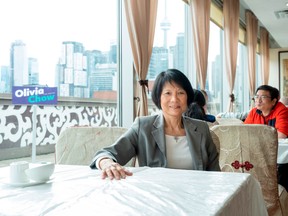
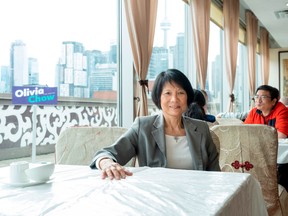
On Monday, Toronto voters will have the chance to elect a mayor who can save the city from the same spiral of decay and despair that’s claimed cities like San Francisco and Seattle. That mayor is not Olivia Chow.
Doom loops — a phenomenon where one problem worsens others, which in turn worsen the first, spurring a perpetual cycle of decline — are taking hold of urban centres across the United States. With its multitude of interconnected crises — from housing affordability to crime, a wholly insufficient transit system, brain drain and a downtown core that hasn’t recovered from the pandemic — Toronto risks joining them.
Notably, cities in doom loops have something in common: a history of rigidly “progressive” mayors whose ideological puritanism rendered them incapable of responding to key issues.
This mentality afflicts politicians on both sides of the aisle, but can be more insidious on the left because of the enduring stereotype that leftists are inherently progressive. This fallacy has delayed much-needed introspection, modernization and reform on the left.
Both San Francisco and Seattle suffered from years of local rule by mayors and councillors determined to stick out archaic progressive attitudes and policies that clearly weren’t working.
Drug use and crime were allowed to proliferate. Preventing homelessness took a back seat to efforts to make unhoused people’s lives marginally better — even as they often got demonstrably worse — at greater and greater cost to taxpayers, and homeless populations exploded.
As a result, young professionals and middle-class families fled to greener pastures, leaving behind gaping wealth gaps. Offices were vacated, businesses big and small shuttered, transit deteriorated and essential workers like nurses, teachers and police were nowhere to be found. This led to even larger exoduses, which once again made things worse.
Olivia Chow has made it clear that she will follow in the same footsteps as the doomed mayors of San Francisco and Seattle. She, too, fails to understand that affordable housing, while important, will never be enough without housing affordability.
She, too, fails to acknowledge that law enforcement must play a role in tackling increasingly open drug use and random acts of crime.
Polls have her gliding to victory based mostly on name recognition and a decades-old personal brand with strong leftist vibes. However, these vibes obfuscate a politician whose views are steeped in old-school ideology rather than modern reality.
If Toronto is to avoid its own doom loop, we can’t simply spin in the same place — or, worse, backwards — led by a retrograde mayor disguised as a champion for change.