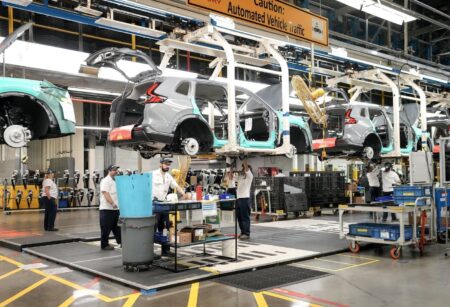



As the world tumbles toward an increasingly automated future, Canada finds itself at an important crossroads. With rapid advancements in artificial intelligence (AI) and automation technologies, the Canadian workforce faces both unprecedented challenges and exciting opportunities. The question on everyone’s lips is: what will the future of work in Canada look like?
The Automation Wave
Automation, once regarded as a distant phenomenon, is now penetrating various sectors of the workforce—from manufacturing to services. A report by McKinsey & Company predicts that by 2030, up to 30 percent of jobs in Canada could be displaced due to automation. This grim statistic has raised concerns among workers and policymakers alike, but it also highlights the need for adaptation.
“While the fear of job loss is valid, automation can also lead to the creation of new roles that we can’t yet imagine,” says Dr. Elizabeth Revet, a labor economist at the University of Toronto.
The AI Revolution
AI is one of the most significant drivers of this change, offering capabilities ranging from data analysis to customer service automation. For sectors like healthcare, AI holds the potential to streamline processes and improve patient outcomes. For instance, AI tools that analyze medical data can aid in accurate diagnoses faster than a human doctor.
However, the integration of AI into the workforce raises ethical questions. How do we ensure fairness and transparency in algorithms that might inadvertently perpetuate bias? Governments and companies must navigate this new territory carefully.
“As AI decisions increasingly impact people’s lives, regulatory frameworks need to keep pace,” emphasizes Dr. Ravi Sood, an AI ethics researcher at Simon Fraser University. “Canada has an opportunity to lead in establishing ethical AI guidelines.”
Job Creation in the Age of Innovation
The flip side of the automation narrative is job creation. While some traditional roles may disappear, new sectors are rapidly emerging. The Canadian government estimates that over the next decade, nearly 40% of new jobs will require skills that are currently scarce in the labor market.
Fields such as green technology, data analytics, and biotechnology are expected to boom. In fact, the federal government’s Budget 2023 earmarked $500 million for tech training programs designed to bolster skills in these emerging fields. These investments are vital for ensuring that workers are not only displaced but also equipped with relevant skills for new job opportunities.
The Role of Education and Reskilling
Education will be key in this transitional period. Institutions across Canada are rethinking curriculum to align with future job markets. Many universities and colleges are now offering programs focused on AI, data science, and digital literacy, reflecting a growing acknowledgment of the need for a tech-savvy workforce.
Additionally, partnerships between educational institutions and industry can further strengthen workforce readiness. Programs that facilitate apprenticeships and internships can provide practical experience, bridging the gap between academia and workforce demands.
The Gig Economy and Remote Work
The rise of automation and AI technologies fuels the expansion of the gig economy, as many individuals turn to freelance work to supplement their income. Platforms like Uber, Upwork, and TaskRabbit have proven instrumental in providing flexible job options.
Moreover, the COVID-19 pandemic has accelerated the shift toward remote work. Companies are now recognizing the benefits of a distributed workforce, allowing for a broader talent pool and increased employee satisfaction. A 2022 survey by Statistics Canada found that 28% of Canadians were still working remotely part-time, illustrating that hybrid work could become a lasting trend.
Conclusion: Preparing for the Future
As Canada navigates the complex waters of automation, AI, and job creation, a balanced approach will be crucial. While the fears of job displacement persist, there is also potential for unprecedented growth and innovation. Both government and industry must collaborate closely to develop strategies that mitigate risks while maximizing opportunities.
With continuous learning and adaptive policies in place, Canada can emerge as a leader in this new era of work—a landscape where human creativity and machine efficiency coexist harmoniously to shape a better future for all.
As we look forward, one thing remains clear: the future of work in Canada will be what we make of it.
Related Products
Follow Canada News Media
Get the day's top Canadian stories and our two daily 60-second news videos wherever you scroll.