




Ukraine’s considerable achievements in 2019
are poorly understood, both in Ukraine and abroad. This is perhaps not
surprising. Ukrainians usually suspect their government of the worst, while the
foreign media rarely reports accurately about Ukrainian reforms. Since
September 2019, US media coverage in particular has been distorted by negative impeachment-related
headlines. Nevertheless, the progress made by Ukraine over the past twelve
months should not be underestimated. This has paved the way for further
significant advances in 2020. Key areas to watch will be the cleanup of
Ukraine’s law enforcement, improvements in state administration, and the opening
of all kinds of markets to competition.
Ukraine’s current economic outlook is far better
than many appreciate. In 2016-19, the Poroshenko administration carried out an
impressive macroeconomic stabilization following the severe crisis of 2014-15
caused by the outright robbery of the preceding Yanukovych government and the
onset of Russian military aggression. Thanks largely to measures implemented
under President Poroshenko, the budget deficit has now been reduced to 2
percent of GDP, while inflation has fallen to 5 percent. Meanwhile, public debt
has dropped from 80 percent of GDP in 2016 to 52 percent of GDP. In 2019, the
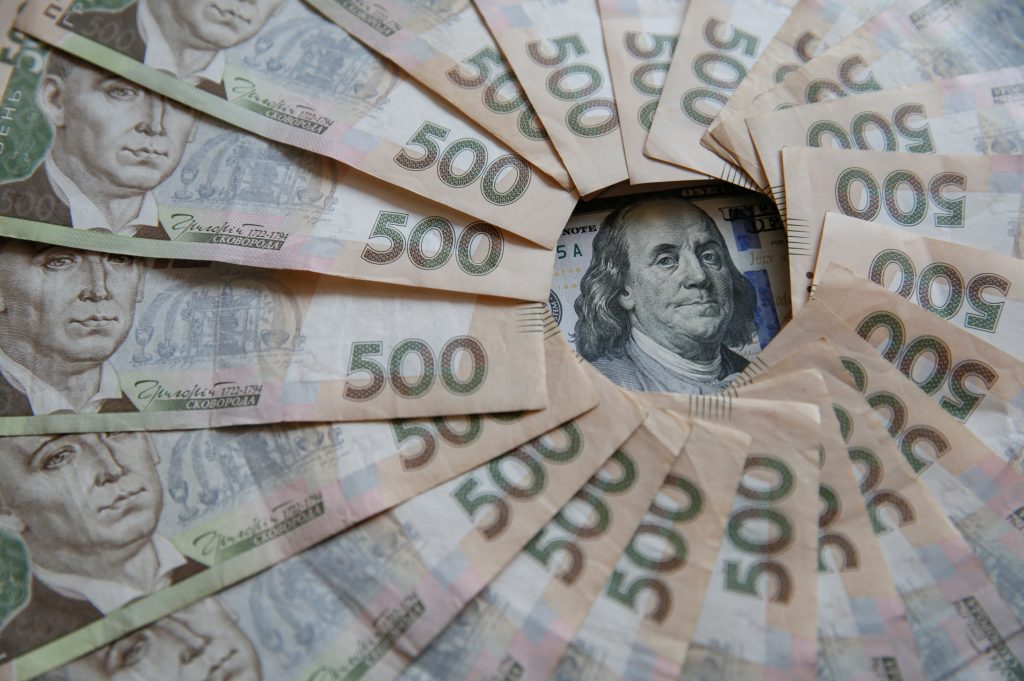
hryvnia was the best-performing currency in the world, appreciating 19 percent
in relation to the US dollar. Ukraine’s average monthly dollar wage has risen
from USD 200 in 2016 to the current level of around USD 450. Bond yields and
interest rates have plunged. Indeed, the main concern today is that the hryvnia
is rising too fast, prompting the National Bank to buy more dollars and cut its
interest rate.
Subscribe for the latest UkraineAlert
The past year also saw arguably the two
freest and fairest national elections in Ukraine’s independent history. With
corruption the main concern among voters, the old guard was unceremoniously
kicked out of power, producing an unprecedented generational shift in Ukrainian
politics. Impressively, 80 percent of the incoming parliamentarians who took
their seats in August 2019 were newcomers, as were all but two of the ministers
appointed to the new government. Such a cleansing was clearly needed in order to
tackle pervasive corruption. Crucially, Ukraine did this through democratic
means. It is now important to expand this cleanup to other state institutions
in 2020.
It is commonplace to blame the “oligarchs”
for Ukraine’s corruption without naming anybody. My view is that the predatory
state actually poses the principal threat to Ukraine’s economy and welfare. In
practice, the people who are considered oligarchs are those who are strong
enough to defend their property against state predators, most of all law
enforcement agencies indulging in corporate raiding. In order to extend property
rights to the wider business community, Ukraine must reform all law
enforcement.
The Zelenskyy administration has started impressively
in this direction. The Prosecutor General’s Office was seen as most harmful.
New Prosecutor General Ruslan Ryaboshapka has launched an admirable cleansing
from the top, demanding both competence and integrity from his prosecutors. The
abolition of parliamentary immunity and the reinstitution of a law on illicit
enrichment are also important steps. Additionally, parliament has adopted a
sound law on cleansing the odious State Bureau of Investigation and President
Zelenskyy has dismissed its head.
Huge problems remain with the country’s
courts. The adoption of a new law on judicial reform is disputed and its
implementation unclear, but 44 judges were appointed to the Supreme Court after
having failed their integrity tests. Corrupt judges need to be removed also from
lower-level courts.
The main remaining hurdle is the State Security
Service (SBU), which has received a new head, but so far little sign of reform
has been noticed. Parliament needs to adopt a law on the SBU, which should be purged
from the top down, much like the Prosecutor General’s Office. If this is
achieved, Ukraine could offer credible property rights, encouraging both Ukrainians
and foreigners to hold more funds in the country.
2020 should also be the year when the
Ukrainian state makes the decisive leap from Soviet-style bureaucracy to
digital government. In spite of incidental attempts to modernize Ukraine’s
state administration, such as the much-admired reform of the Vinnytsia City Administration,
most of the administration remains terribly Soviet and bureaucratic in nature.
Many documents require thirty manual signatures, rendering nobody responsible.
Meetings are devoted to collecting signatures rather than serious analytical
discussions. All this must change. Ukraine needs a modern computerized state
administration. Estonia has set a much-appreciated example. President Zelenskyy
is on the right track with his “state in a smartphone” vision. Let us hope that
the newly created Ministry for Digital Transformation receives the necessary powers
to revolutionize the way Ukraine’s government works.
Finally, markets must be opened up. Ukraine
has an excellent tool for that purpose. Its Association Agreement with the
European Union contains hundreds of rules for the opening of myriad markets.
Ukraine has legislated much already, but in many cases formal rules have yet to
translate into the kind of full implementation that would make European
competitors want to enter Ukraine on a wider scale. Laws on electricity and gas
markets have been adopted, and the electricity market has been formally in
place since July 2019.
In the second and third quarters of 2019,
Ukrainian GDP reached a growth rate of over 4 percent. Prime Minister Honcharuk
aims at 5 percent in 2020 and 7 percent in the ensuing years. These are
sensible and realistic goals. Any doubters should remember that Ukraine averaged
GDP growth of 7.5 percent a year from 2000-2007. The macroeconomic foundations
are now in place to enable a repeat of this performance. Much will depend of
whether Ukraine can open up the economy while creating a transparent and level
playing field.
Anders Åslund is a senior fellow at the Atlantic Council. His most recent book is “Russia’s Crony Capitalism: The Path from Market Economy to Kleptocracy.”

Tue, Nov 26, 2019
Ukraine is finally ready to embrace land reform
The sale of private agricultural land has been banned since 2001. Ukraine is one of six countries in the world to maintain this restriction.
UkraineAlert
by
The views expressed in UkraineAlert are solely those of the authors and do not necessarily reflect the views of the Atlantic Council, its staff, or its supporters.

The Eurasia Center’s mission is to enhance transatlantic cooperation in promoting stability, democratic values and prosperity in Eurasia, from Eastern Europe and Turkey in the West to the Caucasus, Russia and Central Asia in the East.









Follow us on social media