


Cariboo stroke survivor found her footing to help others after doctors said she might not be able to walk – Kelowna Capital News – Kelowna Capital News
dr. Ted Leighton visited Bear Island near Digby, NS, in mid-August, and knew something was wrong when he saw a pair of gulls behaving strangely.
“They behaved in a way that suggested some sort of neurological disorder,” said Leighton, a retired veterinary pathologist and wildlife health researcher.
He also noticed something else.
“I saw that there was a lot of clearing going on. You could see a seagull or two pecking at something dead on the beach, repeated and over and over again along the straight shoreline, as I could see it. So I thought there was a substantial mortality going on.”
Leighton, an internationally renowned wildlife disease scientist, had no chance to investigate further that day, but when he returned to Bear Island on September 3, his suspicions were confirmed.
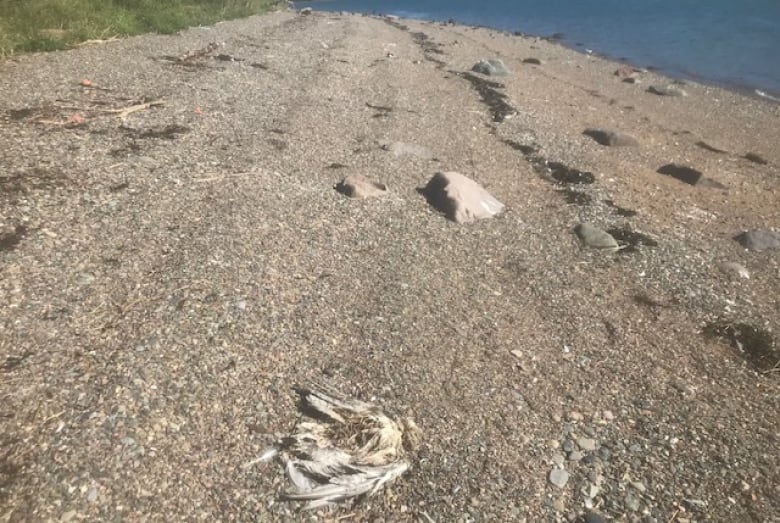
“There were skeletal remains everywhere,” he said. “Often it was just wings and sternum, no meat at all, sometimes feathers.”
Leighton said it’s impossible to know how many seagulls died on the island recently because the tides washed carcasses into the Annapolis Basin twice a day, but he said the number certainly runs into the hundreds.
Leighton believes that highly pathogenic avian influenza is the cause of the extinction.
“It’s very unlikely it’s anything else, but of course you have to do the expensive work of testing for the virus to be sure.”
Bear Island can be reached on foot at low tide and is an occasional destination for hikers and climbers. The town of Digby has recently asked people to stay off the island.
An unprecedented year
Leighton collected some specimens from the island, which will be sent to the Canadian Wildlife Health Cooperative (CWHC) for research. The cooperative, which Leighton co-founded and subsequently led for many years, provides disease surveillance and death tracking in wildlife across Canada.
dr. Megan Jones, the Atlantic Regional Director of the CWHC and an assistant professor in the division of pathology and microbiology at Atlantic Veterinary College, said it has been an unprecedented year for bird flu in the Atlantic provinces and across the continent.
She said the co-op’s Atlantic office normally does about 300 diagnostic tests on wildlife in the first six months of a year, but this year the staff did 1,400 tests over that period. The organization has faced such high demand that it now has to prioritize certain cases as it has already spent its entire diagnostic budget for the year.

From January to March, about nine percent of tests were positive for the highly pathogenic bird flu, and between April and June, that number had risen to about 20 percent.
“It’s a challenge because there isn’t much we can do,” Jones said. “They’re going to get together. There’s no social distancing, so there’s not much we can do about it other than monitor it and try to minimize transmission.”
Glen Parsons, the manager of the sustainable use of wildlife program at Nova Scotia’s Department of Natural Resources and Renewables, said the county has received reports of dead birds in every county and seen cases of highly pathogenic bird flu from Yarmouth to Sydney.
Parsons said the virus is transmitted through direct contact, including feces and liquids, so people are advised not to touch or approach sick or dead birds and not to feed them.
Anyone in Nova Scotia who finds a sick or dead bird or animal should call Natural Resources at 1-800-565-2224.
follow H5N1
The North American outbreak of highly pathogenic avian influenza, a strain of H5N1, began in Newfoundland last December with the discovery of the virus on a display farm. Then a case turned up in a Canada goose in Nova Scotia, and then in other birds in New Brunswick and Prince Edward Island. In the intervening months, the virus has spread across the continent after engulfing Europe last year.
It has caused significant mortality in wild bird populations and has been found in foxes in Nova Scotia and Prince Edward Island, as well as harbor seals in Quebec. In other parts of Canada and the US, it’s been found in skunks, raccoons and bobcats, Jones said.

This particular strain of H5N1 has not caused significant disease in humans, but public health officials are closely monitoring all cases, as transmission of the virus to humans could trigger a global outbreak.
The CWHC sends samples of all positive wildlife cases to the National Center for Foreign Animal Diseases lab in Winnipeg, which conducts genetic sequencing of the virus to try to catch any mutations that make it more likely to infect humans.
source link
Related
.