


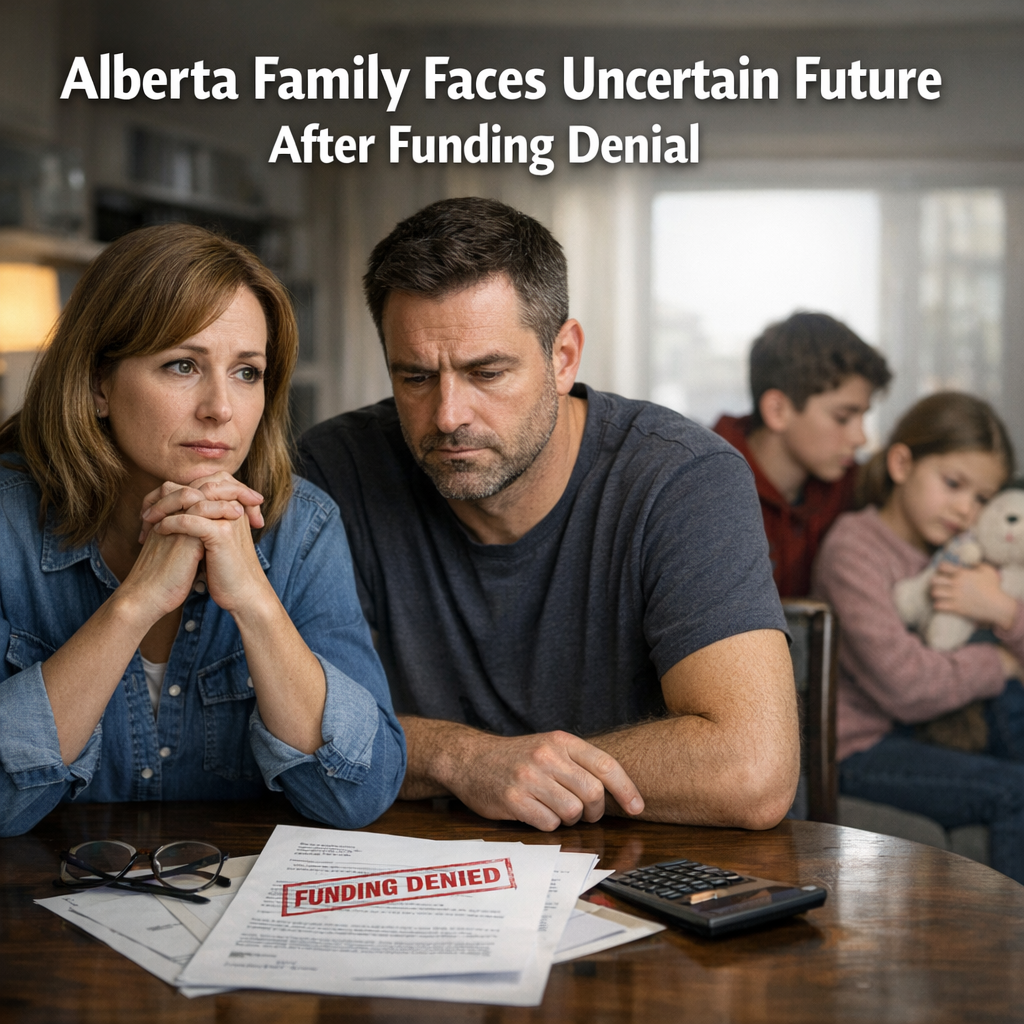
An Airdrie family says Alberta’s public health system is refusing to fund an advanced treatment in Europe that they believe could save their two-year-old child’s life. The case has become a painful example of what can happen when parents, doctors and health officials do not agree on whether an out-of-country therapy is medically necessary or supported by enough evidence. As the family pushes for approval, the story is drawing attention across Alberta and beyond because it touches on urgent questions about access, fairness and the limits of publicly funded care. It is also stirring strong emotions among Canadians who expect medically necessary treatment to be available when a child’s life may be at stake.
For Canadian readers, this story hits close to home because it raises concerns about how provincial health systems decide which treatments are covered and which are denied. Families often assume that if a therapy offers real hope, public insurance will step in, but out-of-country care is usually subject to strict rules, expert review and funding limits. In Alberta, as in other provinces, these decisions can leave families scrambling to raise money privately, seek legal advice or appeal through the health system while time is running short. The case also highlights a broader pressure on Canadian medicare: patients want access to the latest treatments anywhere in the world, while governments and health authorities must weigh evidence, cost and safety before approving public payment.
What comes next will likely depend on whether the family can overturn the decision through an appeal, political pressure or a revised medical review. There may also be growing scrutiny on how Alberta Health and Alberta Health Services handle rare and complex pediatric cases when treatment options exist outside Canada. If the case continues to attract national attention, it could prompt renewed debate over whether provincial rules for out-of-country care are too narrow for children facing life-threatening illnesses.
To understand the wider picture, it helps to remember that Canada’s health-care system is publicly funded but run largely by the provinces and territories, which means coverage decisions are not always the same across the country. In general, treatment outside Canada is only publicly funded when it is unavailable here, considered medically necessary and backed by enough clinical evidence to meet provincial standards. Those standards can be especially difficult to apply in rare childhood illnesses, where treatments may be newer, highly specialized or only offered at a small number of centres worldwide. Families in these situations often feel trapped between medical urgency and government process, especially when every delay can seem unbearable.
The Airdrie family’s fight is likely to resonate with many Canadians because it combines some of the hardest realities in public health care: a very sick child, a treatment not available at home, and a government system that moves more cautiously than desperate parents can accept. While Alberta officials are expected to rely on established policy and medical assessment, the public response may focus more on the human side of the story and the question of whether enough flexibility exists for extraordinary cases. For many readers, this is not just about one family’s dispute with the system. It is about whether Canadian medicare can respond quickly and compassionately when a rare case falls outside normal pathways.
At the heart of the issue is the gap between hope and proof. Parents facing a life-threatening diagnosis may be willing to try any option that offers even a small chance of success, especially when the treatment is already available in another country. Health authorities, however, are typically asked to decide based on published evidence, specialist input, patient safety and whether the therapy has been shown to work better than available alternatives. That tension can create deep mistrust, even when everyone involved says they want the best outcome for the child. In cases involving experimental, emerging or highly specialized procedures, the disagreement can quickly become public because families often turn to media coverage after formal channels fail.
There is also a distinctly Canadian dimension to this kind of conflict. Unlike countries with more private-pay options built into the system, Canadians are used to the idea that medically necessary care should not depend on personal wealth. When a family must consider crowdfunding or private fundraising for overseas treatment, many people see that as a sign the public system has not met its promise. At the same time, provincial governments face real financial and ethical questions. If they approve funding in one high-profile case, they may face pressure to do the same in other cases where the science is uncertain, the costs are extreme, or the treatment is unavailable in Canada for good clinical reasons.
For Alberta families, the story may also sharpen concern about access to specialized pediatric care. Rare diseases and complex childhood conditions often require expert consultations, quick referrals and support that extends beyond one hospital or province. If Canadian centres cannot offer a treatment, parents may ask why there is no faster national pathway to assess overseas options in urgent cases. That is where this story could have a lasting impact: even if one family’s decision is not reversed, the public debate may push governments to review how exceptional out-of-country requests are handled for children.
In the days ahead, readers should watch for any official explanation from Alberta Health, updates from the family’s doctors, and signs that elected officials may step in. Cases like this can evolve quickly, especially if public fundraising, medical advocacy or legal action gathers momentum. Whatever the outcome, the dispute is already forcing a difficult conversation about how Canadian health care balances evidence-based policy with compassion for families facing the unthinkable.
Follow Canada News Media
Get the day's top Canadian stories and our two daily 60-second news videos wherever you scroll.