


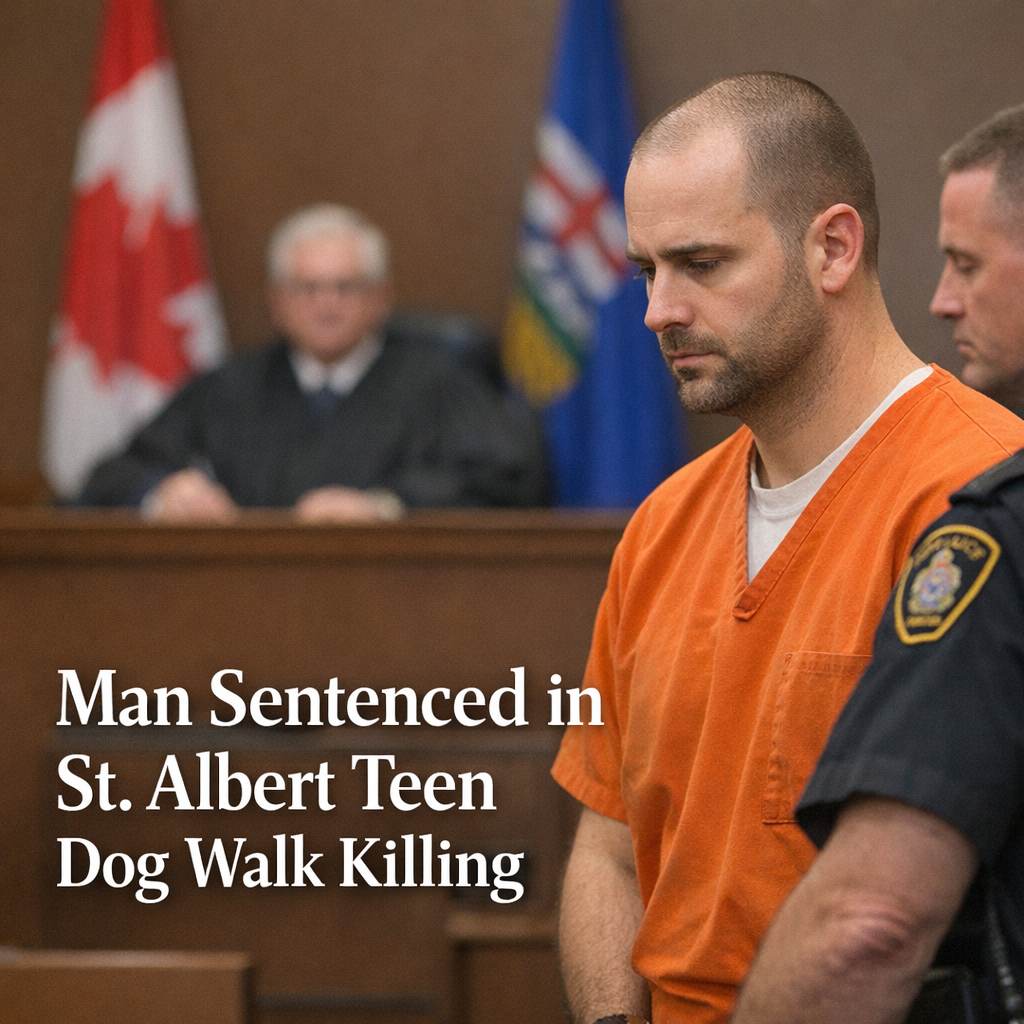
A Saskatchewan judge has sentenced Keith James Landry to 10 years in prison after he admitted to manslaughter in the killing of 15-year-old Broden Radomske. The case had originally proceeded as a second-degree murder prosecution, but the charge was resolved with a guilty plea to the lesser offence. The sentence closes one major chapter in a case that drew attention because of the victim’s age and the serious nature of the violence. It also highlights how Canadian courts weigh guilty pleas, the facts of the offence, and the long-term harm done to families and communities when deciding a sentence.
For Canadian readers, the case is another reminder of how deeply violent crime involving young people can affect entire communities, especially in smaller Prairie centres where families, schools, and neighbourhood networks are closely connected. It also shows how the criminal justice system can move in a direction that differs from the original charge as prosecutors and defence lawyers assess the available evidence and the likelihood of conviction at trial. Canadians following the case may also see it as part of a broader conversation about youth safety, community trauma, and the challenges families face after a sudden and violent loss. In practical terms, the sentence matters because it reflects how courts in Canada try to balance denunciation, deterrence, rehabilitation, and accountability in serious homicide cases.
What comes next will likely centre on how the sentence is carried out and whether any credit for time already served affects how long Landry remains behind bars. Families on both sides may continue dealing with the emotional aftermath long after the courtroom process ends. The case may also remain part of local discussions about public safety, support for grieving families, and the role of plea agreements in serious criminal matters.
To understand the broader picture, it helps to know that manslaughter is a homicide offence under Canadian law, but unlike murder it does not require the Crown to prove the same level of intent. That distinction often becomes crucial in cases where the facts are serious but the evidence may not clearly establish the legal test for murder. Sentencing for manslaughter can vary widely depending on the circumstances, including the degree of violence, the offender’s background, expressions of remorse, and the impact on the victim’s family. When a young person is killed, judges also consider the profound and lasting consequences for parents, siblings, friends, and the wider community.
The sentencing of Keith James Landry is likely to be closely watched in Saskatchewan because it brings legal finality to a case involving the death of a teenager, while also raising difficult questions about justice and accountability. Broden Radomske was only 15 when his life ended, a fact that has shaped public reaction from the start. Cases involving young victims often resonate more strongly because they bring into focus not only the violence itself but also the years of life lost and the damage left behind for loved ones. Even where a guilty plea avoids the uncertainty of a trial, many families still carry a sense that no sentence can fully reflect what has been taken from them.
The shift from a second-degree murder charge to a manslaughter conviction is significant and may be frustrating for some observers who equate the original charge with the final outcome they expected. But in Canada’s justice system, charges laid at the start of a case are not the same as a conviction at the end of it. Prosecutors must continuously assess whether the evidence can prove every element of an offence beyond a reasonable doubt. If that becomes uncertain, a plea to manslaughter can still secure a serious conviction, spare witnesses from testifying, and avoid the emotional toll and risk of a lengthy trial. For some families, that can provide a measure of closure, even if it falls short of what they hoped to see.
A 10-year sentence for manslaughter is substantial, though the real time served can depend on several legal and correctional factors. Canadian judges do not sentence in a vacuum. They are required to consider established principles under the Criminal Code, including denunciation of unlawful violence, deterrence of similar conduct, protection of the public, and the possibility of rehabilitation. A guilty plea is usually treated as a mitigating factor because it acknowledges responsibility and can reduce the strain on the justice system and the victim’s family. At the same time, courts also give serious weight to aggravating factors, and the death of a 15-year-old is one that will inevitably loom large.
For many Canadians, one of the hardest parts of cases like this is understanding why there can be such a difference between public expectations and legal outcomes. The answer often lies in the strict standards of proof that govern criminal court proceedings. The justice system is designed to avoid wrongful convictions, which means the Crown must prove its case to a very high standard. That can lead to resolutions that may seem surprising from the outside but are based on what can be established in court, not simply on suspicion, outrage, or grief. While that can be painful for families, it is also a core part of how Canadian justice is meant to function.
The emotional impact of the case will almost certainly continue far beyond sentencing day. Families who lose a child to violence often face years of grief, unanswered questions, and the difficult process of rebuilding daily life after trauma. Schools, peer groups, and community organizations can also feel the shock for a long time, especially when the victim is a teenager whose death affects classmates and friends. In communities across Canada, cases like this often renew calls for stronger mental health supports, more violence prevention work, and better resources for victims’ families after court proceedings end.
Landry’s sentencing does not erase the harm done, but it does mark the end of one legal process and the beginning of another phase for everyone affected. For the Radomske family, the sentence may offer some measure of recognition from the court that Broden’s death was a grave and irreversible wrong. For the wider public, it is a sobering example of how the justice system addresses serious violent crime when a murder charge does not ultimately lead to a murder conviction. And for Canadians following the case, it underscores a difficult truth: even when the courts reach a conclusion, the consequences of a teenager’s death continue to be felt for years.

Follow Canada News Media
Get the day's top Canadian stories and our two daily 60-second news videos wherever you scroll.