


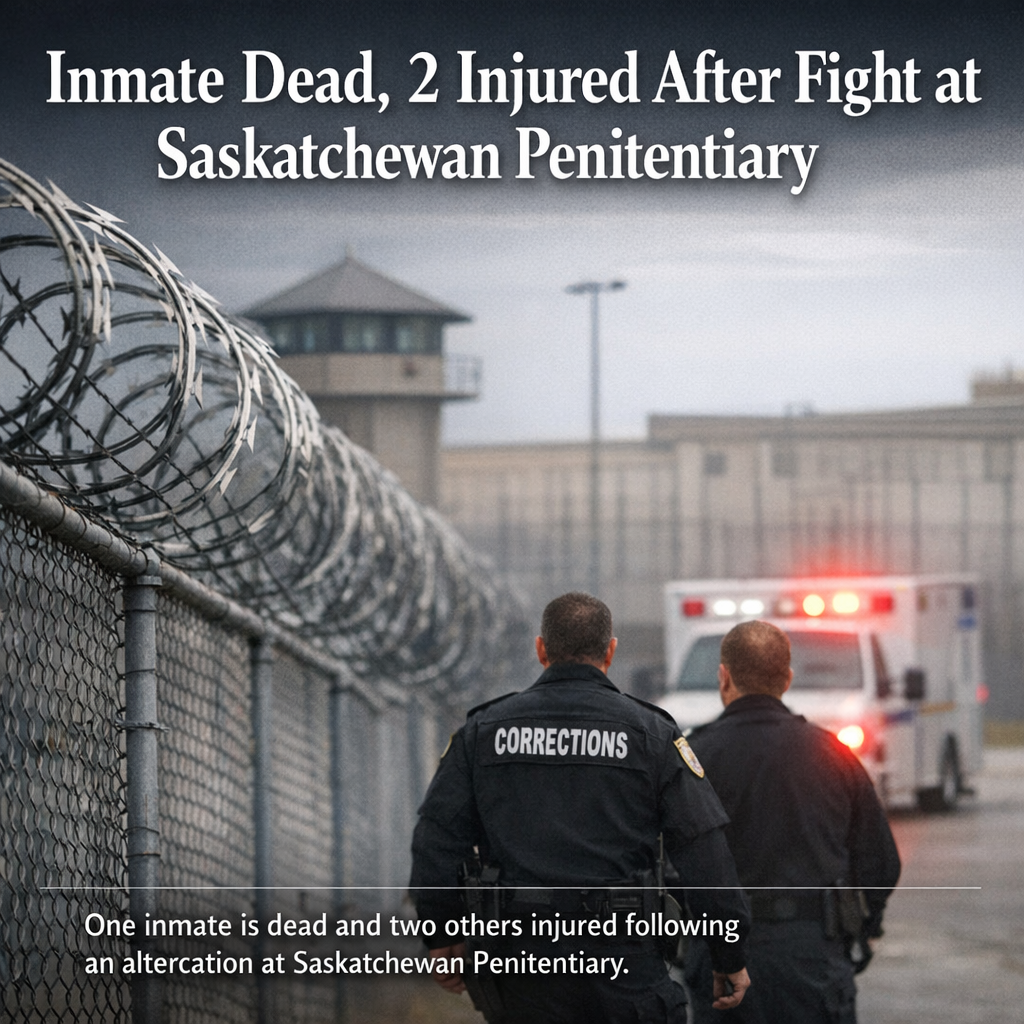
Correctional Service Canada is looking into a deadly incident at Saskatchewan Penitentiary after a fight among inmates left one man dead and two others hurt. The confrontation happened Tuesday inside the federal prison, prompting an internal response and a formal review of what took place. Officials have not yet released many details about the people involved, but the case is now part of a broader investigation into the circumstances surrounding the violence. The death adds to ongoing concerns about safety, supervision, and conditions inside Canadian correctional institutions.
For Canadian readers, this story matters because federal prisons are public institutions funded and overseen by the government, and their safety standards affect staff, inmates, families, and nearby communities. Incidents like this raise questions about how well violence is being prevented inside correctional facilities and whether enough resources are in place to manage tensions before they turn deadly. The case is also relevant to Canadians following debates about prison overcrowding, mental health care, gang activity, and rehabilitation in the justice system. When a serious assault happens in a federal institution, it can influence public confidence in Correctional Service Canada and shape discussions about prison policy across the country.
In the coming days, readers should watch for more information from Correctional Service Canada about the victim, the injured inmates, and whether criminal charges could follow. There may also be updates on lockdown measures, staffing decisions, or changes to inmate movement at the prison while the investigation continues. Depending on what investigators find, the incident could renew calls for stronger oversight, improved safety practices, or reforms aimed at reducing violence in federal custody.
Saskatchewan Penitentiary, located in Prince Albert, is one of Canada’s oldest and most well-known federal correctional institutions. Like other federal prisons, it houses offenders serving sentences of two years or more, and it operates within a system that must balance security, order, and rehabilitation. Violence in prisons can stem from many factors, including interpersonal disputes, gang rivalries, mental health challenges, contraband, and pressures linked to life in custody. When a death occurs behind bars, standard procedure typically involves internal reviews, notifications to outside authorities, and close scrutiny of whether policies, staffing, and inmate management were adequate at the time.
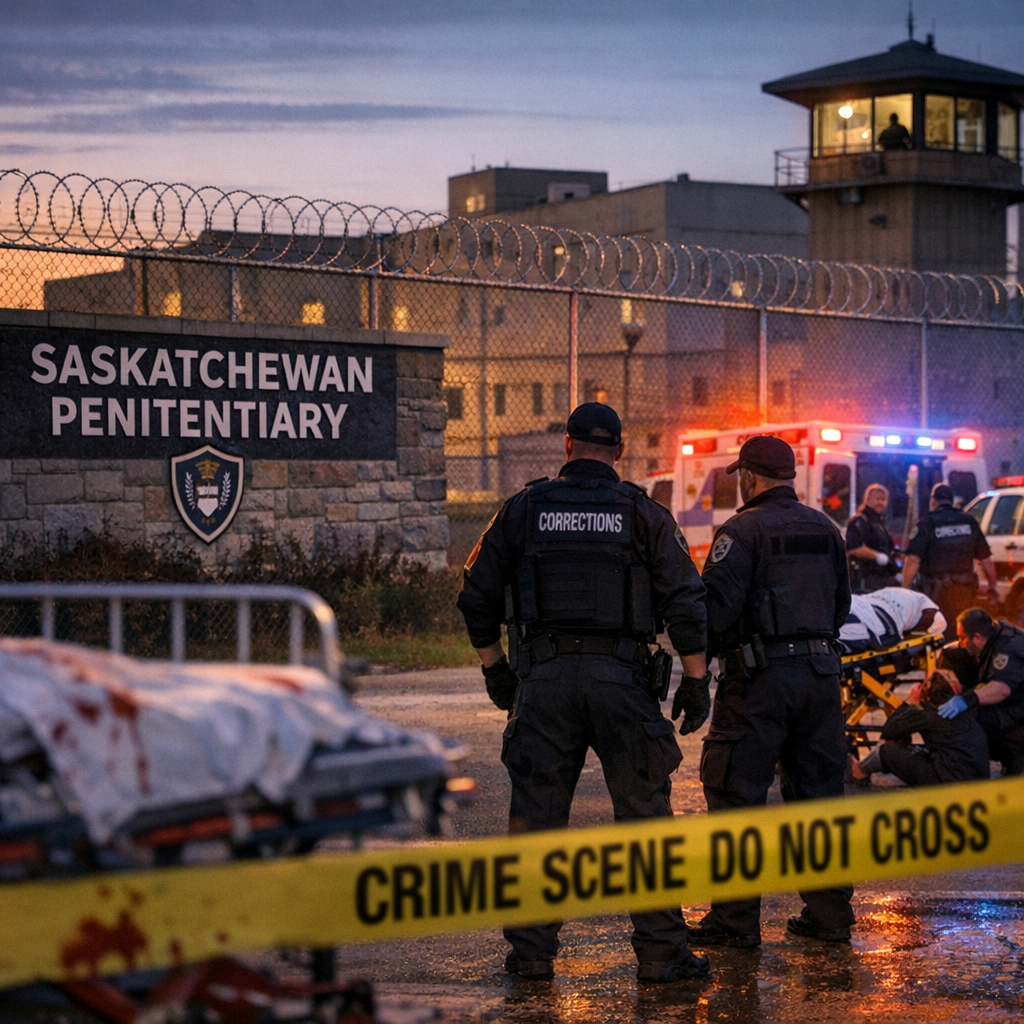
A deadly prison fight in Saskatchewan is once again putting attention on how Canada handles safety inside its federal correctional system. Correctional Service Canada said it is investigating after an inmate died and two others were injured following an altercation Tuesday at Saskatchewan Penitentiary. While the agency has so far shared only limited public details, the seriousness of the incident means it will likely be examined from several angles, including institutional procedures, emergency response, and the broader climate inside the prison. For many Canadians, the story is not only about one tragic event, but about whether federal institutions are doing enough to prevent violence before it escalates.
The investigation is expected to focus on where the fight took place, how staff responded, whether warning signs were missed, and what measures were already in place to separate or monitor the inmates involved. In federal prisons, major incidents can trigger restricted movement, increased searches, and temporary changes to daily operations while officials work to secure the institution and gather facts. These steps are meant to protect both inmates and correctional officers, but they can also highlight the difficult balance prison managers face between maintaining order and supporting rehabilitation. When violence breaks out, that balance is tested in a very public way.
For families of inmates and staff, events like this can be deeply distressing. Relatives often have limited immediate information after a serious prison incident, and uncertainty can add to the emotional strain. Communities near correctional facilities may also watch closely for official updates, even when there is no direct public safety risk outside the institution. In Canada, federal prisons are not isolated from the broader social system; they are connected to health care, courts, policing, labour relations, and community reintegration efforts.
This is why prison violence tends to spark wider debate than the walls of a single institution might suggest. Some Canadians see these incidents as evidence that more front-line staff and stronger security measures are needed. Others point to the importance of better mental health treatment, access to programming, and conflict prevention strategies that reduce the likelihood of violence in the first place. Both views are part of a larger national conversation about what prisons are for: punishment, public safety, rehabilitation, or some combination of all three.
The Saskatchewan case may also revive questions about transparency. In serious incidents involving deaths in custody, the public often wants timely and clear information, but correctional agencies must balance that against privacy rules, next-of-kin notification, and the integrity of ongoing investigations. That can leave a gap between public concern and official disclosure, especially in the early hours or days after an event. As more facts emerge, Canadians will be looking for reassurance that the investigation is thorough and that any lessons from the incident will be acted on.
Saskatchewan Penitentiary has long played a major role in the Prairie correctional system and has been part of the country’s federal prison network for decades. Institutions like it house people serving lengthy sentences, including offenders classified at different security levels depending on risk and institutional needs. Managing such a population is complex, especially when facilities must respond to changing patterns of organized crime, addiction, mental illness, and staffing pressures. A single violent episode can expose weaknesses that are not always visible during normal day-to-day operations.
What comes next will depend on the findings of investigators and on whether outside police become involved in a criminal probe. Correctional Service Canada may release additional details once families are notified and the immediate review advances. If the inquiry identifies procedural failures or systemic concerns, there could be pressure for corrective action not only at Saskatchewan Penitentiary but across the federal system. For now, one inmate is dead, two others are recovering from injuries, and a familiar question has returned to the forefront in Canada: how safe are the country’s prisons for the people who live and work inside them?
Follow Canada News Media
Get the day's top Canadian stories and our two daily 60-second news videos wherever you scroll.