


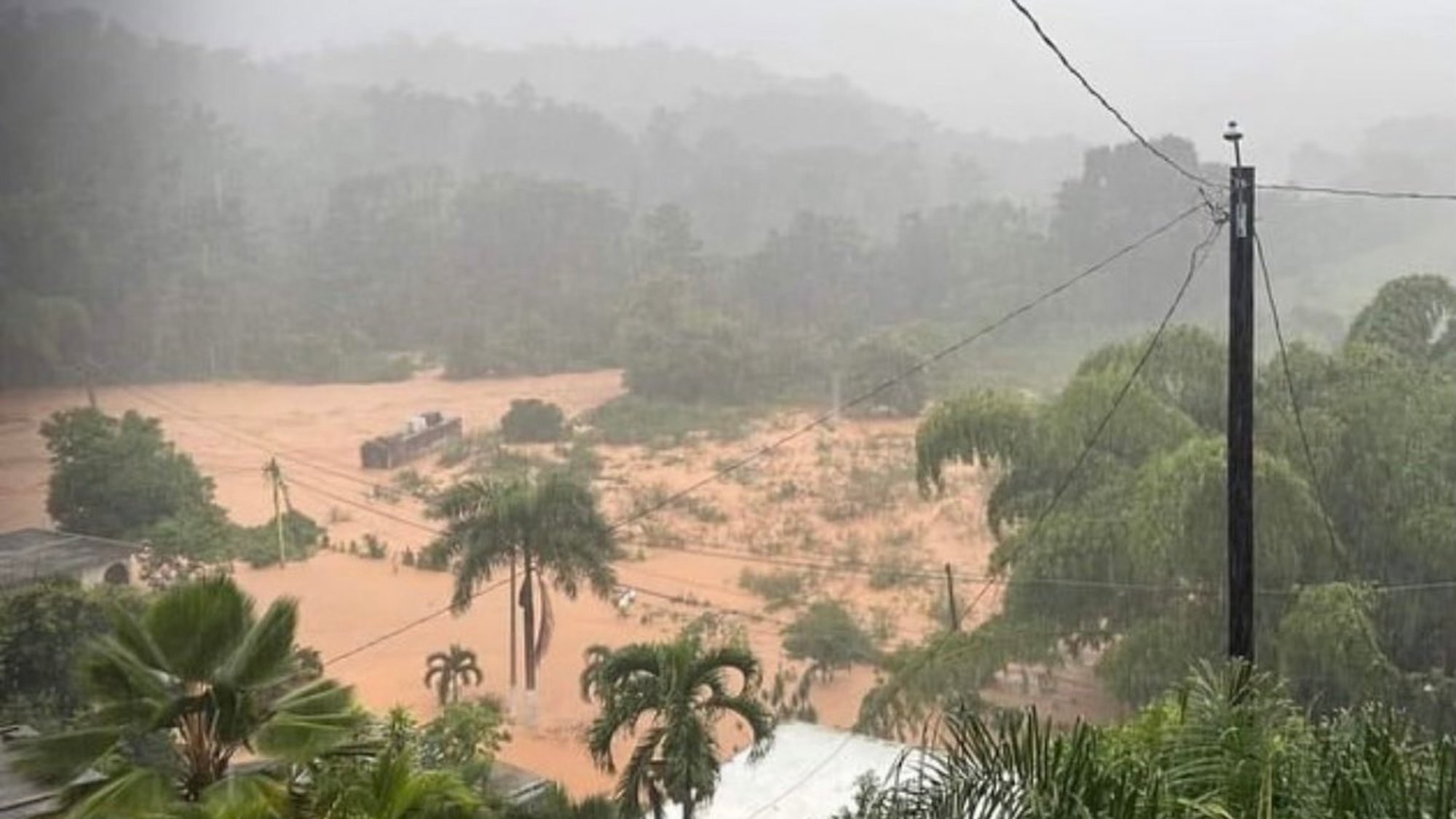
San Juan, Puerto Rico- More than 1.3 million people have been left without electricity following Hurricane Fiona which made landfall on Sunday afternoon.
According to the National Hurricane Center (NHC), Puerto Rico‘s ports have been closed and flights out of the main airport have been cancelled.
In addition, the NHC said torrential rains and mudslides were also forecasted for the Dominican Republic as the storm progresses northwestward, with the Turks and Caicos Islands likely facing tropical storm conditions on Tuesday.
LUMA Energy, the main power utility in Puerto Rico, said in a statement on Sunday that it could be days before power is restored, adding that several transmission line outages are contributing to the blackout.
Power outages have become a familiar crisis for many who live in Puerto Rico. Just five months ago, residents experienced another islandwide blackout after a fire broke out in a power plant.
Some parts of the island still bear the scars of Hurricane Maria, which devastated Puerto Rico almost exactly five years ago, after Hurricane Maria inflicted catastrophic damage to the territory’s infrastructure, which took almost a year for power to be restored across the island.
Meanwhile, many rivers on the eastern side of the island were in moderate to major flood stages on Sunday afternoon.
“Our heart goes out to the residents that are again going through another catastrophic event five years later. The biggest concern is the life and safety of residents,” said Anne Bink, the Federal Emergency Management Agency (FEMA)’s Assistant Administrator for Response and Recovery.
In addition, Bink said FEMA’s response is dual-focused, including emergency power generation for critical facilities and ensuring that a command and control structure is in place for things like search and rescue, as well as addressing long-term needs citing that lessons were learned from Hurricane Maria.
“We are much more prepared. We have four warehouses now strategically located throughout the island which include commodities, exponentially larger supplies than in the past, ten times the meals and water, three times the emergency generator support and more than that, we are proactively there and well ahead of any storm hitting to make sure that we are coordinating and all of the planning efforts we undertake during those blue skies days can be brought to bear when the rain falls,” said Bink.
According to scientists, hurricanes are becoming wetter because of more water vapour in the warmer atmosphere and rising sea levels are contributing to higher storm surges, the most destructive element of tropical cyclones.
Follow Canada News Media
Get the day's top Canadian stories and our two daily 60-second news videos wherever you scroll.
X Threads Facebook Instagram LinkedIn TikTok YouTube Pinterest Reddit Substack Flipboard Newsletter RSS