


A new survey suggests many people in Winnipeg are ready for restaurants to cut down on single-use waste and make reusable dishes, cups, and containers a normal part of dining out. The findings point to strong public support for greener food service practices, especially when people eat inside restaurants rather than take meals away. For local businesses, the message is becoming clearer: customers increasingly expect practical environmental action, not just promises. The results also add to a wider Canadian conversation about how cities and businesses can reduce garbage without making daily life less convenient.
For Canadian readers, this matters because restaurant waste is part of everyday life in cities and towns across the country. From coffee cups and takeout boxes to plastic cutlery and condiment containers, food-related packaging creates a steady stream of garbage that municipalities must collect, sort, and landfill or recycle. When residents show they are willing to accept reusable food ware, it gives restaurants, city leaders, and provincial policymakers more confidence to introduce changes that may once have seemed risky or unpopular. In practical terms, this could shape how Canadians dine out, how businesses manage costs, and how local governments approach waste reduction targets.
What comes next will likely depend on whether restaurants see enough customer demand to justify changing their operations. Winnipeg businesses may test more reusable plates, cups, and containers for dine-in service, while policymakers and advocacy groups watch to see whether public support leads to broader local action. Readers should also keep an eye on whether other Canadian cities report similar attitudes, since that could influence future municipal bylaws, industry standards, and waste reduction programs.
The broader context is that Canada has been wrestling for years with the environmental cost of disposable packaging and single-use items. Even when products are technically recyclable, many still end up as waste because of contamination, inconsistent local recycling rules, or limited processing capacity. Restaurants have faced extra pressure since the pandemic, when takeout and delivery surged and concerns about hygiene often pushed businesses toward disposable items. Now, as dining habits continue to normalize, many communities are revisiting how to balance convenience, cleanliness, affordability, and environmental responsibility.
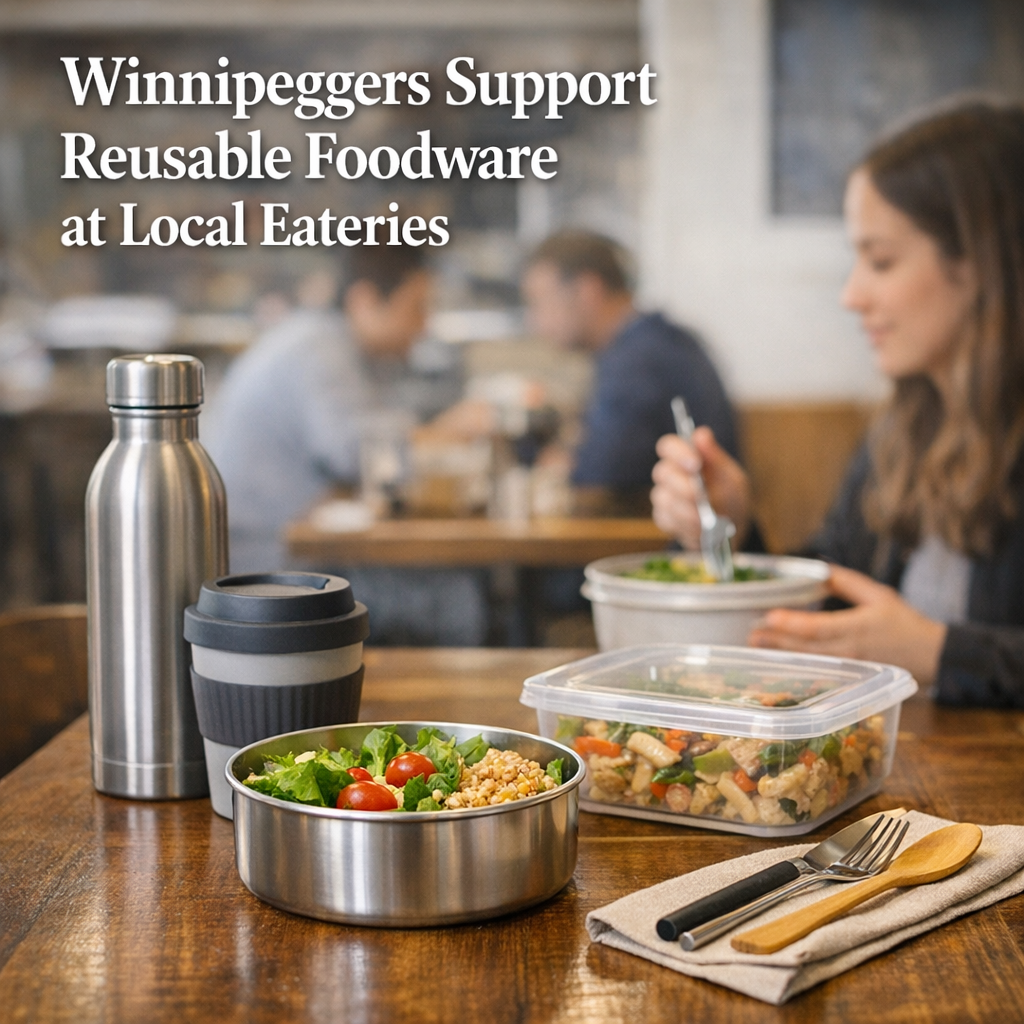
A growing number of Winnipeg residents appear to believe restaurants should play a bigger role in cutting food service waste, and that public support could become an important driver of change in the local dining scene. According to the survey, nearly three-quarters of respondents said they want eateries to do more to address waste, while more than eight in 10 said they would be willing to eat in using reusable food ware. Those numbers suggest environmental concerns are no longer limited to a niche group of highly engaged consumers. Instead, they point to a mainstream expectation that businesses should reduce unnecessary garbage where practical.
That shift in public opinion matters because restaurants often operate on thin margins and are cautious about making changes that could raise costs or complicate service. Switching from disposable products to reusable dishes and cups for dine-in customers can require investments in dishwashing equipment, staffing, water and energy use, and new kitchen workflows. At the same time, relying heavily on single-use items also carries ongoing costs, especially as supply prices fluctuate and waste disposal becomes more expensive. If enough customers support reusable options, some restaurants may decide the long-term financial and reputational benefits outweigh the short-term challenges.
For Winnipeg’s restaurant sector, the survey offers a useful snapshot of what diners may now expect from local businesses. Consumers increasingly pay attention to how companies handle environmental issues, and waste reduction is one of the most visible areas where restaurants can make a change. A customer can immediately see whether a meal is being served on a proper plate with metal cutlery or in a pile of throwaway packaging. That visibility means waste practices can influence brand image, customer loyalty, and even online reviews, especially among younger diners who often place a high value on sustainability.
The implications go beyond individual businesses. Municipal governments across Canada are under pressure to reduce landfill use, improve diversion rates, and meet broader climate and environmental goals. Waste from the hospitality sector may seem small compared with construction or industrial waste, but it is highly visible and tied to daily consumer habits. When residents support reusable systems in restaurants, it creates an opening for city halls and local agencies to promote stronger waste reduction efforts through education, incentives, pilot projects, or procurement policies. In some communities, that could eventually include rules that discourage unnecessary single-use items in dine-in settings.
There is also a cultural piece to this story. Dining out has long been associated with convenience and speed, especially in urban centres where takeout and fast-casual meals fit busy work and family schedules. But many Canadians are also becoming more aware of the hidden environmental cost of that convenience. A single lunch order can involve a container, lid, napkins, cutlery, sauce packets, and a bag, much of it used for only a few minutes before being thrown away. Survey results showing strong support for reusable food ware suggest that at least for dine-in service, many people are willing to return to habits that were once simply standard practice.
For readers outside Manitoba, Winnipeg’s results may sound familiar. Across Canada, municipalities and businesses have been experimenting with ways to cut down on disposable items, whether through reusable cup programs, container return systems, or restrictions on plastic bags and cutlery. Success has been uneven, in part because public acceptance varies and operational realities differ from one region to another. Still, signs of broad consumer backing are important because they can help turn sustainability from a branding exercise into a more practical business norm.
Restaurants that decide to move in this direction will still need to communicate clearly with customers. People may support reusable food ware in theory, but businesses must make sure service remains clean, efficient, and comfortable. Staff training, food safety standards, and clear messaging all matter, especially for chains or busy independent operators managing high customer volumes. If the transition is handled well, reusable dine-in service may come to be seen not as an inconvenience, but as a normal and welcome part of eating out.
In the months ahead, the key question will be whether public opinion translates into visible change in Winnipeg restaurants. If it does, the city could become an example of how consumer expectations help push practical waste reduction in the food service sector. If not, the survey may still serve as a useful signal to businesses and governments that public attitudes are shifting faster than some industry practices. Either way, the findings add another piece to Canada’s larger debate over waste, sustainability, and what responsible dining should look like today.