


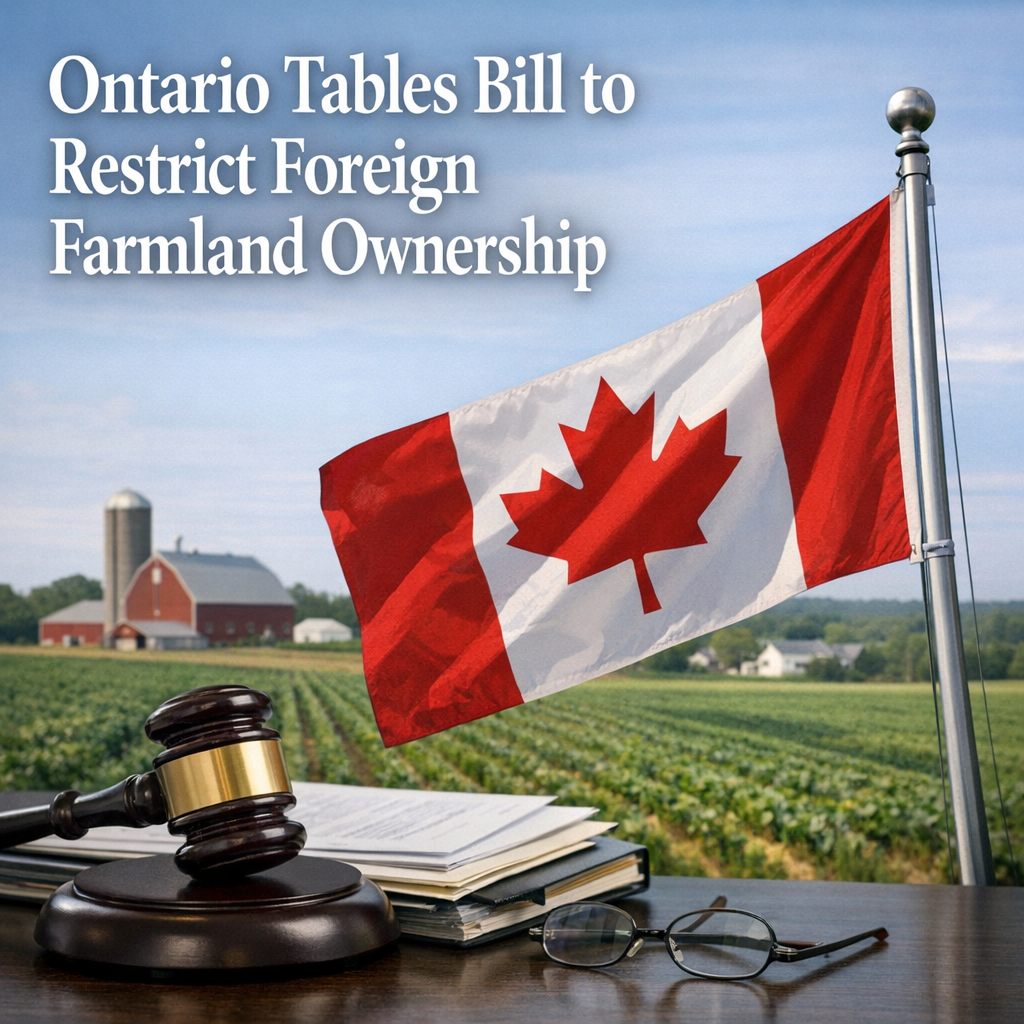
Ontario has tabled new legislation aimed at strengthening the province’s domestic food system at a time of growing concern about supply chains, trade friction and the cost of living. The proposed law, called the Protecting Ontario’s Food Independence Act, was introduced by Agriculture, Food and Agribusiness Minister Trevor Jones and is being framed as a way to support local production, processing and access to Ontario-grown food. The move signals that Queen’s Park wants to reduce vulnerabilities in the food system and make the province less exposed to outside disruptions. It also fits into a broader political push to back homegrown industries and keep more economic activity inside Ontario.
For Canadian readers, the biggest question is whether this kind of policy can translate into more stable food prices and better access to local products at grocery stores, farmers’ markets and community institutions. If the province succeeds in expanding Ontario’s food production and processing capacity, that could create more resilience for households dealing with inflation and sudden shortages caused by weather events, transportation bottlenecks or international disputes. The legislation may also matter for farmers, food processors, truckers, distributors, schools, hospitals and long-term care homes that rely on dependable local supply. In practical terms, Ontarians could see more emphasis on buying local, more political attention on food security and more debate over how governments balance affordability with support for domestic agriculture.
What comes next is the legislative process: the bill will need to move through debate, committee review and possible amendments before it can become law. Readers should also watch for the details behind the headline, including whether the government pairs the bill with funding, infrastructure support, procurement changes or incentives for farmers and processors. The real impact will depend less on the name of the legislation and more on how it is implemented, enforced and financed. Another key issue will be whether industry groups, opposition parties and consumers see the plan as practical and affordable.
The broader backdrop is that food independence has become a more urgent issue across Canada over the past several years. The pandemic exposed how quickly global supply chains can falter, while extreme weather, labour shortages, rising fuel costs and geopolitical tensions have all added pressure to food production and distribution. Ontario is a major agricultural province with a large manufacturing and food-processing base, but it is also deeply connected to interprovincial and international trade, especially with the United States. That means any effort to increase self-reliance has to work within the reality that modern food systems are complex, highly integrated and affected by everything from climate risk to trade policy.
Ontario’s decision to introduce the Protecting Ontario’s Food Independence Act comes at a time when food affordability remains one of the most persistent concerns for families across the province. Grocery bills have become a regular kitchen-table issue, and governments are under pressure to show they are doing more than simply reacting to crises after they hit. By placing food independence at the centre of a new legislative proposal, the province is trying to send a message that local agriculture is not only an economic sector but also a strategic necessity. That framing is likely to resonate with many consumers who want to buy Canadian and Ontario-grown food, especially when global uncertainty is high.
For producers, however, legislation alone rarely solves the structural problems facing the agriculture industry. Farmers continue to deal with high input costs for fuel, fertilizer, feed, equipment and labour, while also facing unpredictable weather and pressure from land development. Food processors are also under strain, particularly smaller operators that may struggle with energy costs, staffing shortages and the need to modernize equipment. If the province truly wants to build food independence, stakeholders will be looking for concrete supports such as investment in processing capacity, transportation infrastructure, workforce development and risk management tools that help producers stay competitive.
There is also an important institutional angle to this conversation. Public-sector buyers such as schools, hospitals, correctional facilities and long-term care homes purchase significant volumes of food every year. If Ontario links food independence to procurement rules or stronger local purchasing targets, that could have a meaningful effect on demand for Ontario products. It might help stabilize markets for farmers and processors while giving public institutions a larger role in supporting local supply chains. At the same time, governments would need to ensure that any local-first approach remains workable within budgets and does not unintentionally drive up costs for already stretched institutions.
Another question is how broad the government’s definition of food independence will be. In practice, no province can produce every item consumed within its borders year-round, especially in a country with Canada’s climate. The more realistic interpretation is usually greater resilience: growing and processing more at home where possible, diversifying sources of supply and making the system less vulnerable to shocks. If that is the province’s true goal, the most useful measures may involve storage, distribution, greenhouse capacity, processing facilities and support for innovation rather than a simplistic promise of total self-sufficiency.
The bill may also trigger debate about how Ontario’s goals fit into the wider Canadian federation. Food systems do not stop at provincial borders, and many products move back and forth between provinces before reaching store shelves. A stronger Ontario food strategy could complement national efforts to improve food security, but it could also raise questions if provincial policies create barriers or favouritism that complicate internal trade. For Canadian readers outside Ontario, this legislation may still be worth watching because it reflects a wider shift in how governments are thinking about essential sectors. Food, like energy and housing, is increasingly being treated as part of economic security.
Politically, the government is likely betting that food independence is an appealing concept across urban, suburban and rural communities. Rural voters may welcome stronger recognition of agriculture’s importance, while urban consumers may respond to promises of a more reliable and local food supply. Still, public support could depend on whether the plan delivers visible results rather than slogans. If shoppers continue to face high prices and farmers do not see practical benefits, critics will argue that the bill is more symbolic than transformative.
In the weeks ahead, much of the scrutiny will centre on the fine print. Industry organizations will want to know what powers the legislation creates, what targets it sets and whether it changes how land, production or procurement decisions are made. Opposition parties may press the government on whether this is a serious long-term strategy or a political response to public frustration over rising costs. For now, the proposed Protecting Ontario’s Food Independence Act adds a new and timely chapter to the province’s effort to make its food system more secure, more local and more resilient in an uncertain world.
Follow Canada News Media
Get the day's top Canadian stories and our two daily 60-second news videos wherever you scroll.
X Threads Facebook Instagram LinkedIn TikTok YouTube Pinterest Reddit Substack Flipboard Newsletter RSS