


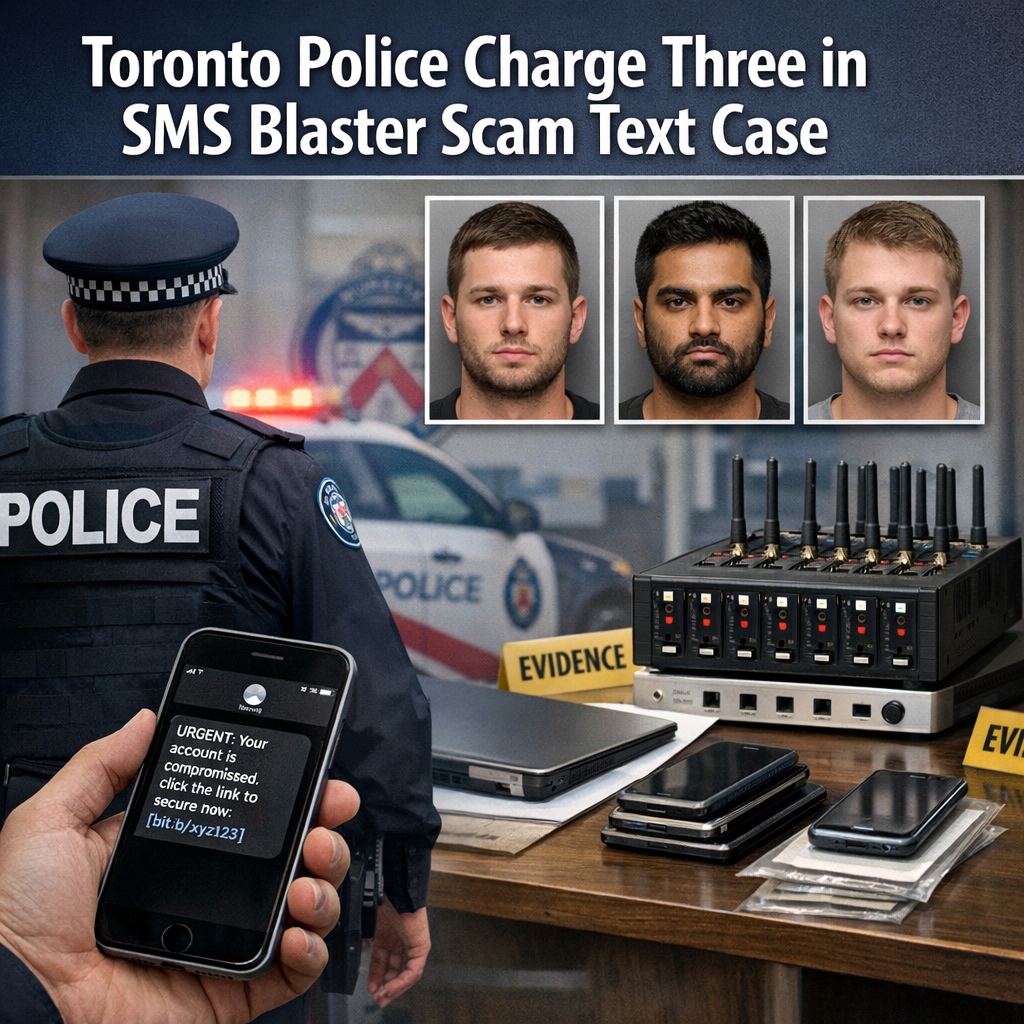
Police in Ontario say they have uncovered what appears to be the first known Canadian case involving portable devices that imitate cellphone towers, a technology often linked to covert surveillance and sophisticated fraud. Investigators allege the equipment was being used in the Toronto area to interfere with normal mobile connections and potentially capture identifying information from nearby phones. The discovery has raised fresh questions about how vulnerable Canadian wireless networks and consumers may be to tools that were once mostly discussed in U.S. and international security circles. It also signals that policing and regulators in Canada may need to pay closer attention to a form of electronic interception that is difficult for the public to detect.
For Canadian readers, the case hits close to home because nearly every part of daily life now runs through a smartphone, from banking and two-factor authentication to work calls, maps and emergency alerts. If someone is able to trick phones into connecting to a fake tower, even briefly, it can create privacy risks and open the door to scams, identity theft or disruptions in service. The issue also matters to Canadian institutions including police, telecom providers, banks and privacy watchdogs, all of which may face pressure to strengthen safeguards and explain what protections are already in place. In a country with vast geography and heavy reliance on mobile service, trust in wireless networks is not just a technical concern but a public confidence issue.
What comes next will likely depend on the outcome of the police investigation, including whether charges are laid and what investigators say the devices were meant to do. Canadians should watch for any statements from major telecom companies, the Canadian Radio-television and Telecommunications Commission and privacy officials about whether broader monitoring or new guidance is needed. This case could also prompt calls for updated laws, better detection tools and clearer public advice on how to reduce risks when phones behave strangely.
The technology at the centre of the case is commonly known as a cell-site simulator, sometimes referred to by brand names used elsewhere. These devices work by pretending to be legitimate cellular towers, which can cause phones in the area to connect to them instead of to a carrier’s real network equipment. Depending on how they are configured, they may gather identifying data, force phones onto less secure connections or disrupt communications. Because they can be small and portable, they are hard to spot, making them especially concerning in busy urban areas where thousands of devices may be nearby.
Ontario police say the devices were detected during an investigation in the Greater Toronto Area, drawing attention to a cybersecurity threat that many Canadians may never have heard of but could still be affected by. While authorities have not suggested that this kind of equipment is widespread across the country, the fact that it has now surfaced in Canada is likely to intensify scrutiny from law enforcement, telecom firms and privacy advocates. The case stands out because it points to a level of technical sophistication beyond the average phone scam or phishing attempt, suggesting bad actors may be adapting quickly as more personal and financial activity moves onto mobile devices. For many readers, the headline may sound abstract, but the underlying concern is simple: the phone in your pocket is a gateway to your identity, your contacts and often your money.
Canadian telecom customers may now be wondering how a fake tower could affect an ordinary day. In practice, a person would not necessarily notice anything dramatic. A phone might suddenly drop to an older network standard, experience odd signal behaviour, lose encrypted service quality or have unexplained interruptions. In some scenarios, the risk is not that the user’s entire phone is taken over, but that key bits of information are exposed, allowing criminals to identify a device, track a target’s presence or support broader fraud operations. That can be especially troubling in a country where text-based authentication codes are still widely used for logging into bank accounts, email accounts and workplace systems.
The Canadian implications go beyond personal privacy. Businesses rely on mobile networks for point-of-sale payments, delivery coordination, employee authentication and customer communication. Public institutions use wireless systems for everything from field operations to outreach and emergency response. If portable tower-mimicking devices become more common, organizations may have to revisit how much they depend on text-message verification and whether staff need training to recognize suspicious network behaviour. Financial institutions, in particular, may face renewed calls to move customers toward stronger account security methods, such as app-based authentication or hardware keys.
There is also a legal and policy dimension that could gain traction in Ottawa and across the provinces. Canada already has privacy laws and criminal offences related to unauthorized interception and fraud, but rapidly evolving wireless technology can outpace the public’s understanding of the threat. This case may push regulators and elected officials to ask whether mobile carriers should be required to do more to detect rogue base stations and notify authorities faster. It may also revive debates about transparency, since cell-site simulators have historically attracted controversy not only because criminals can misuse them, but also because police and intelligence agencies in some countries have used similar tools under tightly controlled circumstances. That broader backdrop makes public trust especially important.
For readers trying to make sense of the story, it helps to understand that phones are designed to seek out and maintain the strongest available connection. That convenience is part of what makes spoofed towers possible. Modern networks have better protections than older systems, but not every device, app or connection method is equally secure, and attackers often look for the weakest link. A fake tower does not automatically mean all the contents of a phone are exposed, but it can still create enough access or disruption to be useful in surveillance, stalking, targeted fraud or other crimes.
Canadians concerned about the issue should pay attention to practical signs rather than panic. If a phone repeatedly drops to older network types, loses service in unusual ways, behaves oddly in the same location or receives a burst of suspicious login prompts or authentication texts, it may be worth contacting the mobile provider and reviewing account security. Using app-based authenticators where possible, keeping devices updated and avoiding reliance on SMS alone for sensitive accounts are sensible precautions regardless of this case. As police continue their investigation, the bigger question for Canada will be whether this was an isolated discovery or an early warning about a more persistent threat to the country’s mobile networks.

Follow Canada News Media
Get the day's top Canadian stories and our two daily 60-second news videos wherever you scroll.
X Threads Facebook Instagram LinkedIn TikTok YouTube Pinterest Reddit Substack Flipboard Newsletter RSS