


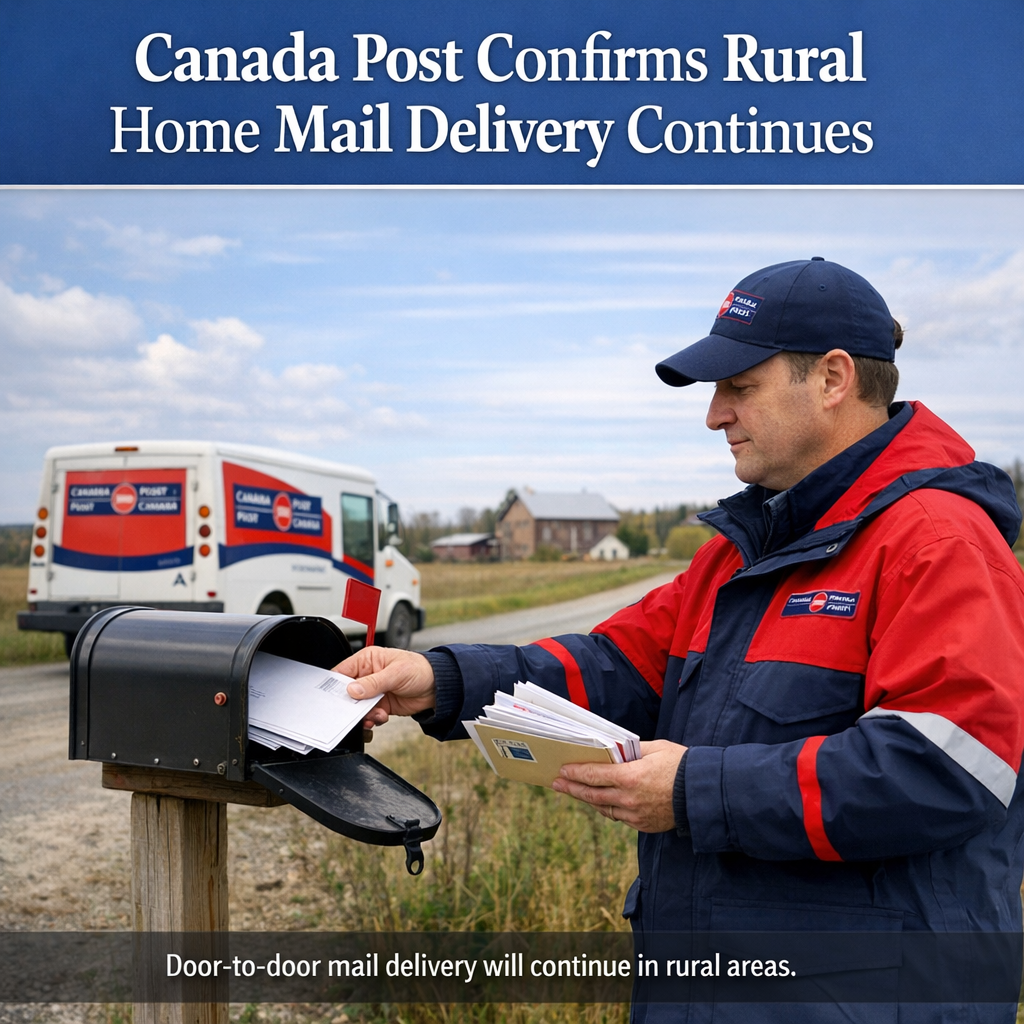
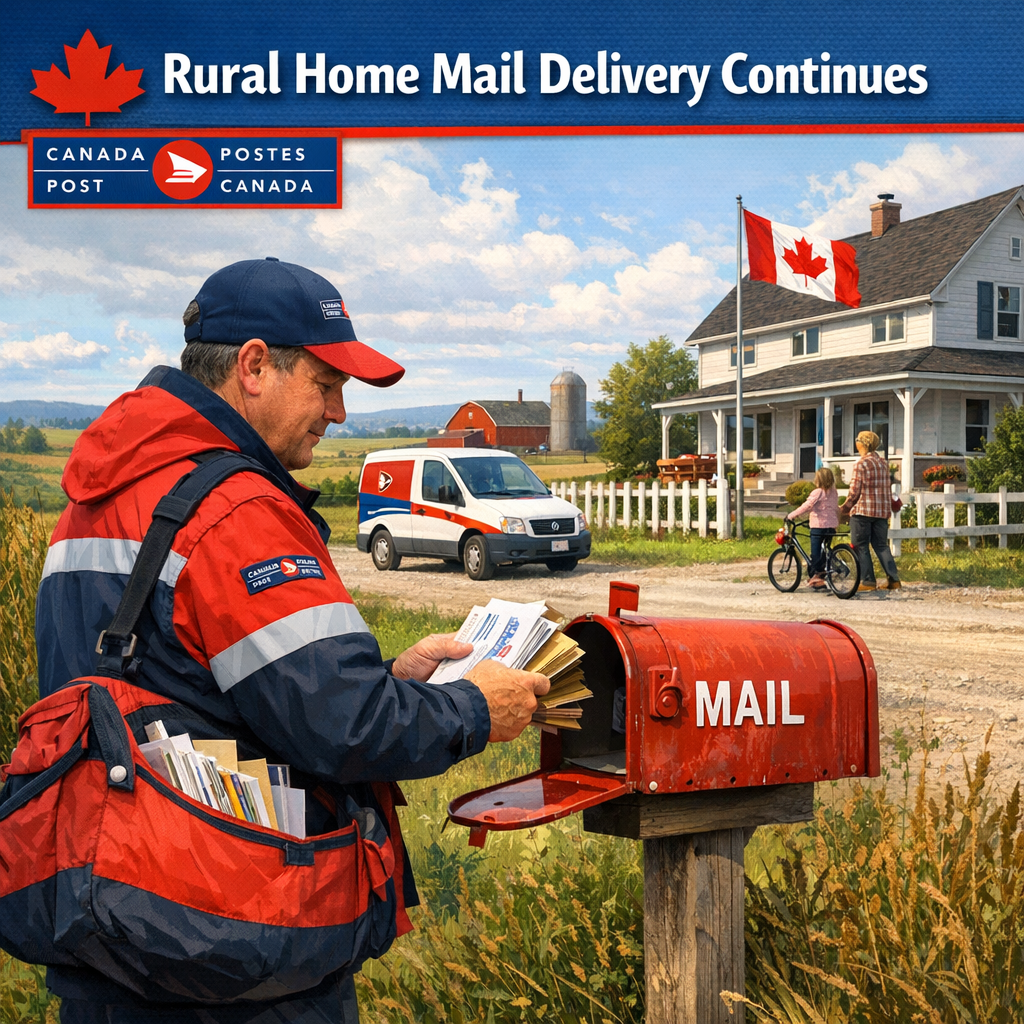
Canada Post is pausing a planned change to rural mailbox service after pushback from residents who feared they would have to travel farther to collect their mail. The decision follows concerns from small communities that ending some roadside delivery could create real hardships for seniors, people with mobility issues and families living long distances from town. By stepping back for now, the Crown corporation is signalling that public access and safety remain central to any future changes. The move also shows how sensitive mail service remains in rural Canada, where delivery is tied closely to daily life and local identity.
For Canadians, especially those in rural and remote areas, this matters well beyond convenience. Mail delivery is still essential for receiving government documents, prescriptions, bills, small business supplies and parcels from online shopping, particularly in places where service options are limited. A change that forces residents to drive several kilometres for pickup can add fuel costs, time and difficulty during winter weather, and it can be especially tough for older adults or those without reliable transportation. The debate also touches Canadian institutions more broadly, because Canada Post is a public service expected to balance efficiency with equal access for communities across the country.
What happens next will likely depend on further consultation between Canada Post, local governments and affected residents. People will be watching to see whether the pause turns into a permanent reversal, a revised delivery model or a community-by-community approach. There may also be renewed scrutiny on how Canada Post handles rural service standards as parcel volumes grow and traditional letter mail continues to change.
The broader context is that Canada Post has spent years trying to modernize operations in response to shifting mail habits and rising costs. Letter volumes have fallen over time, while parcel delivery has become more important as online shopping grows, putting pressure on the postal system to adapt. At the same time, rural delivery has always posed unique challenges in a country as large and spread out as Canada, where weather, distance and road conditions can make service expensive and complex. That tension between financial sustainability and universal service helps explain why even relatively small delivery changes can trigger strong reactions from communities.
Canada Post’s decision to halt the rural mailbox shift comes at a time when many Canadians are thinking more carefully about how public services reach smaller communities. In big cities, getting mail may be as simple as checking a building lobby or a nearby community box, but in rural Canada, mail delivery can still be closely linked to a person’s ability to stay connected, manage household affairs and access essential items. For some households, the mailbox is not just a place for letters. It is where medication shipments arrive, where farm paperwork is delivered and where important notices from government agencies show up without requiring a long drive into town.
That is why reaction from rural residents was so strong. In many areas, people worried that shifting away from existing delivery arrangements would create a burden that is small on paper but significant in real life. A few extra kilometres may not sound like much in an urban policy discussion, but in rural communities it can mean more fuel, more time on the road and more risk during snow, ice or spring washouts. For people who already make careful plans around work, caregiving or transportation limits, the added trip can become one more barrier in an already stretched daily routine.
The issue also reflects a long-standing concern in Canada that rural communities often feel asked to accept service reductions in the name of modernization. Whether the topic is banking, transportation, health care or postal access, residents outside major centres frequently argue that “efficiency” can translate into fewer local options and more personal cost. That makes any proposed change by Canada Post especially sensitive, because the organization is not viewed simply as a business. It is also seen as part of the country’s public infrastructure, with an obligation to serve people fairly regardless of postal code.
For local businesses, the pause could be especially welcome. Many rural entrepreneurs rely on predictable mail and parcel access to send invoices, receive supplies and ship products to customers across Canada. While larger centres may have multiple courier choices, smaller places often depend heavily on Canada Post to connect them to the wider economy. If customers or business owners have to travel farther to pick up items, it can reduce convenience, create delays and add costs in communities where margins are already tight.
There is also a political and social dimension to the story. Rural service changes often become a test of whether public agencies are listening carefully to the communities they serve. When residents raise concerns about distance, safety and accessibility, they are not only objecting to inconvenience. They are asking institutions to recognize how geography shapes everyday Canadian life. The current pause suggests Canada Post understands that public trust can be damaged if reforms appear to be imposed without enough local input or without a clear plan to protect vulnerable residents.
Looking ahead, Canadians should watch for more details on how Canada Post evaluates service changes in rural areas. The key questions will be whether the corporation introduces clearer criteria, whether it offers exemptions for seniors or people with mobility challenges and how it consults with municipalities before making future decisions. If this review leads to a more flexible approach, it could become an important example of how national services adapt without leaving small communities behind.
At the same time, the pressures that led to the proposed shift have not disappeared. Canada Post, like many postal systems worldwide, is operating in a landscape where the old economics of letter mail no longer fully support the network. The challenge is to modernize in a way that respects Canada’s geography and the public expectation of universal service. For rural Canadians, this story is a reminder that even a local mailbox decision can speak to a much bigger national question: how to keep essential public services accessible in every part of the country.
Follow Canada News Media
Get the day's top Canadian stories and our two daily 60-second news videos wherever you scroll.
X Threads Facebook Instagram LinkedIn TikTok YouTube Pinterest Reddit Substack Flipboard Newsletter RSS