



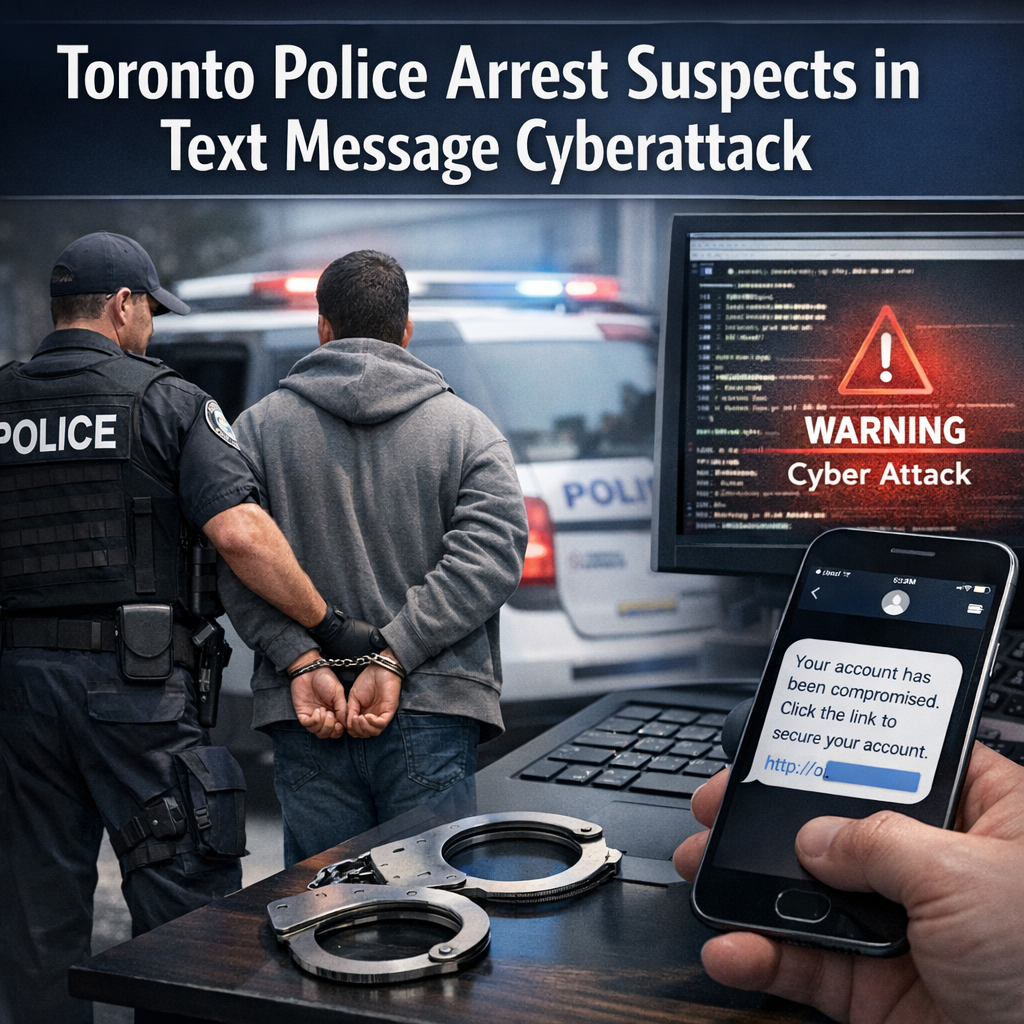
Toronto police have made arrests in what investigators describe as a groundbreaking probe into so-called “SMS blaster” technology, a device used to push fraudulent text messages to large numbers of mobile phones at once. Police say the operation targeted people across the Greater Toronto Area, sending scam texts directly to nearby phones without relying on the usual phone-number lists many people associate with mass messaging. The case is being treated as a major development because it points to a more sophisticated form of fraud that can mimic legitimate alerts and reach victims quickly in crowded public spaces. Investigators are now using the arrests to warn the public that scam tactics are evolving, and that text messages appearing urgent or official should be treated with caution.
For Canadians, the case is a reminder that everyday tools like smartphones can be exploited in new ways, even when people are careful about sharing personal information online. A scam text that appears on your phone while commuting, shopping, attending an event, or walking through a busy Toronto neighbourhood can feel more believable simply because it arrives at the right time and place. That creates a real risk for Canadian consumers, banks, telecom providers, and public institutions, all of which may have to work harder to help people distinguish real service alerts from fake ones. It also raises fresh concerns about privacy and digital safety in major urban centres, where thousands of people can be targeted in a short period.
What happens next will likely involve more court details, more technical information from investigators, and possibly a broader review of how widely this technology has been used in Canada. Police may also work with telecom companies, cybersecurity experts, and other law-enforcement agencies to determine whether similar operations have appeared in other cities. For the public, the key thing to watch is whether authorities issue new fraud-prevention advice or identify specific scam messages, locations, or tactics linked to the investigation.
The term “SMS blaster” generally refers to equipment that can send text-style messages to phones within a certain range, often by imitating trusted wireless infrastructure or exploiting how devices connect to nearby signals. While the exact setup in this case will depend on what police allege in court, the concern is that this kind of technology can make scam messages seem immediate and local, which may increase the odds that someone clicks a link, calls a fake number, or shares financial details. Canadian authorities have spent years warning the public about text-message fraud involving fake delivery notices, bank alerts, government refunds, and account problems, but this case suggests criminals may be adopting more advanced tools to scale up those schemes. In practical terms, that means Canadians should be careful with any unsolicited text that demands urgent action, asks for passwords or banking information, or includes a suspicious link, even if the message appears timely or looks connected to a familiar service.
The Toronto investigation matters beyond one police file because mobile fraud has become one of the easiest ways for criminals to reach large numbers of people quickly. Most Canadians use text messaging daily for work, family, banking alerts, deliveries, medical reminders, and two-factor authentication, so trust in mobile communication is now part of ordinary life. If scammers can flood phones with convincing fake messages in a targeted area, they can take advantage of moments when people are distracted, rushed, or already expecting a legitimate update. That is why this case is likely to draw attention from police services across the country, especially in cities where packed transit hubs, entertainment districts, and shopping centres give bad actors access to large crowds.
There is also a broader institutional issue at play. Canadian banks, courier companies, government agencies, and telecom firms have spent years trying to teach customers that they will not ask for passwords, verification codes, or sensitive personal details through random text links. But scammers succeed by copying branding, language, and timing, making their messages look routine rather than suspicious. A technology that can blast those messages to many nearby devices may blur the line even more between genuine service communication and fraud, putting extra pressure on legitimate organizations to strengthen public education and improve message authentication.
For readers in the GTA and beyond, the practical takeaway is simple: pause before responding to any text that creates urgency. If a message says your bank account is locked, a package is delayed, a government payment is waiting, or your toll or bill must be paid immediately, do not tap the link in the text. Instead, open the company’s official app, type the web address yourself, or contact the organization using a trusted phone number from its website or from the back of your bank card. If something feels off, it probably is, and reporting the message to your carrier, the Canadian Anti-Fraud Centre, or local police can help investigators track wider patterns.
This case also shows how fraud prevention is shifting from simple awareness campaigns to more technical enforcement. Police are no longer just chasing fake websites and spoofed phone numbers; they are confronting devices and systems designed to manipulate how our phones receive information in the first place. That makes public awareness even more important, because no single institution can stop this alone. Canadians will need clear advice, stronger safeguards from telecom and financial sectors, and continued police attention as mobile scams become more sophisticated.
Follow Canada News Media
Get the day's top Canadian stories and our two daily 60-second news videos wherever you scroll.
X Threads Facebook Instagram LinkedIn TikTok YouTube Pinterest Reddit Substack Flipboard Newsletter RSS