

While the federal government was successful in procuring COVID-19 vaccines amid an urgent pandemic situation, the Public Health Agency of Canada (PHAC) fell short when it came to minimizing the number of doses wasted, according to Canada’s auditor general.
In an audit of the federal government’s COVID-19 vaccine procurement, tabled in the House of Commons on Tuesday, Karen Hogan found that while federal departments “secured COVID-19 vaccine doses so that everyone in Canada who chose to be vaccinated could be,” once the vaccines arrived the systems to keep track of them were lacking.
Hogan’s performance audit focused on assessing the job Public Services and Procurement Canada did in procuring vaccines, and how the Public Health Agency of Canada and Health Canada did in keeping track of the inventory as well as seeing the vaccines delivered across the country and later donated globally.
The audit found that PSPC’s “efficient” work—led by then-procurement minister Anita Anand—and the decision to sign advance purchase agreements with seven COVID-19 vaccine manufacturers ensured that Canada would have enough doses to meet the demand. However, Hogan noted that this approach came with the risk of Canada having a surplus of doses.
As this played out in realtime, and six of the seven potential vaccines were authorized for use in Canada, the federal government paid for 169 million doses of COVID-19 vaccines between December 2020—when Canada’s COVID-19 vaccine authorization and immunization rollout began—and May 2022.
Of those, the federal government administered more than 84 million doses across the country.
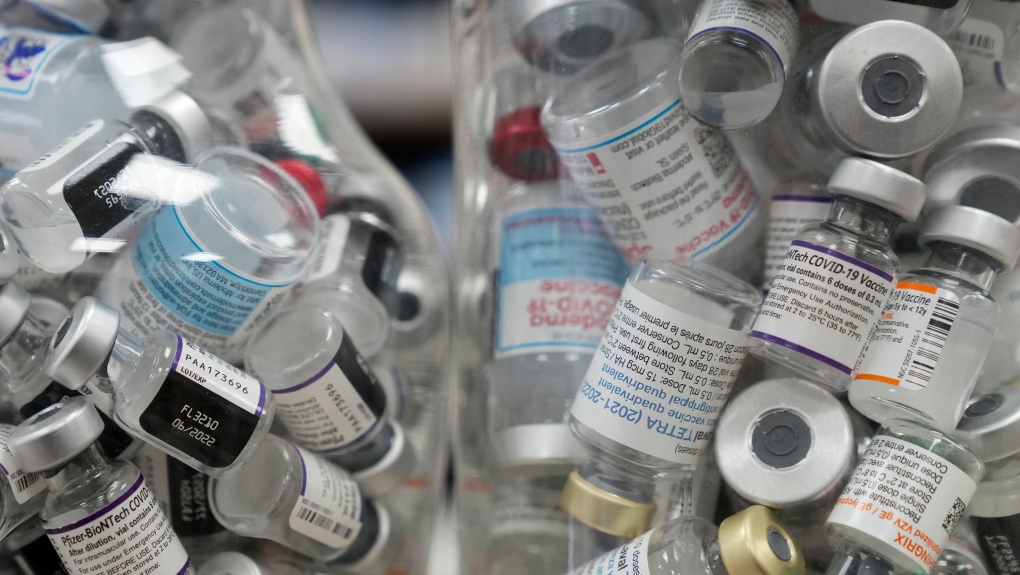
That left 85 million COVID-19 vaccine doses unused, 50.6 million of which the audit found were deemed surplus and offered for donation. However, just 15.3 million doses have been given to other countries while 13.6 million expired before they could be donated.
That meant that as of the end of May, Canada had 32.5 million doses—worth an estimated $1 billion—sitting in inventories across the country. The report flags that the majority of these shots are set to expire by the end of the year, resulting in more wastage if they are not used or donated soon. In addition to these shots, the government has gone on to procure doses of newly-developed bivalent booster shots.
The auditor general said that while PHAC “equitably allocated” COVID-19 vaccine doses to the provinces and territories and oversaw their delivery in a “timely way,” efforts to cut down on wasted doses was “unsuccessful.”
This was in part due to delays in the agency developing and implementing an information technology planning system called “VaccineConnect,” meant to help track and manage vaccine usage. By the end of the audit, the report states that even still “not all of the system’s functionalities were being used.”
Another factor that contributed to more doses potentially going to waste than necessary was that the agency did not have in place finalized data-sharing agreements with the provinces and territories, a long-standing issue the AG’s office has brought up repeatedly with this and previous governments, most recently in the 2021 audit on pandemic preparedness.
“This meant that the agency relied on voluntary reporting by the provinces and territories. Although some provinces and territories consistently reported to the agency, the agency was unable to obtain complete data from most,” the audit said. “This meant that the status of these doses was unknown and reduced the agency’s ability to predict supply needs and plan for donations.”
Hogan found that while the federal health bodies were timely in responding to the trio of confirmed vaccine safety signals, the data-sharing gap “affected the agency’s ability to effectively share detailed case-level safety surveillance data with Health Canada, the World Health Organization, and vaccine companies,” as it pertained to incidents of adverse reactions in Canada.
She is now calling for this gap to be addressed immediately, “because the sharing of health data is a cornerstone of effective surveillance to keep Canadians safe.”
Federal officials and opposition critics will be responding to Hogan’s findings this afternoon.
This is a breaking news story, more to come…