


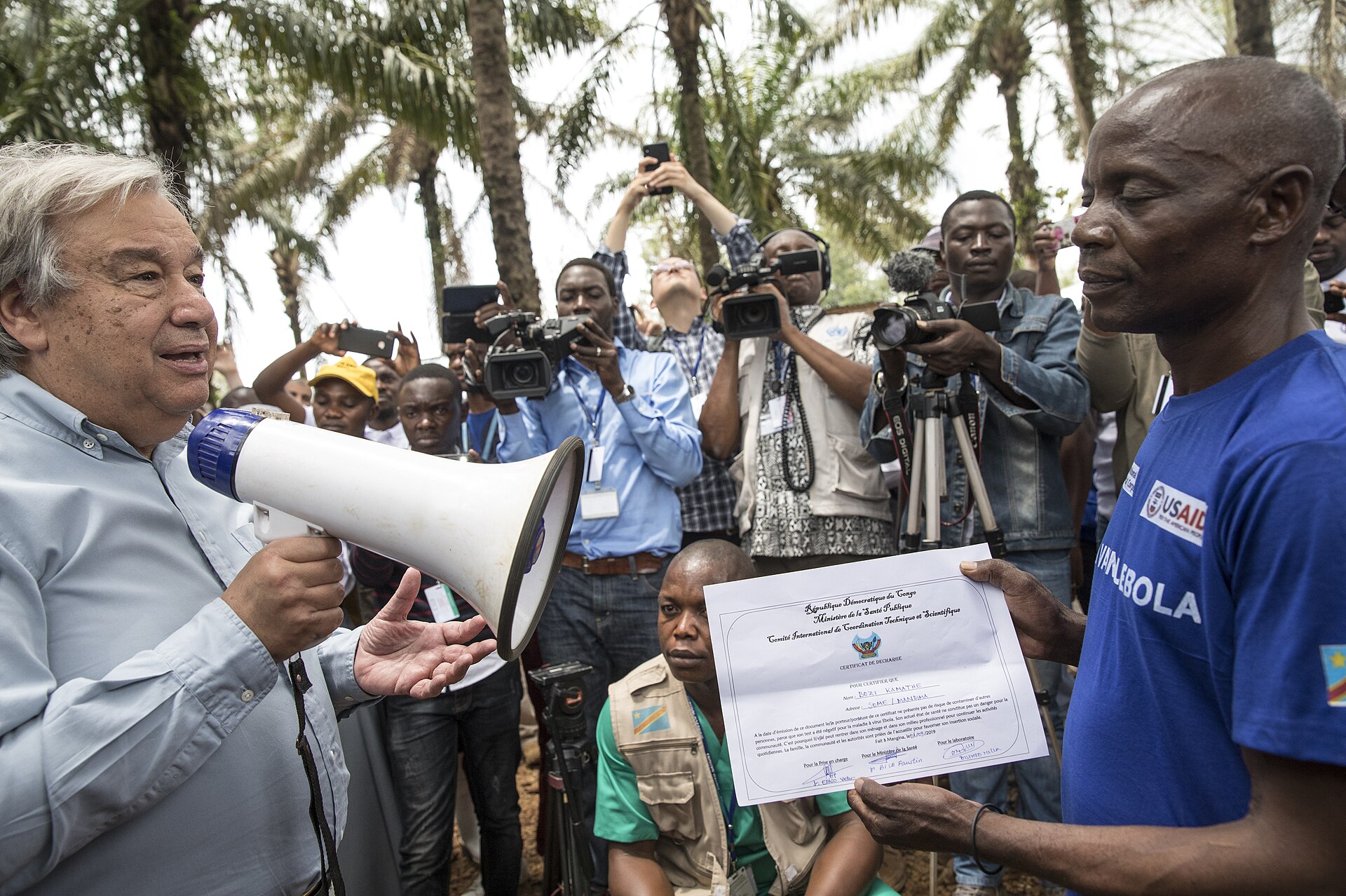
The World Health Organization said Oct. 22 that an Ebola outbreak caused by the Bundibugyo virus now spans four African countries, with 9,066 confirmed cases and 4,381 deaths in Congo as of Oct. 11, after Nigeria confirmed its first case on Oct. 20.
The Congo toll makes this the country’s deadliest Ebola outbreak, with a case-fatality rate of 48.3 per cent, according to WHO figures reported by Newsweek. Nigeria is the most populous country to confirm a case so far.
“We are facing a more complex outbreak landscape,” Mohamed Janabi, WHO’s regional director for Africa, said at an online media briefing on Oct. 22, Al Jazeera reported. The outbreak was first announced in Congo in mid-May.
Nigeria’s case is a woman in Abuja who arrived from Uganda. Authorities are tracing 44 contacts, and more have since been identified, Al Jazeera reported. Patrick Otim, a WHO emergency response manager, said the source of her infection is still unknown and that investigators are reviewing which Abuja health facilities she visited between symptoms starting and her admission to hospital 48 hours later.
Uganda’s government rejected any suggestion that the woman caught the virus there. Government spokesman Alan Kasujja called a link to Uganda, where she had holidayed, “preposterous,” according to Al Jazeera. Africa CDC, the African Union’s public health agency, said the first Nigerian and Kenyan cases both left Entebbe, Uganda, on Oct. 3 and that a possible encounter between them is being investigated.
Kenya has confirmed nine cases, all in one cluster, according to Patrick Amoth, the country’s director-general for health. “As of today there is no evidence of transmission outside this group,” Amoth said on Oct. 20, as quoted by Newsweek. Officials have traced all 135 contacts of Kenya’s first patient, whose case was announced Oct. 6.
There is no approved vaccine or specific treatment for Bundibugyo virus disease, WHO says. Early supportive care can improve survival. WHO also advises against any restriction of travel to, or trade with, Congo, Uganda or Kenya based on current information.
Canada has taken a stricter line than that advice for some countries. Under temporary border measures in force until 11:59 p.m. on Nov. 27, 2026, foreign nationals who were in Congo in the past 21 days cannot enter Canada or board a flight to Canada, and foreign nationals of Congo, Uganda and South Sudan cannot travel to Canada during the suspension, even with a visa or an electronic travel authorization.
Canadian citizens, permanent residents and people registered under the Indian Act who were in Congo, Uganda or South Sudan in the past 21 days may enter Canada but must quarantine for 21 days, with a suitable quarantine plan in place. Travellers with symptoms receive an immediate medical exam and isolation, the Public Health Agency of Canada says.
The Government of Canada’s travel health notice for Congo, updated Oct. 20, is Level 3, “avoid non-essential travel.” It says the risk of getting Ebola is low for most travellers who take the proper precautions. The border measures page, last updated Oct. 8, names only Congo, Uganda and South Sudan, so its quarantine rules do not mention Kenya or Nigeria.
Canadians travelling to or living in the affected region are advised to register with the Registration of Canadians Abroad service, avoid contact with anyone showing symptoms and avoid non-urgent visits to health-care facilities in the outbreak area.
Earlier Canada News Media reporting covered the first Nigerian case, the Kenyan cluster and Canada’s restrictions, and what is known about the Nigerian patient.
What happens next depends on whether Nigeria’s contact tracing finds further cases and whether Kenya’s cluster stays contained. Canada’s border measures are set to expire on Nov. 27 unless the government extends them.
If you find reporting like this useful, consider supporting Canada News Media, an independent Canadian newsroom with no corporate parent.
Via Al Jazeera and Newsweek, with Government of Canada and WHO statements as cited.
Follow Canada News Media
Get the day's top Canadian stories and our two daily 60-second news videos wherever you scroll.
X Threads Facebook Instagram LinkedIn TikTok YouTube Pinterest Reddit Substack Flipboard Newsletter RSS