


The Canadian Food Inspection Agency has put the County of Essex, the City of Windsor, the Township of Pelee and the Municipality of Chatham-Kent under a regulated area for spotted lanternfly after confirming the invasive insect is now established in southwestern Ontario.
The agency said Oct. 23 that after the first detection in Windsor, it confirmed more finds in Windsor and Essex County and received hundreds of reports of confirmed sightings across the county. It found both adults and egg masses, a sign of a reproducing population, so it now considers the pest established in the area.
Under the new rules, nursery stock, outdoor household items, ornamental stones and firewood must be free of every life stage of the insect before they are moved from the regulated area to any part of Canada outside it, the CFIA said in a news release. The details are set out in agency directive D-24-01. Chatham-Kent and Pelee were included because the agency regulates places where the pest is established along with neighbouring areas.
The spotted lanternfly is a sap-feeding planthopper native to Asia that has spread through much of the eastern United States. It can feed on more than 100 species of trees and plants, but significant damage has only been seen on grapes, the agency said. The regulated area takes in the Lake Erie North Shore and Pelee Island, two of Ontario’s wine-growing regions.
The CFIA is asking people in the area to check anything stored outdoors, including vehicles, patio furniture, tarps, sports equipment, garden tools, trees and plants, for egg masses. Travellers coming from infested U.S. states or from the Ontario regulated area should inspect their vehicles and outdoor gear before they leave.
Anyone who spots the insect is asked to take a photo or video, catch it or scrape egg masses into a sealable container, and report it right away to the CFIA at inspection.gc.ca/pests or through a local CFIA office.
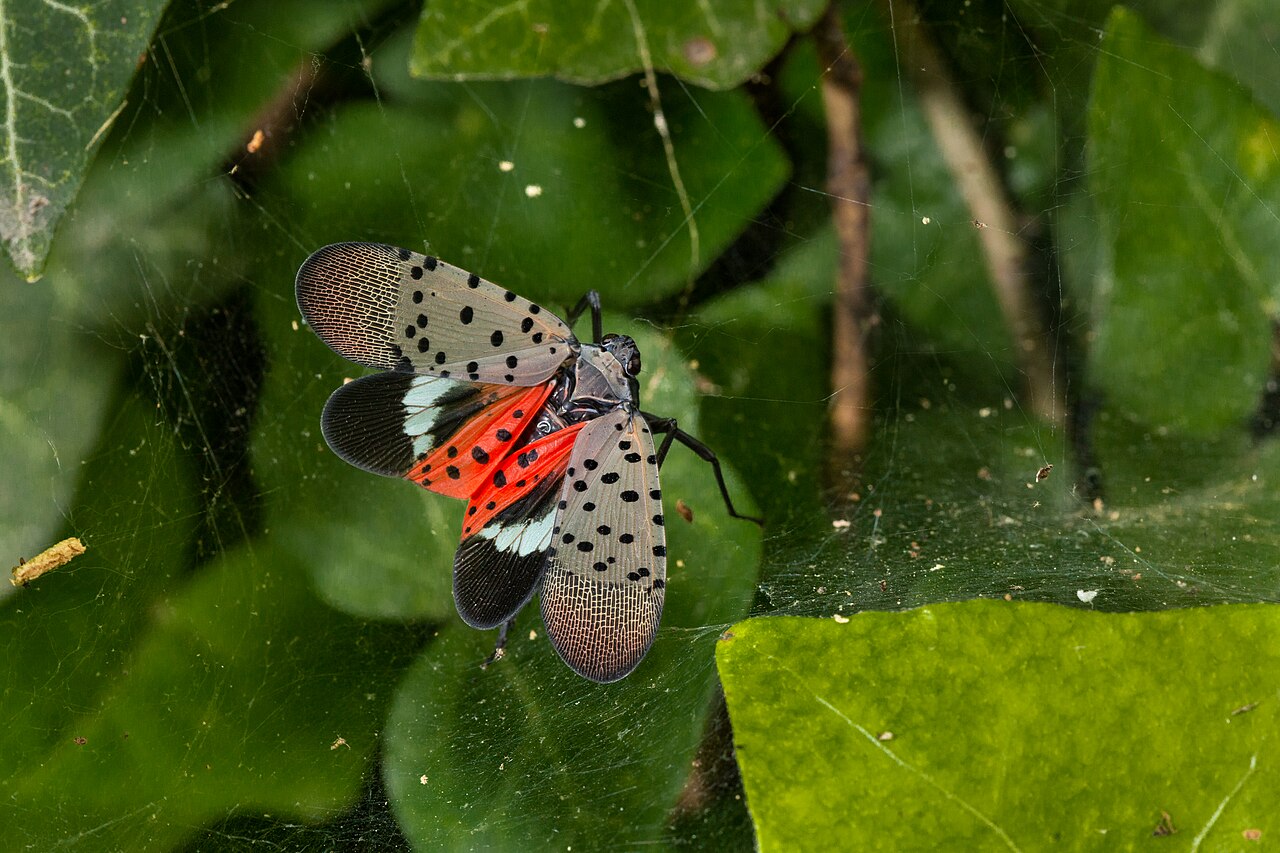
Adults are about 2.5 centimetres long, with greyish forewings marked with black spots and bright red hind wings that show when they fly. Egg masses look like smears of grey mud on bark, stone and other hard surfaces.
The agency first warned in 2022 that the pest was nearing the border. Ontario grape growers were already dealing with extreme weather threats at the time.
If you find reporting like this useful, consider supporting Canada News Media, an independent Canadian newsroom with no corporate parent.
Photo: An adult spotted lanternfly. USDA Agricultural Research Service via Wikimedia Commons, public domain.
Follow Canada News Media
Get the day's top Canadian stories and our two daily 60-second news videos wherever you scroll.
X Threads Facebook Instagram LinkedIn TikTok YouTube Pinterest Reddit Substack Flipboard Newsletter RSS