

In a surprise hardware reveal this week, Valve — the company best known for its Steam PC gaming platform and the handheld Steam Deck — formally announced a trio of new devices poised to mark its most ambitious foray into living-room and console-style gaming yet. The centrepieces: a next-generation Steam Machine, the all-new Steam Controller, and a companion VR-capable headset (the Steam Frame). For the purposes of this article, we’ll focus primarily on the Steam Machine and Steam Controller — what they promise, how they’re different, and what they mean for gamers (including us in Canada) and the broader industry.
What’s revealed so far: Specs, positioning and claims
Valve described the Steam Machine as the logical evolution of the Steam Deck experience, but aimed squarely at TV-based, couch-style gaming and living room setups, rather than solely portable play.

Steam Machine: A high-powered mini-PC for gaming
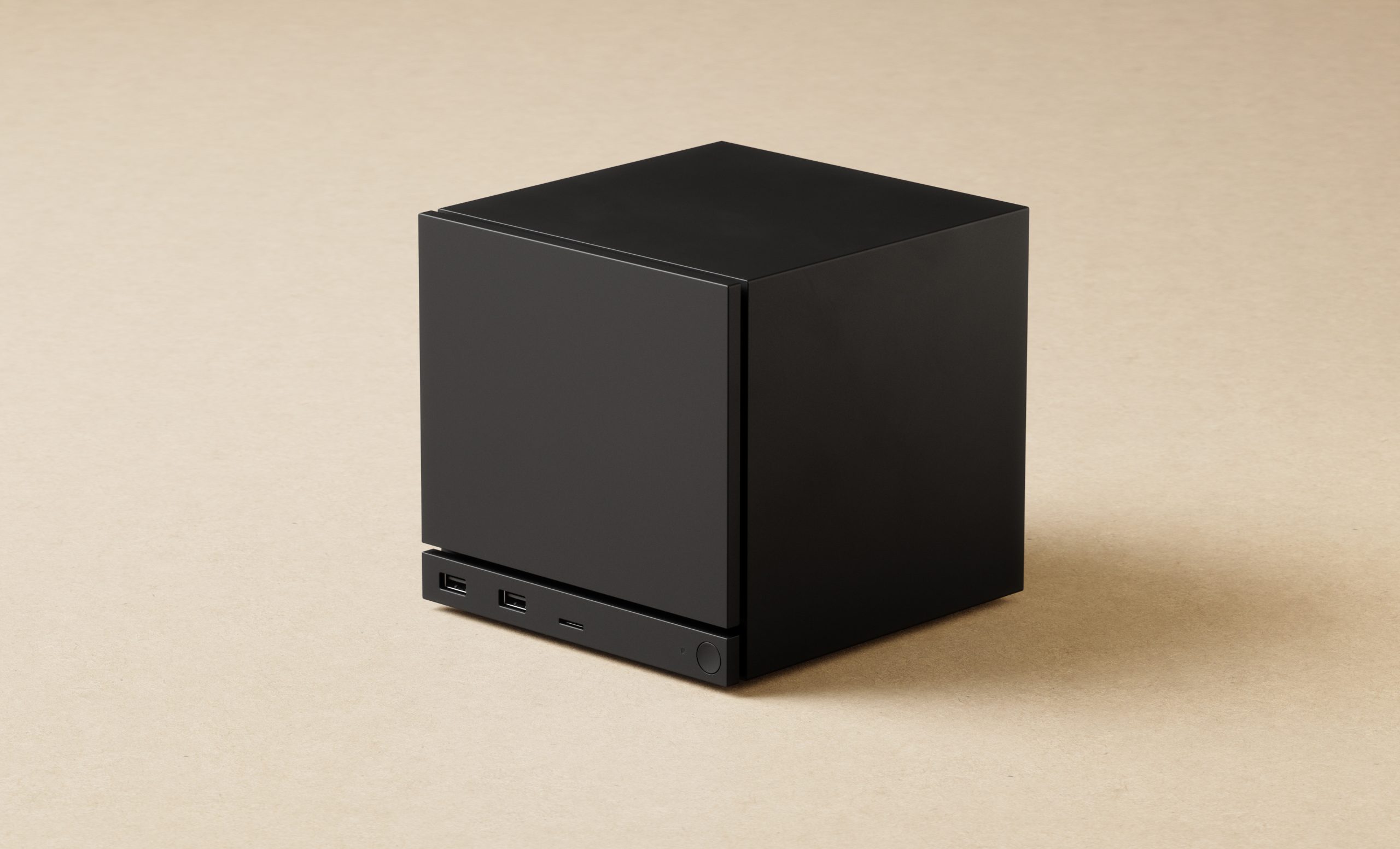
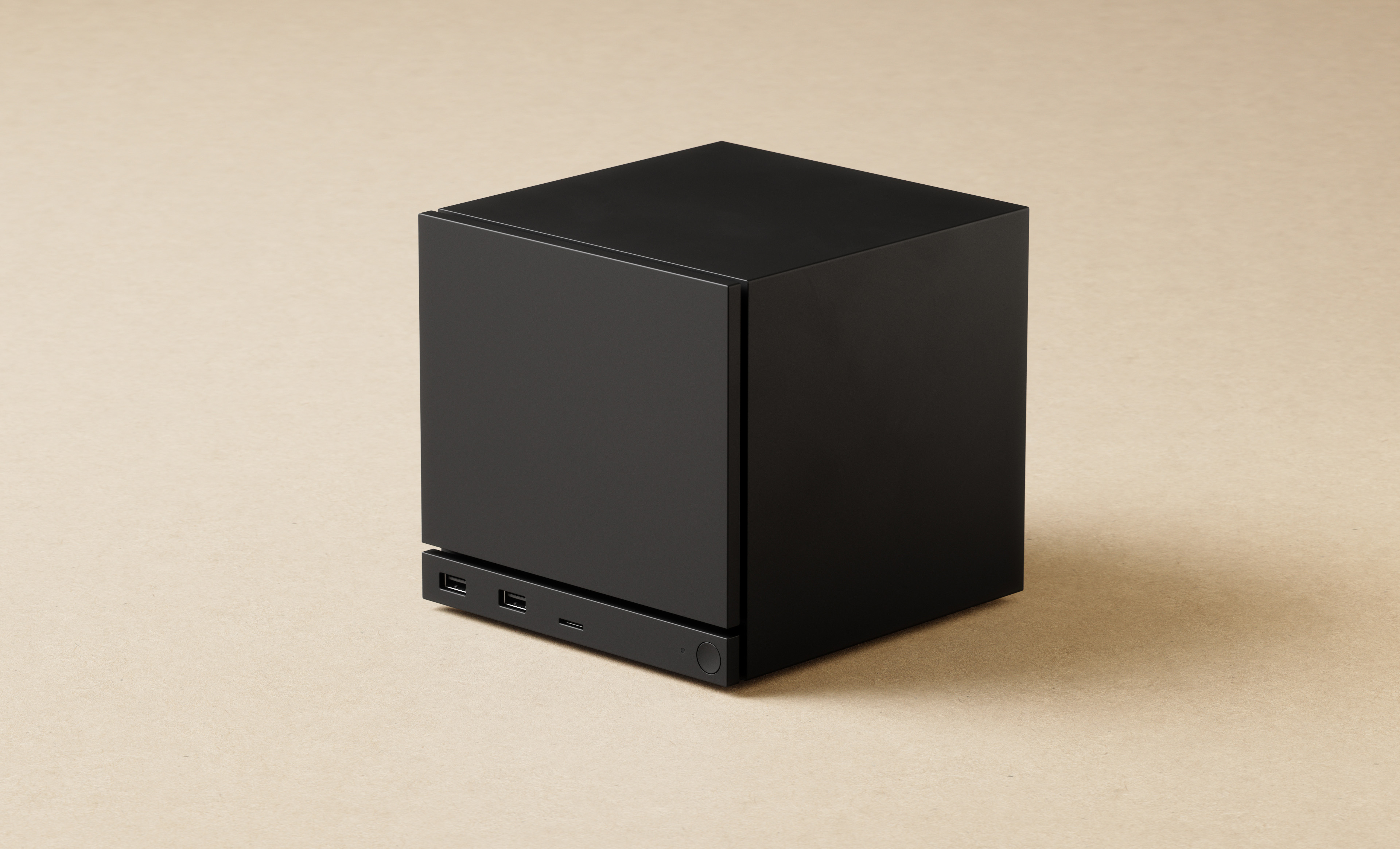
According to multiple sources, the Steam Machine is housed in a compact cube (about six inches on each side) and runs Valve’s own SteamOS. Business Standard+3Gematsu+3Ars Technica+3
Key highlights:
-
A semi-custom AMD Zen 4 CPU (6 cores / 12 threads) clocked up to ~4.8 GHz. Ars Technica+2Business Standard+2
-
A semi-custom AMD RDNA 3 GPU with 28 compute units (CUs) and an 8 GB GDDR6 VRAM allocation. Gematsu+1
-
Total system memory of 16 GB DDR5, and storage options of 512 GB or 2 TB NVMe SSDs. Micro‐SD expansion is also supported. mint
-
Connectivity and I/O catered to both desktop and living-room: DisplayPort 1.4, HDMI 2.0, Gigabit Ethernet, USB-C 3.2 Gen2, multiple USB-A ports, WiFi 6E, Bluetooth 5.3. Gematsu+2Ars Technica+2
-
Performance claims: Valve states the system delivers more than six times the performance of the Steam Deck, and can handle 4K @60fps gaming (with AMD FSR upscaling) along with ray-tracing support. mint+1
But perhaps more interesting than the raw specs is the positioning: This isn’t just “Steam Deck but bigger” — Valve is framing it as a PC-console hybrid, one that can sit in your entertainment unit, open to modding, alternative OS installation, and the full Steam library (plus compatibility layers). In that sense, it occupies the space between a traditional console (Xbox/PlayStation) and an enthusiast PC.
Steam Controller (Second-Gen)
Accompanying the Steam Machine (and usable across PCs, handhelds, SteamOS devices) is a heavily revised controller — one designed to address the shortcomings of Valve’s earlier peripheral efforts and to provide a more universal input solution.


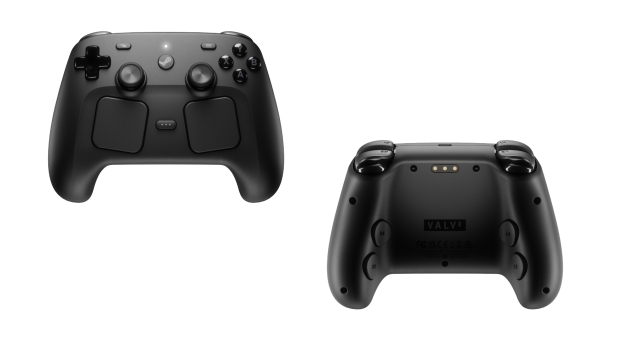
Major features:
-
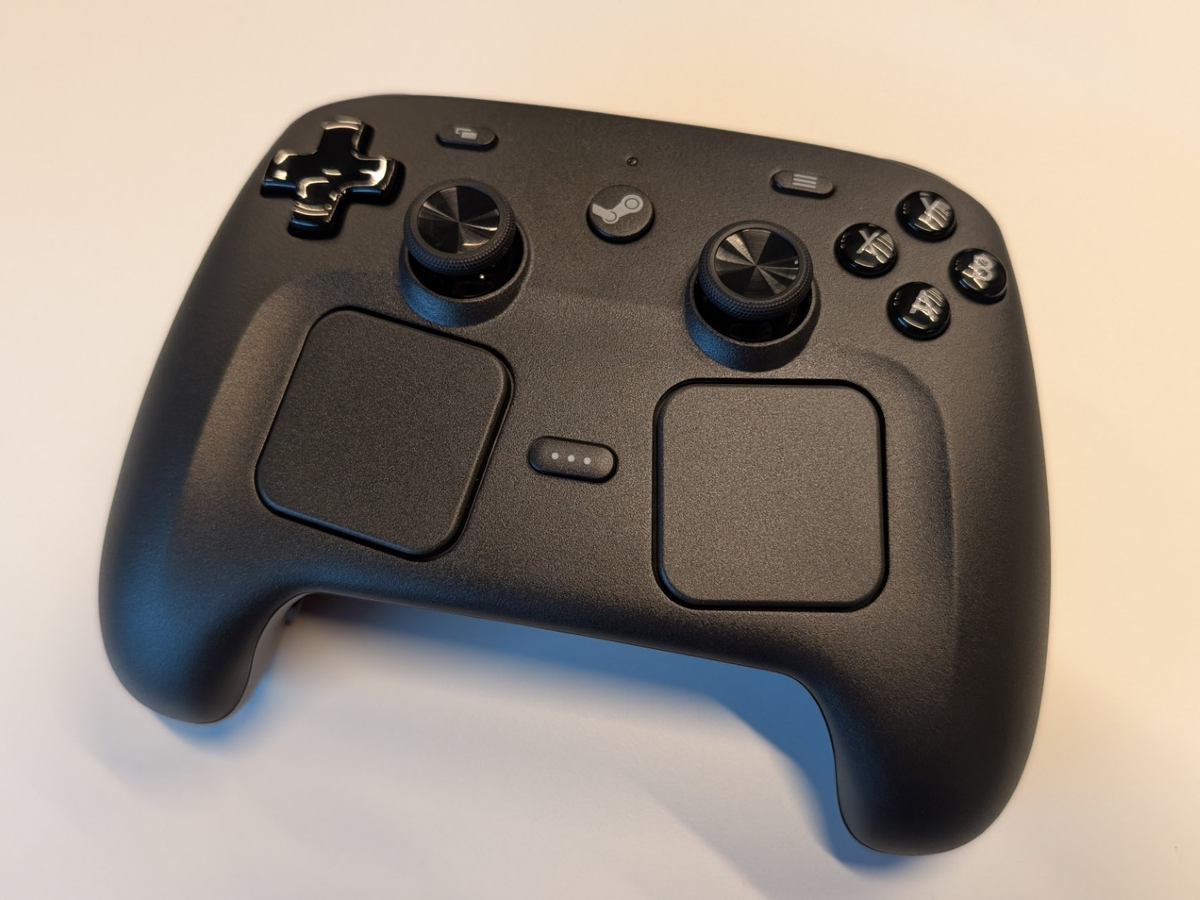
Magnetic thumbsticks (TMR technology) designed to mitigate stick-drift, a complaint shared across many modern controllers. GamerBraves+1
-
Dual large trackpads (underneath thumbsticks) with haptic feedback, enabling mouse-style control or hybrid input schemes. TechSpot
-
Gyroscope and “Grip Sense”: capacitive sensors on the grips letting users enable/disable gyro aiming via touch; four assignable back “grip buttons”. Wccftech+1
-
Wireless connectivity via a proprietary ‘Puck’ (USB dongle + charging station) offering ~4 ms polling; also supports Bluetooth and USB-C tethered use. GamerBraves
-
Battery life claimed to exceed 35 hours on a charge. TechRadar+1
-
Compatibility: Windows PCs, Mac, Linux, SteamOS devices, Steam Deck, and via Steam Link to mobile (iOS/Android). mint
Taken together, the controller is designed with versatility in mind: one controller that can serve console-style living-room play, desktop gaming, handheld streaming, and more.
Why this matters (and the challenges)
For players and the Canadian market
For gamers in Canada, there are several implications:
-
More hardware options for PC gaming beyond the traditional tower or laptop. If priced competitively, the Steam Machine could appeal to those who want “pull-plug-play” living-room PC game access without building a full desktop.
-
Input options matter: The new Steam Controller may finally deliver broad appeal for players who toggle between gamepad, mouse & keyboard, handheld streaming, and couch gaming.
-
Steam’s ecosystem continues to blur the lines between PC and console: The library you already have (if you’re a Steam user) becomes more portable across form factors, whether you’re docking, streaming, or playing in the living room.
-
For Canadian retailers and importers: Valve’s hardware strategy may add another layer of competition to the console/PC space. Availability, pricing, warranty/support (especially in Canada) will be important; many hardware launches suffer from supply and regional distribution constraints.
-
As always, the “value proposition” is critical. Valve’s claims of “six times Deck performance” sound impressive — but Canadians will want to see real-world performance, software ecologies (driver support, compatibility layers, anti-cheat issues), and total cost.
For the industry
-
Valve re-entering the console-adjacent hardware space is significant. We’ve seen handhelds (like Steam Deck), but a living-room box optimized for 4K + TV + full Steam library? That places Valve in competition (at least indirectly) with the major consoles and the mini-PC market.
-
Input innovation: The new controller attempts to reconcile PC input flexibility with console simplicity — if successful, it could influence how third-party controllers evolve and how game developers treat input mapping across ecosystems.
-
Ecosystem lock-in vs openness: One of Steam’s competitive advantages has been openness (modding, alternative OS, broader library). Valve must balance usability with openness without alienating either casual gamers or enthusiasts.
-
Hardware pricing and margins: Valve has had mixed success with hardware historically (the original Steam Machine initiative, for example). Execution, supply chain, pricing, software support — these become crucial.
-
Software support & game compatibility: While the hardware specs are strong, success will depend on how many games run well on the device (especially via compatibility/Proton layers), how developers embrace the platform, and how Valve supports updates. Early claims about “all your Steam library” are optimistic — some games (especially those using tricky anti-cheat) may not run flawlessly. Windows Central
Challenges and open questions
-
Pricing: Valve has not yet revealed retail price. Many observers suggest the Steam Machine will need to hit around the $500 USD mark (or less in some regions) to be competitive with Xbox, PlayStation and capable gaming PCs. mint
-
Software ecosystem & exclusives: Even if hardware is excellent, the living-room box experience depends on ease of use, UI polish, and availability of titles optimized for couch play. Valve must make the SteamOS + controller combo seamless.
-
Library compatibility & “just works” experience: While Steam has massive library coverage, PC titles vary wildly in control mapping, performance, and input fidelity when used via gamepad. The new controller’s dual trackpads may help, but user experience will matter.
-
Supply and regional support: Canadian launch details (availability, warranty, support) are not yet clear. Hardware delays or import premium could hamper uptake in Canada.
-
Competition: The console market is tough. Xbox Series X/S, PlayStation 5, Nintendo Switch (and its upcoming iterations), PC gaming towers, streaming boxes all vie for consumer attention. Valve must carve out a compelling niche.
-
Historical baggage: Valve’s earlier “Steam Machine” hardware initiative (around 2015) is widely considered a commercial disappointment. Skeptical consumers may hesitate until reviews and field units are proven.
What this means for Valve’s strategy
This announcement appears to be Valve doubling down on its strategy of blurring the lines between PC and console gaming, leveraging its Steam ecosystem (software + storefront) and increasingly strong hardware credentials (Steam Deck track record) to become a more complete hardware-software platform.
-
Valve appears to target couch/TV gaming more aggressively now — maybe acknowledging that the living room remains key even for PC gamers who previously migrated to smaller handhelds.
-
The synergy between the Steam Machine, the Controller, and the upcoming Steam Frame signals a family of devices rather than a one-off hardware launch — all built around SteamOS and cross-device compatibility.
-
By controlling both input hardware (controller) and console-style device (Machine) Valve can capture more of the experience stack, thereby enhancing value of Steam in the competitive landscape.
-
For the Canadian market specifically, this could mean more localized support, perhaps bundling with Canadian retailers, paying attention to bilingual packaging, local warranty/regulation compliance (though nothing has been confirmed yet).
Canadian context & consumer perspective
In Canada, the gaming landscape is rich: we have a high penetration of Steam users, many PC gamers, and increasing interest in alternative hardware (e.g., Steam Deck). Canadian consumers will ask some key questions:
-
Will the Steam Machine be sold in Canada simultaneously with U.S./Europe? Will pricing reflect CAD currency and taxes (GST/HST)?
-
What bundles will be offered (e.g., Machine + Controller + subscription or services)?
-
Will there be Canadian-specific support (repair centres, localized service, French packaging) — especially important for buyers outside major metropolitan hubs.
-
How will performance benchmarks look in Canadian living rooms (4KTVs, HDR sets, variable internet quality for streaming)?
-
Will the controller appeal enough to justify purchase for existing Steam Deck or PC gamers, or will many wait for bundle deals?
-
From an inductive perspective: The new hardware may encourage Canadians who were on the fringe of PC gaming to dip into Valve’s ecosystem with a lower “console-like” barrier. Alternatively, those dedicated to PCs may continue building their own. The sweet spot will be the mid-range price/performance living-room PC experience.
Final reflections: High promise, but execution critical
Valve’s latest hardware reveal is one of the most interesting moves in gaming hardware this year. The Steam Machine and Controller combine bold engineering with a vision: bring the full breadth of Steam to the living-room, make PC gaming accessible for couch play, and offer input hardware that addresses long-standing pain-points (controller drift, mouse-style input on TV, universal compatibility).
However, promise doesn’t guarantee success. The execution will depend on price, regional availability (including here in Canada), software polish, game compatibility, hardware reliability, and how well Valve can avoid the pitfalls that befell its earlier machine initiatives. For Canadian gamers, the next 6-12 months will be crucial: pre-orders, launch reviews, after-sale support, and ecosystem uptake will determine whether this hardware push becomes a mainstream hit or remains a niche favourite.
For now, if you’re a Canadian gamer watching this space, it’s time to pay attention: Valve is moving. Whether you’re a PC purist, a console convert or somewhere in between, this announcement could reshape your gaming options in 2026 and beyond.
If you like, I can prepare a Canadian-market-focused breakdown of what the Steam Machine + Controller might cost here (estimated CAD pricing, import duties, comparison with consoles), plus a feature-matrix vs Xbox Series X / PS5 / Steam Deck.
Follow Canada News Media
Get the day's top Canadian stories and our two daily 60-second news videos wherever you scroll.