


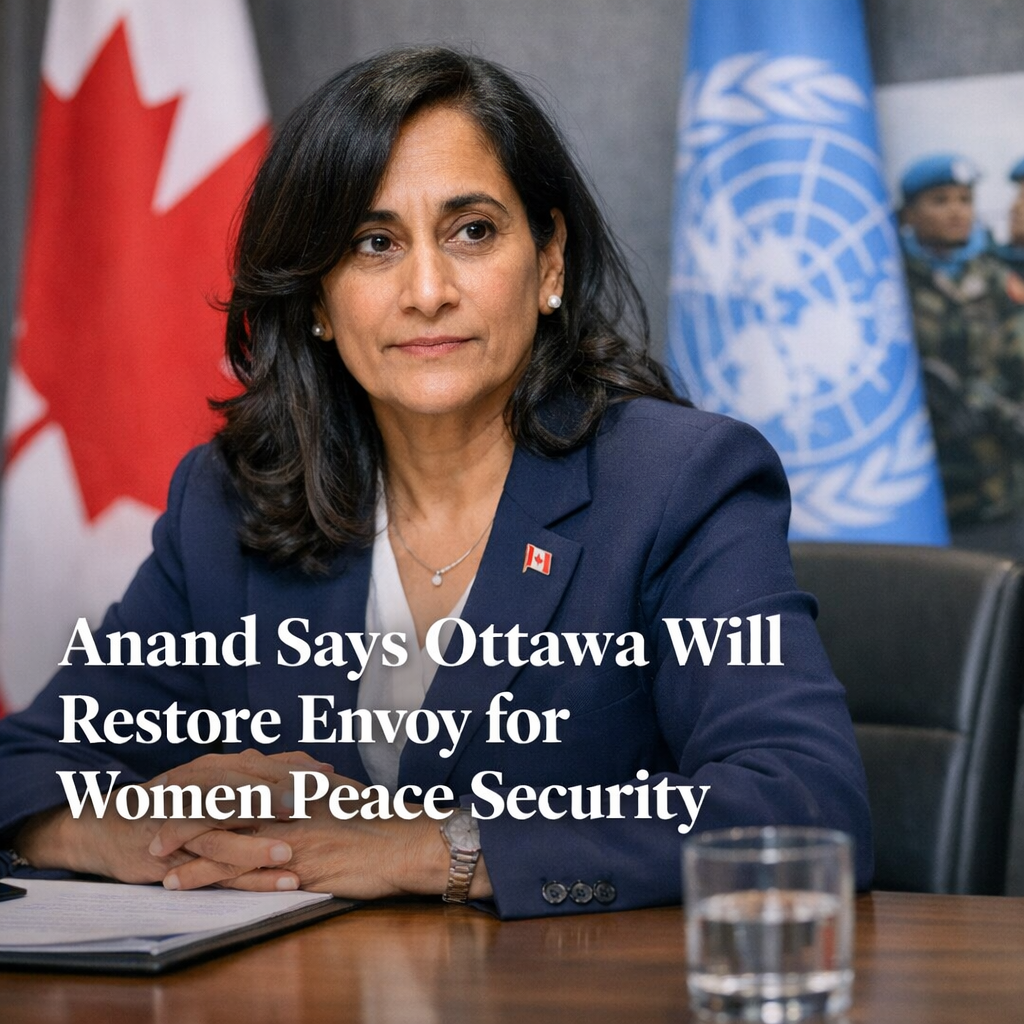
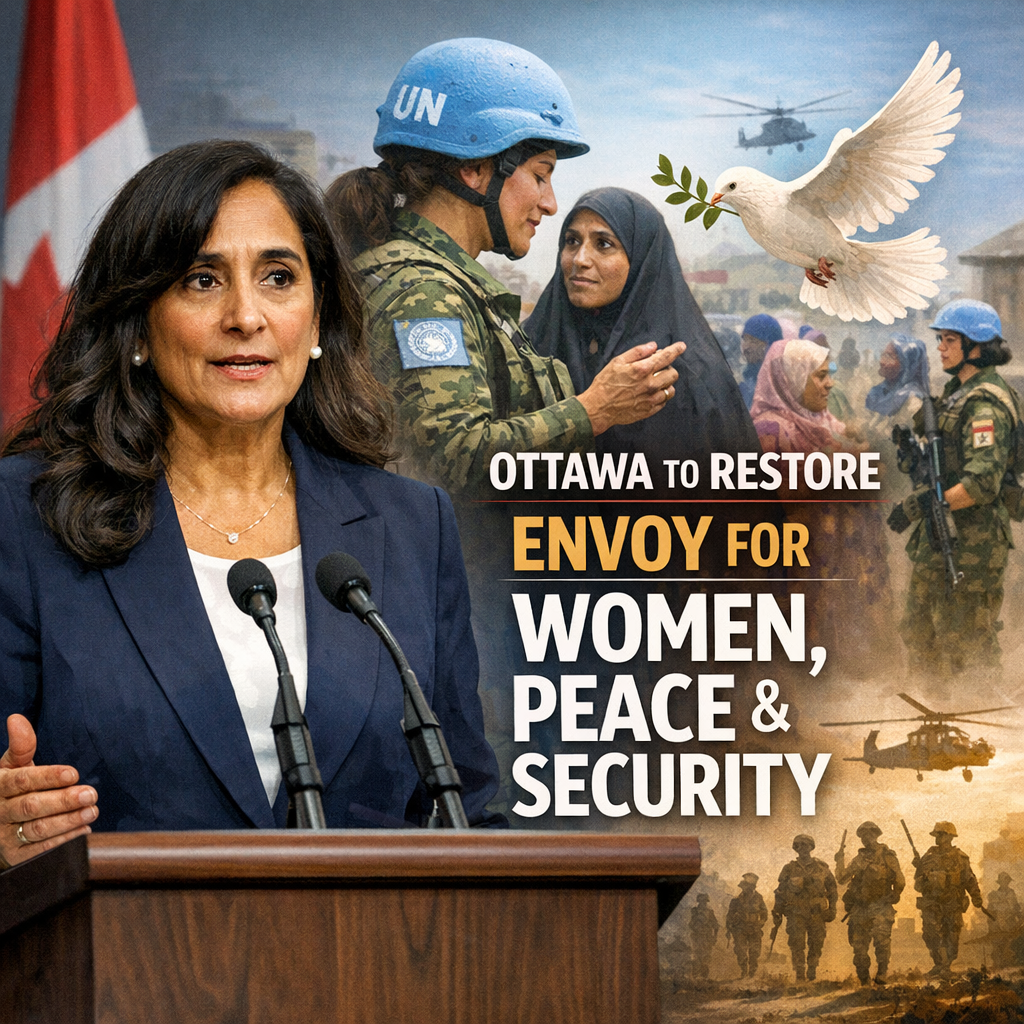
Canada is bringing back a dedicated ambassador for women, peace and security, restoring a diplomatic role that had been left vacant for more than a year. Foreign Affairs Minister Anita Anand made the announcement in Ottawa, signalling that the federal government wants to put gender equality and the protection of women and girls back at the centre of its foreign policy work. The position is expected to help Canada coordinate international efforts on conflict prevention, peacebuilding and humanitarian response through a gender-focused lens. The move also sends a message that Ottawa wants to reassert itself on global human rights issues at a time of growing instability in several regions.
For Canadians, the decision matters because foreign policy choices often shape how Canada responds to wars, refugee crises and international development needs. A revived ambassadorial role could influence how federal departments, aid agencies and diplomatic missions prioritize support for women and girls affected by violence, displacement and political repression. Canadian institutions that work abroad, including non-profits, peacebuilding groups and academic researchers, may also see clearer federal leadership and stronger partnerships tied to this agenda. At home, the appointment could reinforce Canada’s long-standing public commitment to gender equality by linking domestic values more closely with action on the world stage.
What comes next will depend on who is appointed and how much authority, funding and access the new ambassador is given inside government. Observers will be watching to see whether the role becomes a visible and active part of Canada’s diplomacy or remains largely symbolic. There will also be attention on whether Ottawa outlines clear goals, such as improving support for women peacebuilders, strengthening protections in conflict zones or increasing accountability in international forums.
The broader context is important. Canada has for years promoted a feminist approach to foreign policy, including efforts tied to peacekeeping, development assistance and the defence of human rights. The women, peace and security agenda itself is rooted in international commitments that recognize women are often disproportionately harmed by war while also playing critical roles in mediation, recovery and community leadership. In recent years, advocates have argued that Canada’s credibility suffered when the ambassadorial post was allowed to lapse, especially as conflicts in places such as Ukraine, Sudan and the Middle East deepened humanitarian pressures. Restoring the position appears aimed at closing that gap and showing allies and civil society groups that Canada intends to play a more consistent role again.
The federal government’s announcement comes at a time when democratic institutions and civilian protections are under strain in many parts of the world. Humanitarian organizations have repeatedly warned that women and girls face heightened risks during conflict, including sexual violence, barriers to health care, loss of education and exclusion from decision-making tables where ceasefires and recovery plans are shaped. Supporters of the ambassador role argue that without a senior official dedicated to these issues, governments can struggle to turn broad promises into coordinated action. By creating a focal point again, Ottawa may be trying to ensure these concerns are raised more consistently in diplomatic discussions, sanctions debates, aid planning and multilateral negotiations.
For Canadian readers, this is not just an abstract international file. Canada’s approach to conflict and humanitarian crises affects immigration pathways, refugee sponsorship, international student flows, overseas consular priorities and the work of Canadian Armed Forces members deployed abroad. When Canada takes a stronger stand on women’s rights and civilian protection in conflict zones, that can influence where aid dollars go and how quickly assistance is organized. It can also shape Canada’s reputation with allies and international institutions, which matters when Ottawa is seeking support on trade, security or United Nations priorities. In practical terms, a more active policy could mean stronger backing for grassroots women’s organizations in fragile states, which many experts view as essential to long-term peace.
The political timing is also notable. Reinstating the role gives the Liberal government a chance to answer criticism from advocacy groups that said the lapse sent the wrong signal about Canada’s commitment to feminist foreign policy. The announcement allows ministers to show continuity with past promises while adapting to a world that has become more volatile and fragmented. At the same time, the government will likely face questions about whether the move is backed by a serious strategy across Global Affairs Canada, National Defence, immigration policy and international development programming. Simply naming an ambassador will not satisfy critics unless the office has a clear mandate and measurable outcomes.
There is also a domestic policy dimension. Canadians are used to hearing governments speak about equality, diversity and inclusion within Canada, but international policy often receives less public attention unless there is a major crisis. This appointment may encourage a broader discussion about how Canadian values are applied overseas and whether Ottawa is prepared to defend them consistently. Universities, think tanks and civil society organizations that study conflict resolution and human rights may see new opportunities to contribute expertise if the government begins refreshing its women, peace and security planning. Provinces and municipalities are less directly involved in foreign affairs, but local communities can still feel the effects through refugee settlement services, cultural ties and fundraising efforts tied to global emergencies.
Looking ahead, one of the biggest tests will be whether the ambassador can work effectively across government lines. Issues involving conflict, gender equality and human rights rarely fit neatly into a single department, so success will require coordination with immigration officials, defence planners, development experts and Canada’s network of embassies. Another key measure will be whether Canada uses the role to elevate women peacebuilders from affected regions, rather than relying only on top-level diplomatic language. If the government follows through with resources and influence, the restored post could become an important tool in shaping a more coherent Canadian response to global crises. If not, critics may see it as a well-worded gesture that falls short of the urgent realities facing women and girls in conflict zones.
Follow Canada News Media
Get the day's top Canadian stories and our two daily 60-second news videos wherever you scroll.
X Threads Facebook Instagram LinkedIn TikTok YouTube Pinterest Reddit Substack Flipboard Newsletter RSS