



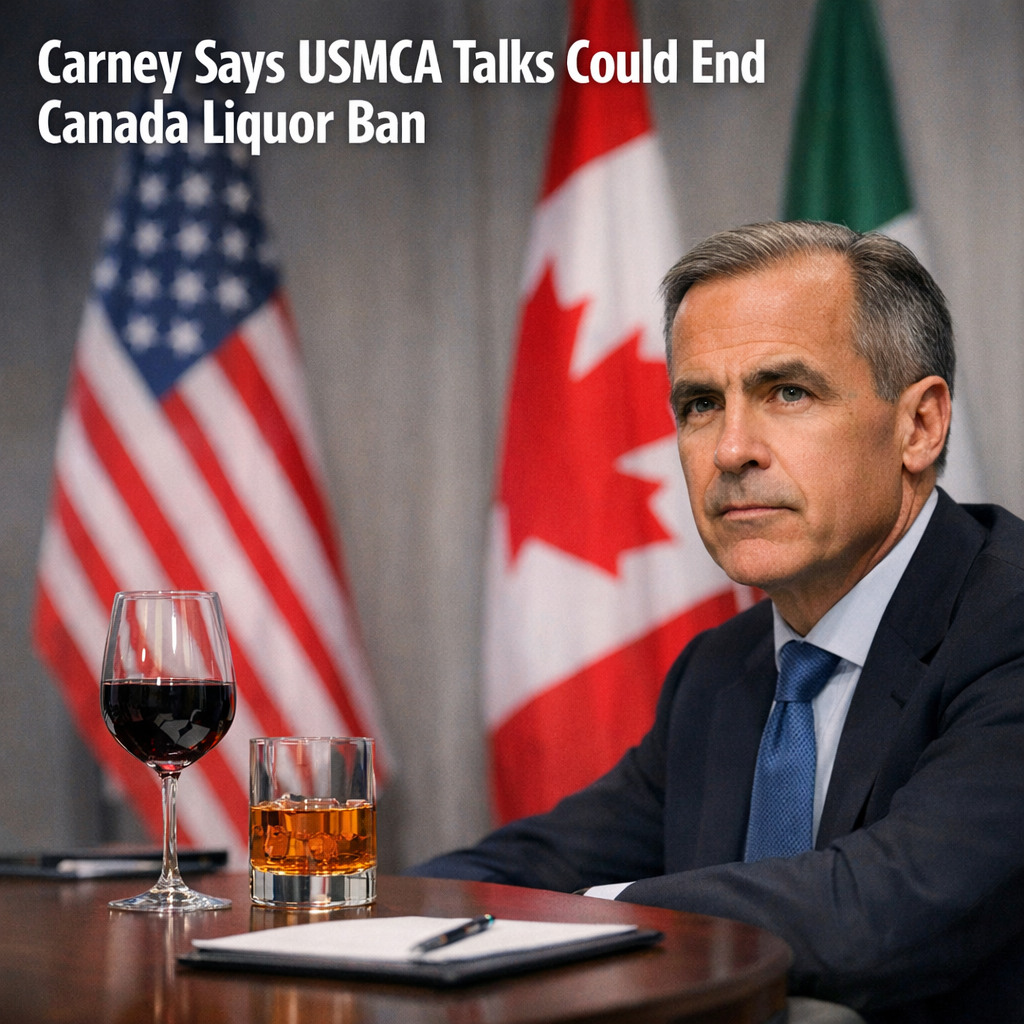
Prime Minister Mark Carney says Canada’s next round of trade talks with the United States will focus on removing or reducing tariffs on steel, aluminum and automobiles, three sectors that matter deeply to the Canadian economy. He signalled that these industries are at the top of Ottawa’s priority list as both countries look for a path through a tense period in the broader trading relationship. The message is straightforward: Canada wants to protect jobs, stabilize investment and restore more predictable access to its largest export market. With many manufacturers already dealing with higher costs and uncertainty, the federal government is trying to show businesses and workers that these issues are front and centre.
For Canadian readers, the stakes are immediate and personal. Tariffs on steel, aluminum and autos can ripple through factory towns in Ontario and Quebec, affect orders for parts suppliers across the country and put pressure on wages, hiring and expansion plans. They can also raise costs throughout the supply chain, which may eventually touch everything from vehicle prices to construction materials used in homes, roads and public infrastructure. Canadian pension funds, provincial revenues and local communities all have an interest in the health of these industries because they support thousands of direct and indirect jobs.
What comes next will depend on how quickly Canada and the U.S. can move from political messaging to detailed negotiations. Readers should watch for signs of formal talks, possible carve-outs for Canadian exports and any mention of timelines tied to auto production, metals shipments or broader North American trade co-operation. It will also be important to see whether Ottawa links these discussions to other issues, including supply chains, defence spending, energy security or cross-border investment.
To understand why this matters so much, it helps to remember how tightly Canada and the United States are connected economically. Canada sends most of its exports to the U.S., and steel, aluminum and vehicles are among the most integrated sectors on the continent, with parts and materials often crossing the border multiple times before a finished product is sold. Past tariff disputes have shown how quickly political decisions in Washington can disrupt Canadian plants and force companies to rethink production. Even when tariffs are temporary, the uncertainty alone can delay contracts, freeze capital spending and make it harder for Canadian firms to compete globally.
The auto sector is especially sensitive because it depends on just-in-time manufacturing and a highly synchronized Canada-U.S. supply chain. A single vehicle assembled in Ontario may contain components made in several provinces and multiple U.S. states, while Canadian-made steel and aluminum feed directly into vehicle production, machinery and consumer goods. When tariffs are applied at any point in that chain, costs can stack up quickly and undermine the logic of North American integration that has developed over decades. For workers, that can mean overtime cuts, postponed hiring or worries about future model allocations at assembly plants.
Steel and aluminum carry added significance because they reach far beyond industrial exports. These materials are used in construction, transit, energy projects, defence equipment, packaging and manufacturing of all kinds. If tariffs remain in place or become a recurring threat, companies may pass along higher costs, absorb lower margins or delay projects altogether. That matters to municipal governments building infrastructure, to developers managing housing costs and to consumers already stretched by broader affordability pressures. In a country trying to boost productivity and build more homes, higher input costs are not a minor issue.
For Ottawa, prioritizing these sectors in negotiations is also a political calculation. The federal government knows that communities tied to manufacturing and resource processing are watching closely for proof that Canada will push back firmly when trade barriers hurt domestic jobs. Prime ministers of all stripes have faced pressure to defend industrial workers while also preserving a workable relationship with Washington. That balancing act is never easy, especially when the U.S. frames tariffs as part of a wider industrial strategy or domestic political message rather than a narrow trade dispute. Canada’s challenge is to argue that a stable, tariff-free relationship benefits both countries and keeps North America more competitive against overseas rivals.
There is also a broader strategic angle. The U.S. and Canada are both trying to strengthen supply chains in critical industries, attract manufacturing investment and reduce dependence on geopolitical competitors. In that environment, tariffs can send mixed signals to companies deciding where to build plants, source materials or place long-term bets. If cross-border trade becomes less predictable, firms may hesitate before committing billions of dollars to factories, processing facilities or advanced manufacturing projects in Canada. That is one reason Ottawa wants clarity: businesses can handle competition, but they struggle when the rules keep shifting.
Canadian readers should also keep in mind that trade negotiations are rarely only about one issue. Even if steel, aluminum and autos are the most visible flashpoints, discussions can widen to include procurement, environmental rules, subsidies, border enforcement and regulatory alignment. A breakthrough in one area may depend on concessions or co-operation in another. That means the public conversation may move beyond tariffs alone and into questions about how Canada positions itself in a changing North American economy.
In practical terms, the coming weeks and months could shape business confidence in key regions of the country. Southern Ontario’s auto corridor, Quebec’s aluminum industry and steel producers in several provinces all have reason to watch closely. Workers will be looking for signs that orders are holding up and that employers still see Canada as a reliable place to invest. If negotiations gain traction, the payoff could be more certainty for manufacturers and a better foundation for growth. If they stall, pressure could build for stronger Canadian countermeasures or new domestic support for affected sectors.
For now, Carney’s message sets a clear benchmark for what Ottawa considers urgent. By putting steel, aluminum and autos at the top of the agenda, the federal government is acknowledging that these are not abstract trade files but core parts of Canada’s industrial base. The outcome will matter not only to exporters and factory workers, but also to communities, public finances and consumers across the country. In a trade relationship as deep and consequential as Canada’s with the United States, even targeted tariffs can have wide national effects.
Follow Canada News Media
Get the day's top Canadian stories and our two daily 60-second news videos wherever you scroll.
X Threads Facebook Instagram LinkedIn TikTok YouTube Pinterest Reddit Substack Flipboard Newsletter RSS