


Saskatchewan Premier Scott Moe accused U.S. President Donald Trump of turning to what he called “blood potash” after Trump said Sunday he is negotiating a deal to buy the crop nutrient from Belarus instead of Canada, escalating a trade fight that has already cost the province one of its biggest export markets.
Trump wrote on Truth Social Sept. 21 that the United States is working on a “massive deal” for Belarusian potash at prices “substantially less” than what Canada charges, calling it “very good news for our Farmers and Ranchers,” according to Global News.
Moe called the idea “wrong” and said it “doesn’t make sense,” arguing that buying from Belarus amounts to “supporting Russian aggression” given the country’s role as a staging ground for Russian forces during the invasion of Ukraine. He also questioned the economics of the plan, saying potash shipped from landlocked Belarus would have to cross Russia before reaching a port, a routing he doubts would actually undercut Saskatchewan’s prices once freight costs are added in.
Conservative MP Andrew Scheer echoed the criticism, calling Belarus a “communist dictatorship” with a “terrible human rights record” and describing Trump’s proposal as “ridiculous.”
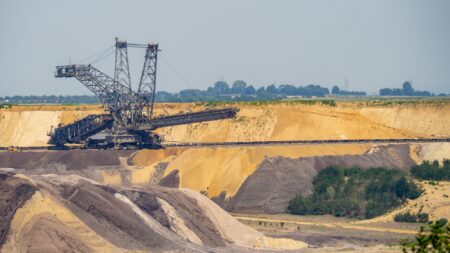
The stakes for Saskatchewan are considerable. The U.S. bought about 85 per cent of its potash from Canada last year, a trade worth $4.2 billion, and Saskatchewan alone produced roughly a third of the world’s potash in 2023. Just under half of that provincial output is shipped south of the border, Saskatchewan Mining Association president Pam Schwann said, leaving an industry that supports thousands of jobs in the province directly exposed to whatever Washington decides next.
Trump’s overture follows the collapse of Canada-U.S. trade talks in August and a subsequent round of new American tariffs on Canadian goods. It also contradicts an earlier line from U.S. Ambassador Pete Hoekstra, who said potash was among the critical minerals the United States has few alternatives to sourcing from Canada. Canadian premiers have since split over whether to use potash as leverage of their own in any retaliation, a debate Trump’s Belarus threat has now sharpened.
What most coverage of Trump’s post has skipped is why “blood potash” is more than a slogan. The supplier in question, Belaruskali, is a state-controlled firm that Canada, the United States, the European Union and Britain have sanctioned since 2021, after Belarusian leader Alexander Lukashenko’s government crushed a nationwide strike movement that followed his disputed re-election. About 4,000 Belaruskali miners walked out that year demanding a new vote. The company fired 49 of them and had union leaders arrested, records of the sanctions history show. The European Union’s top court upheld those sanctions as recently as September 2024, rejecting Belaruskali’s legal challenge.
There is also a supply problem the White House has not addressed. Former Alberta premier Jason Kenney noted this week that Belarusian potash production is already fully spoken for by Asian buyers, chiefly China, long Belaruskali’s largest market and one of the ways the company has worked around Western sanctions. Lukashenko himself has said little volume remains for a new Western customer, raising the question of what, exactly, Trump would be buying, and whether Belarus can deliver it even if Washington strikes a deal.
None of that guarantees the plan collapses. Trump has followed through on unlikely trade threats before, and his post gives Canadian negotiators one more reason to expect pressure on potash specifically as the broader trade dispute drags on. For a province where the mineral is both an economic engine and, this week, a talking point in a fight over Belarus’s record, the story is no longer hypothetical. It is playing out in real time, one Truth Social post at a time.
Via Global News, with additional sourcing from BNN Bloomberg and paNOW.